August 27, 2026
IGI vs GIA for Lab Grown Diamonds
IGI grades the large majority of lab grown diamonds and is the working standard. GIA grades them too, under different rules since October 2025. The two are not interchangeable.
IGI grades the large majority of lab grown diamonds and is the working standard in this category. GIA grades them too, but since October 1, 2025 its colorless lab grown document rates a stone Premium or Standard instead of D or VS1. The two are not interchangeable. A report is only comparable to another report from the same lab.
Everything below was checked against igi.org and gia.edu on August 27, 2026. Re-check the linked pages if you read this much later. This area has already changed once.
Which lab actually grades most lab grown diamonds?
IGI grades roughly two out of every three
IGI's own 2024 annual report claims "approximately 65% of the market share based on the number of certifications" of laboratory grown diamonds in calendar year 2023 (IGI Annual Report). That is a company figure about its own business, not an independent audit. It is still the clearest number published anywhere, and it matches the market: open almost any lab grown listing and the document is IGI's.
The market landed there for reasons unrelated to quality
IGI built capacity in India, where most lab grown rough is cut and polished, and it graded lab grown stones on the natural-diamond scales early, while GIA was still deciding how to treat the category. Growers got a familiar document quickly and close to the factory. Volume follows convenience, and once a supply chain standardizes on a document, retailers inherit it.
GIA never left, it changed what it issues
GIA still assesses lab grown diamonds. On October 1, 2025 it stopped using natural-diamond vocabulary for colorless ones, because it "will no longer use the nomenclature created for natural diamonds" (GIA news release). That decision is why most older advice here is now wrong.

A grading report is only useful next to the stone it describes, and only comparable to other reports from the same laboratory.
What is on an IGI report, and what is on a GIA one?
IGI issues a Laboratory Grown Diamond Report on the familiar scales
The document's real name is the IGI Laboratory Grown Diamond Report, and its cover is yellow to separate it from a natural-diamond report. It carries shape, cutting style, measurements, polish, symmetry, and the four grades you know: carat weight, color on the D to Z scale plus Fancy grades, clarity from IF through I3, and a cut grade set against IGI's studies of "brightness, fire, scintillation, and pattern" (igi.org). Since September 1, 2022, IGI has issued a cut grade on fancy shapes too, not only round brilliants (IGI announcement).
Growth method on an IGI report is not automatic
This is the detail most comparison pages miss. IGI's own wording: "upon request the growth process used and presence of treatments will be noted in the comments section". Read it literally. Whether the stone was grown by CVD or HPHT, and whether it was treated after growth, is disclosed when someone asks for it to be. Absent those lines, the stone is not shown to be untreated. It means nobody requested the analysis. Girdle inscription is likewise a service, Laserscribe, not a default.
GIA issues three different documents, and only one uses letters
| What you are grading | GIA document | What it tells you |
|---|---|---|
| Colorless to near-colorless, loose, 0.15 ct up | Laboratory-Grown Diamond Quality Assessment | Premium or Standard. No D-to-Z letter, no IF-to-I3 letter. |
| Colored, loose, 0.15 ct up | Laboratory-Grown Colored Diamond Report | Full quality assessment, plotted clarity diagram, growth type and post-growth treatment. |
| Colored, when color is the question | Laboratory-Grown Colored Diamond Report, Color Identification | Color and color distribution, growth type and post-growth treatment. |
All three are digital only and all three inscribe the girdle with "Laboratory-Grown" plus the report number (gia.edu). Note the disclosure column: on GIA's colored reports, growth type and post-growth treatment come with the service rather than on request. That is a real advantage of the GIA colored document, and the reverse of the IGI position above.
What Premium and Standard actually require
GIA published the thresholds. Premium needs all of: clarity Very, Very Slightly Included or better, color D, polish and symmetry Excellent, cut Excellent on round brilliants. Standard needs clarity Very Slightly Included or better, color E to J, polish and symmetry at least Very Good (Good accepted on fancy shapes), cut at least Very Good on rounds. The letters still exist inside GIA's method. They just do not reach you. Our guide to VVS and VS clarity walks that ladder, and how to read an IGI report walks the document line by line.
Does an IGI D VVS2 mean the same thing as a GIA D VVS2?
On a colorless stone, that comparison no longer exists
GIA does not issue a D VVS2 on a colorless lab grown diamond anymore. It issues Premium or Standard. Anyone offering "the GIA equivalent" of an IGI colorless grade is working from a pre-October-2025 report or inventing it. The one honest translation runs a single direction: a stone GIA calls Premium met D color and VVS-or-better clarity. You cannot run that backwards.
The "IGI runs two grades softer" claim is repeated more than it is evidenced
Many retailer education pages state that IGI grades one to two grades looser than GIA. We went looking for the underlying work: a published, repeatable study submitting the same stones to both labs, results tabulated. We did not find one. What exists is trade opinion, confidently restated, sourced to nothing. The claim may be true. As of August 2026 it is an assertion, and a page repeating it as fact is passing on a guess.
What is genuinely true about grading tolerance
Color and clarity are human judgments made against master stones under 10x magnification, at one bench, on one day. Any lab, GIA included, will occasionally return a different grade on a resubmitted stone. That variance is structural, not scandalous, and it is why a grade only means something against grades produced the same way. Stop treating the letter as the product. Two IGI VS1 stones are comparable to each other. An IGI VS1 and a number from anywhere else are not.
How do I verify a diamond report myself?
Do this before you pay. It takes two minutes per stone and it is the highest-value check a buyer can run unaided.
Verifying an IGI report
- Open Verify Your Report from the igi.org navigation, or go straight to igi.org/Verify-Your-Report.
- Type the number into the Report Number field. It is printed on the report and, if Laserscribe was used, inscribed on the girdle.
- Press Verify. The page returns the data IGI holds for that number.
- Compare every field against the document you were shown: carat weight, shape, measurements, color, clarity, cut, polish, symmetry. A mismatch in measurements matters as much as one in color.
- The QR code on a physical report reaches the same record. SKU Lookup works from a stock number instead.
Verifying a GIA report
- Go to gia.edu and open Report Check at gia.edu/report-check-landing.
- Enter the report number or quality assessment number.
- Compare the returned record against what you were shown.
- GIA's guidance is decisive: reports for laboratory grown diamonds are digital only, and "if it can be found on Report Check, the report is authentic" (GIA FAQ). A printed GIA lab grown certificate that will not resolve on Report Check is not a document. It is a picture of one.
If the number does not resolve, stop
A number that returns nothing was mistyped, belongs to a different lab, or is not real. All three are the seller's problem to fix before money moves. Ask for the number again in writing and re-run it yourself rather than accept a screenshot.
How do I compare two stones graded by different labs?
Convert nothing, compare the physical facts instead
Do not attempt a translation table. Compare what both documents state in the same units: carat weight, millimeter measurements, table and depth percentages, polish, symmetry, fluorescence. Those are measurements, not opinions, and they cross labs intact. An oval measuring 9.6 by 6.9 mm is that size whichever lab wrote it down.
Then look, in person or on video, under one light
No report carries what the stone does in light on your hand. Ask for video under a single, disclosed light source. Two stones with identical paperwork can look different, and the difference is usually cut precision: one word on a report, a great deal of visible behavior in reality. Our round, oval and cushion pages list measurements beside the grades for this reason, and every stone we hold carries a report you can check yourself.
Let price disagree with you
If one stone costs materially less than another with the same stated grades, the market is telling you something the paperwork is not. It may be cut, an eye-visible inclusion the clarity grade tolerates, or the lab. Ask which. A seller who cannot explain the gap between two supposedly identical stones has not looked at them either.
Does a report from a third lab matter?
It matters if you can verify it and it discloses treatment
Other labs exist and a report from one is not automatically worthless. Three tests. Can you look the number up on that lab's own site, unassisted, right now? Does the report state growth method and post-growth treatment? Does the lab publish the criteria behind its grades? A lab passing all three is giving you something usable.
The FTC sets the disclosure floor, not the grading standard
Under the FTC Jewelry Guides a seller must describe the stone as "laboratory-grown," "laboratory-created," or a phrase of like meaning "immediately preceding the word 'diamond' and equally conspicuously," and must disclose a treatment "if it significantly affects the value of the gemstone" (ftc.gov). That duty sits on the seller, whichever lab graded it, and no report relieves them of it. What these stones are is answered in are lab grown diamonds real.
The resale question is not solved by a better report
A GIA document does not fix the resale picture. Offers land far below retail, further below than for natural stones, and paperwork does not move that much. More in do lab grown diamonds hold value. Buy the stone for wearing it.
Where we are biased, and where GIA is the better call
Every stone we sell carries an IGI report. Partly because IGI is the working standard here, and partly because it is what our supply chain already produces. Weigh the second reason at least as heavily as the first. It is a commercial convenience wearing the clothes of a standard, and we would rather say so than let you assume we ran a bake-off.
Where GIA is genuinely the better choice for you:
- You are buying a colored stone and want treatment history as standard. GIA's colored reports assess growth type and post-growth treatment as part of the service. On an IGI report that is noted on request. Looking at a 2.15 ct Fancy Intense Pink oval, ask for those two lines. Our fancy color grades guide explains the color words.
- You want the institution rather than the letters. If your priority is the most conservative single name in gemology, that is GIA, and the price is no D and no VVS2 to compare with anything.
- Someone appraising or insuring the stone asked for GIA. Do not argue. Meet it.
Where IGI is the better choice: you want a grade you can rank against other grades, on a document you can verify in a browser in a minute, on a stone you are buying to wear. That is most people, most of the time, which is also how the category ended up here.
Questions people ask before they buy
Does GIA still grade lab grown diamonds at all? Yes, under three services. For colorless stones the output is Premium or Standard rather than letter grades.
Is IGI certification worth it? Yes, in the sense that it gives you a verifiable grade on a scale you can read and rank. It is not interchangeable with a natural-diamond grade from another lab.
Is a GIA lab grown diamond better than an IGI one? No. The lab grades the stone, it does not improve it. What differs is the report's vocabulary and what disclosure comes as standard.
Do all lab grown diamonds come with a report? No. Small accent stones frequently do not. Every loose and center stone we sell does, and you should expect that anywhere.
Can a report be faked? A printed document can. The record on the lab's own server cannot, which is why you verify the number rather than read the paper.
The rule to take away
The letter on a report is a lab's opinion recorded on a given day, and the only place that opinion is reliably comparable is against another opinion from the same lab. Pick the lab first, compare inside it, verify the number before you pay, and let measurements and your own eyes settle what the grades cannot. To see how that reads on a real document, start with a 2.01 ct D VVS2 round or a 2.02 ct D VS1 oval. Our diamonds page sets out how we describe every stone, and find your stone is where to begin if the shape is open.
In the collection
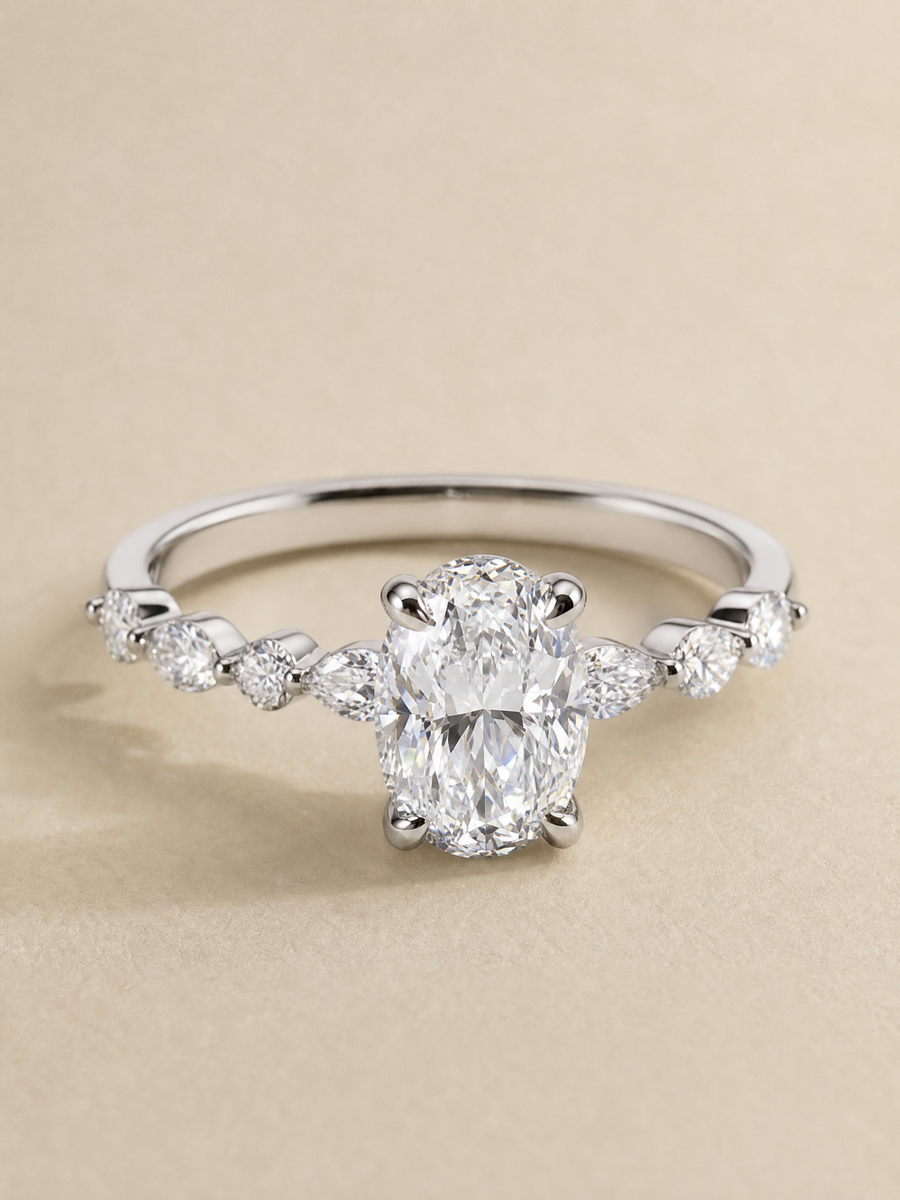
Platinum 950 Oval Brilliant Lab-Grown Diamond Ring - 1.22 ct Total
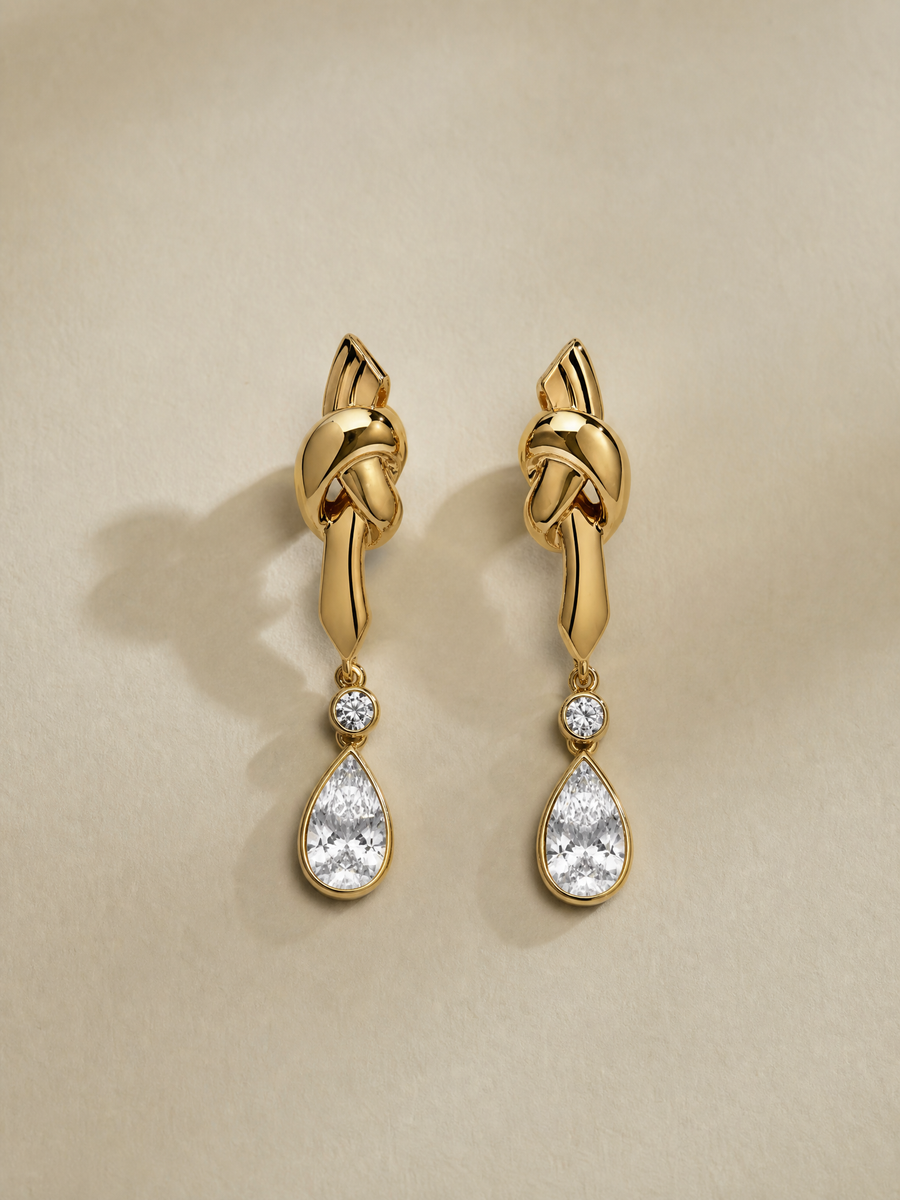
14K Yellow Gold Pear Lab-Grown Diamond Stud Earrings - 2.407 ct Total
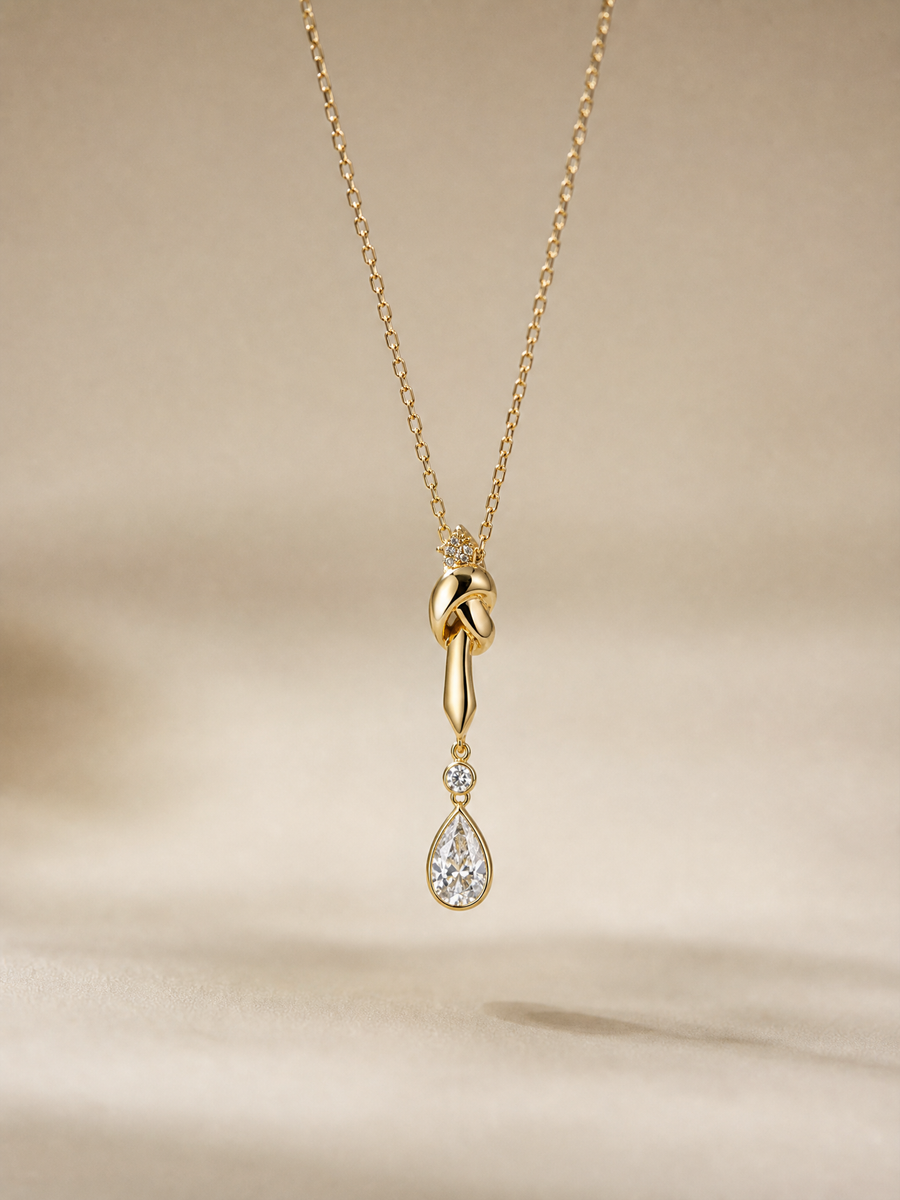
14K Yellow Gold Round Lab-Grown Diamond Necklace - 2.209 ct Total
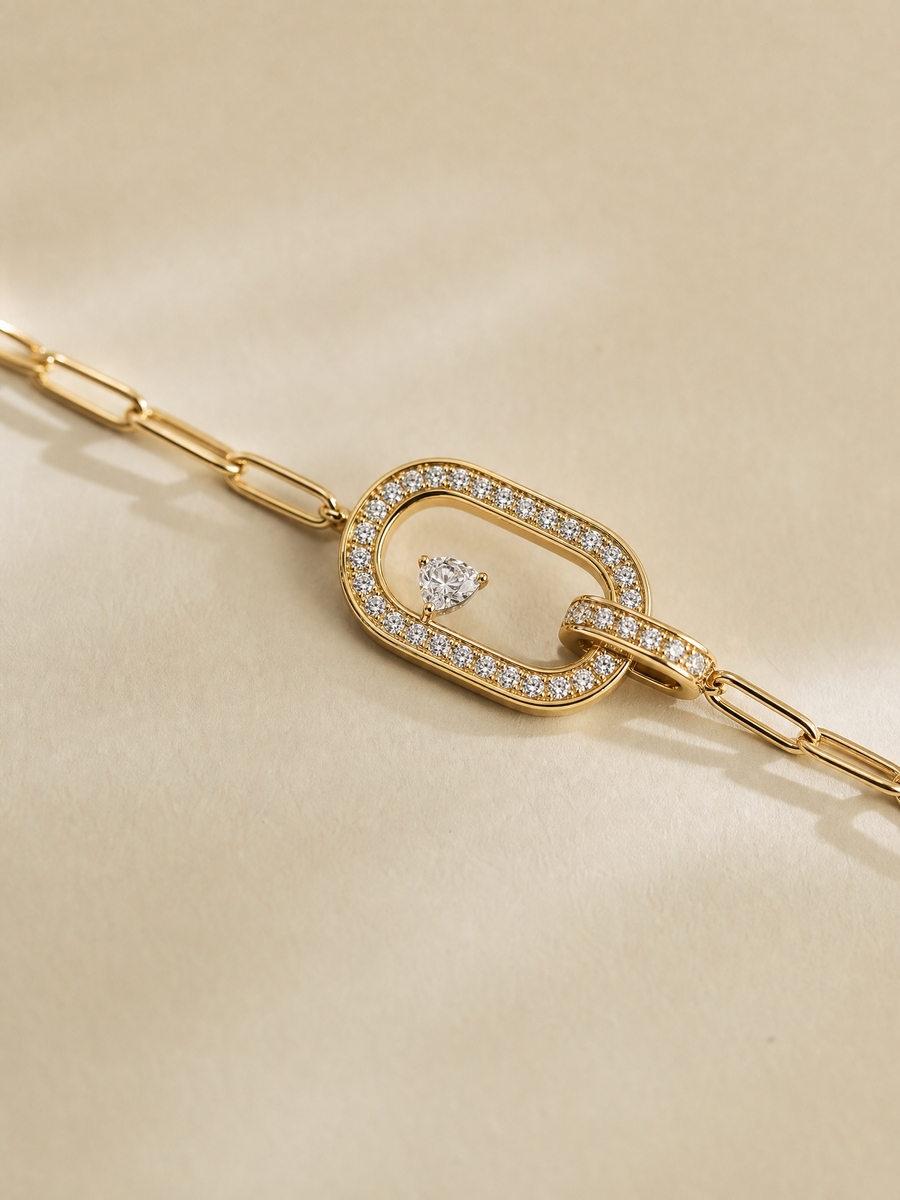
14K Yellow Gold Round Lab-Grown Diamond Bracelet - 0.633 ct Total
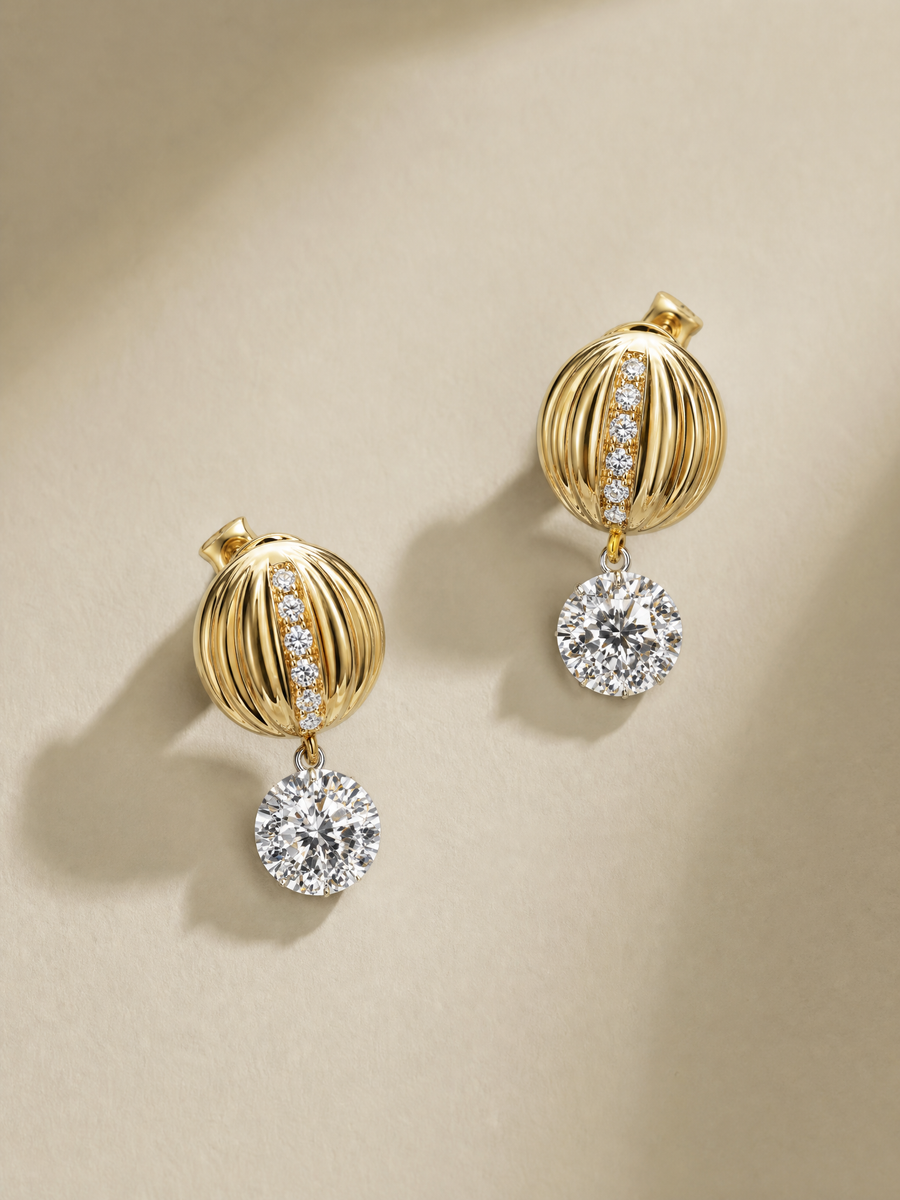
14K Two-Tone Gold Round Lab-Grown Diamond Stud Earrings - 1.654 ct Total
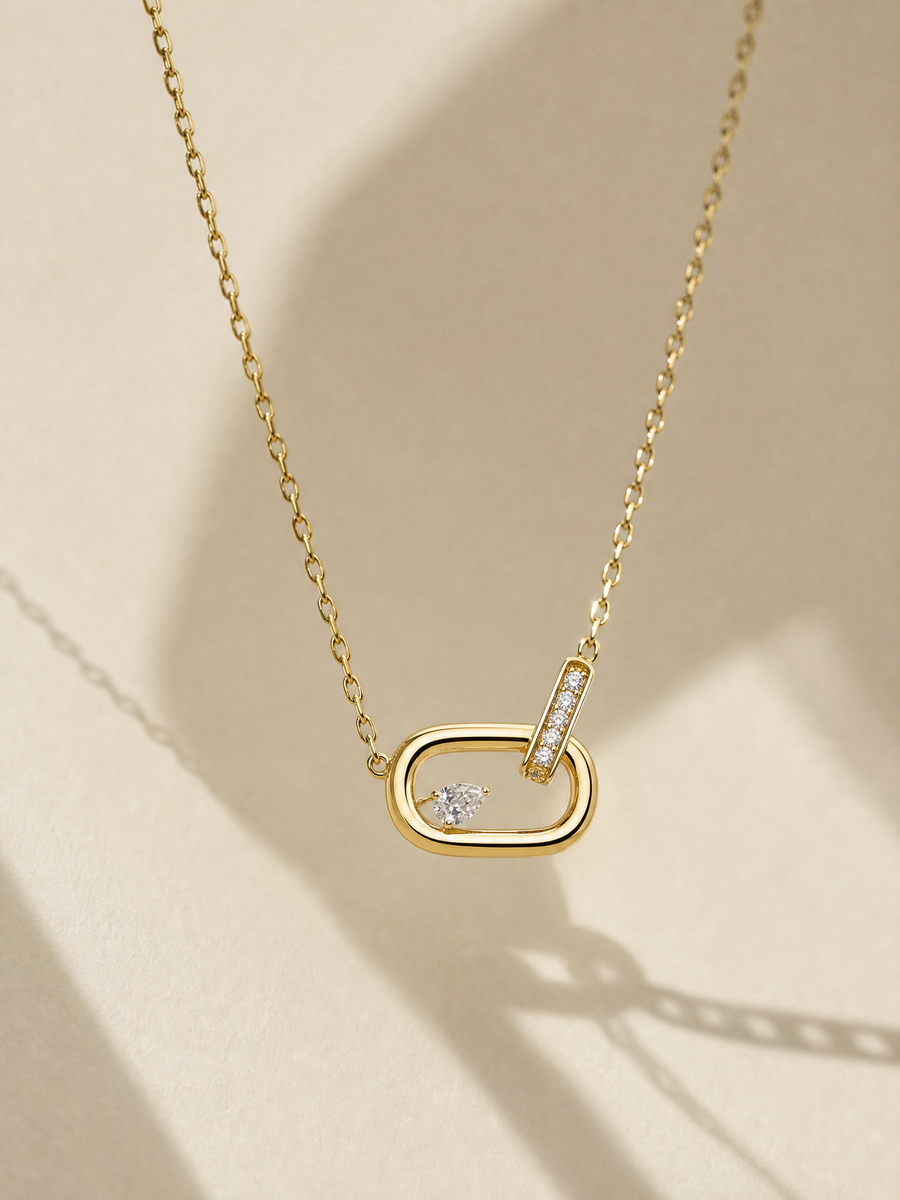
14K Yellow Gold Pear Lab-Grown Diamond Necklace - 0.245 ct Total
One note at a time.
New writing, new stones. Nothing else. Unsubscribe whenever you like.