
September 30, 2026
2026 Holiday Jewelry Gift Guide: Choose a Gift That Feels Like Them
Diamond studs, a pendant or something more expressive: a holiday guide to choosing jewelry through the small details that make someone themselves.

A memorable jewelry gift begins before the box is opened. It starts with noticing: the necklace they wear with everything, the gold they always reach for, the ring they pause over but never buy for themselves.
Our 2026 holiday jewelry gift guide is built around those details. Whether you are choosing diamond earrings, a pendant, a tennis bracelet or a more expressive piece, the aim is to find something that feels at home in the recipient’s life.
Start with their jewelry habits
Look at the pieces they wear repeatedly, rather than the ones they own but leave in a drawer. Do they prefer yellow gold or white metal? Small earrings or a visible drop? A single pendant or several chains? Have they mentioned a metal sensitivity?
Those observations create a better brief than age, an assumed style category or the size of the occasion. Set a comfortable budget, then choose the kind of piece before comparing individual designs. A gift does not need to be the largest item in someone’s collection to become the most worn.
Diamond stud earrings: for someone who loves an easy ritual
Diamond earrings are worth considering when the recipient wears studs regularly. Check that they have pierced ears and favor the type of fastening offered. Notice the scale of their existing earrings; a gift can feel special without being dramatically larger.
Read carat descriptions carefully. “Total carat weight” refers to the diamonds added together. In a simple pair with one matching diamond in each ear, 2 ct total means approximately 1 ct per earring. More elaborate designs can distribute that total across several stones.
Shape, setting and dimensions help explain how a pair will look. Round studs and elongated cuts can have different visual proportions even at similar weights. GIA’s guide to diamond studs also discusses settings and earring backs, useful details to review before choosing.
A diamond necklace: for the person with a signature piece
A diamond pendant necklace can be a thoughtful starting point when you do not know someone’s ring size. You still need to consider fit: compare the chain length with a necklace they enjoy, and check where the pendant will sit with their usual neckline.
If they already layer chains, think about what your gift will add. A different length or a distinct shape may be more useful than another necklace with the same proportions. Confirm whether a chain is included and which metal and length you are purchasing.
A tennis bracelet: for someone who notices the small finishing touches
A tennis bracelet offers a continuous line of diamonds around the wrist. When comparing options, look at bracelet length, individual stone size, total carat weight and the clasp description together.
Measure a bracelet they already find comfortable if you can. Do not assume that a standard length fits everyone, or that two bracelets with the same total carat weight will have the same proportions. If the fit is uncertain, clarify sizing options before ordering.
A ring or colored stone: for a gift with a very specific person in mind
A ring asks for more preparation because fit is part of the choice. Confirm the finger, size system and available size; a size from one hand or finger may not translate to another. For a surprise, a well-chosen shortlist can be more thoughtful than guessing.
For someone already drawn to expressive jewelry, explore High Jewelry through their preferred colors and shapes. This is a personal selection, not a requirement to choose the biggest stone. Consider how the piece will work on its own.

What to know when gifting a lab-grown diamond
Laboratory-grown diamonds are real diamonds, with essentially the same chemical, physical and optical properties as natural diamonds. Their origin is different, so a lab-grown diamond should be described clearly as laboratory-grown rather than natural. GIA explains the distinction.
Keep the product specifications and any supplied grading report with the gift. Details such as metal, stone identity and carat weight should be easy for the recipient to find later.
Your holiday ordering checklist
Before checkout, confirm the selected size, stock or pre-order status, current production and shipping estimates, and the return or exchange terms that apply to that piece. For a date-sensitive gift, ask for timing confirmation before purchasing; availability can differ between variants.
Add a note about why you chose it. A small observation, written in your own words, is often what makes the gift unmistakably theirs.
For a closer look at the stone itself, explore how lab-grown diamonds are made.
Sources & further reading
In the collection
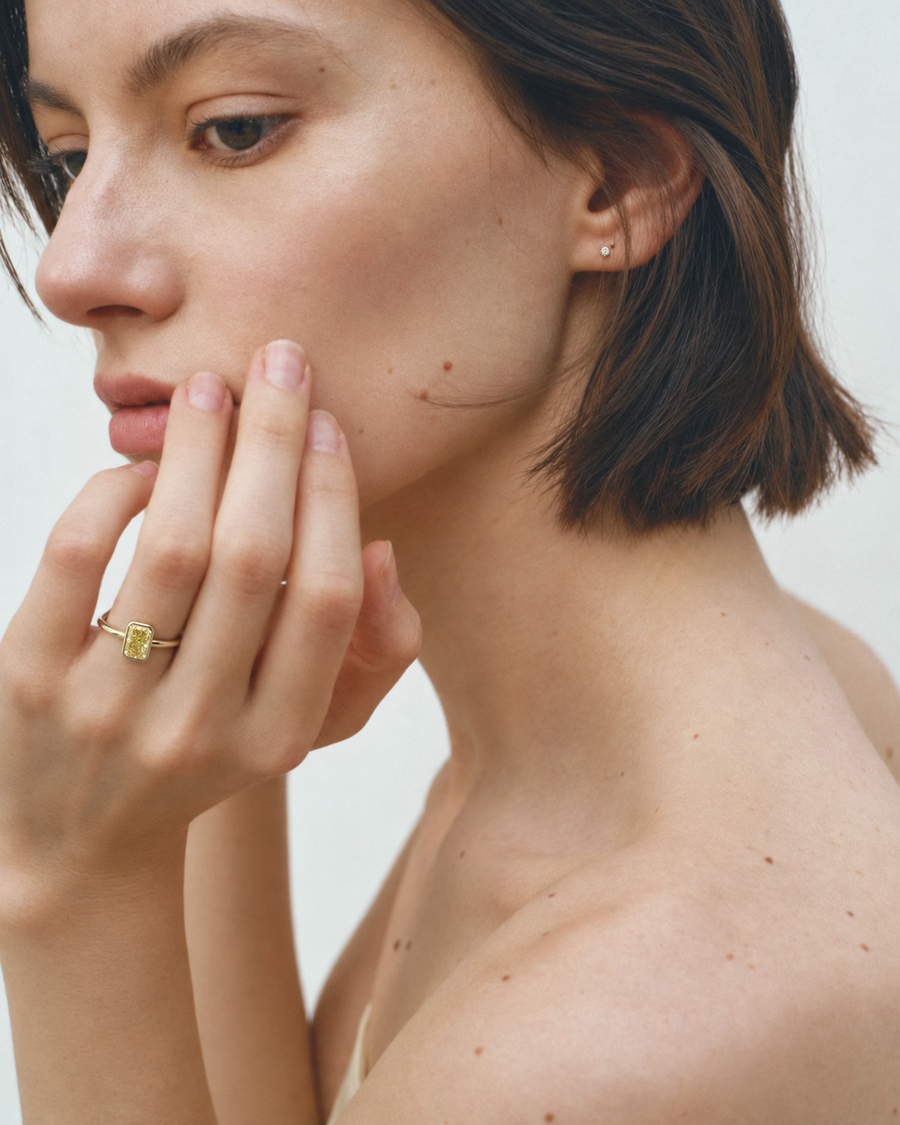
Orbit Yellow Bezel Ring — 18K Yellow Gold Lab-Grown Diamond Ring - 0.473 ct Total

Lien Lumière Necklace — 14K Gold Lab-Grown Diamond Necklace - 0.482 ct Total

18K Yellow Gold Lab Grown Diamond Ring - 0.686 ct Total

Lumière Oval Pendant — 14K White Gold Oval Modified Brilliant Lab-Grown Diamond Necklace - 1.52 ct Total


One note at a time.
New writing, new stones. Nothing else. Unsubscribe whenever you like.