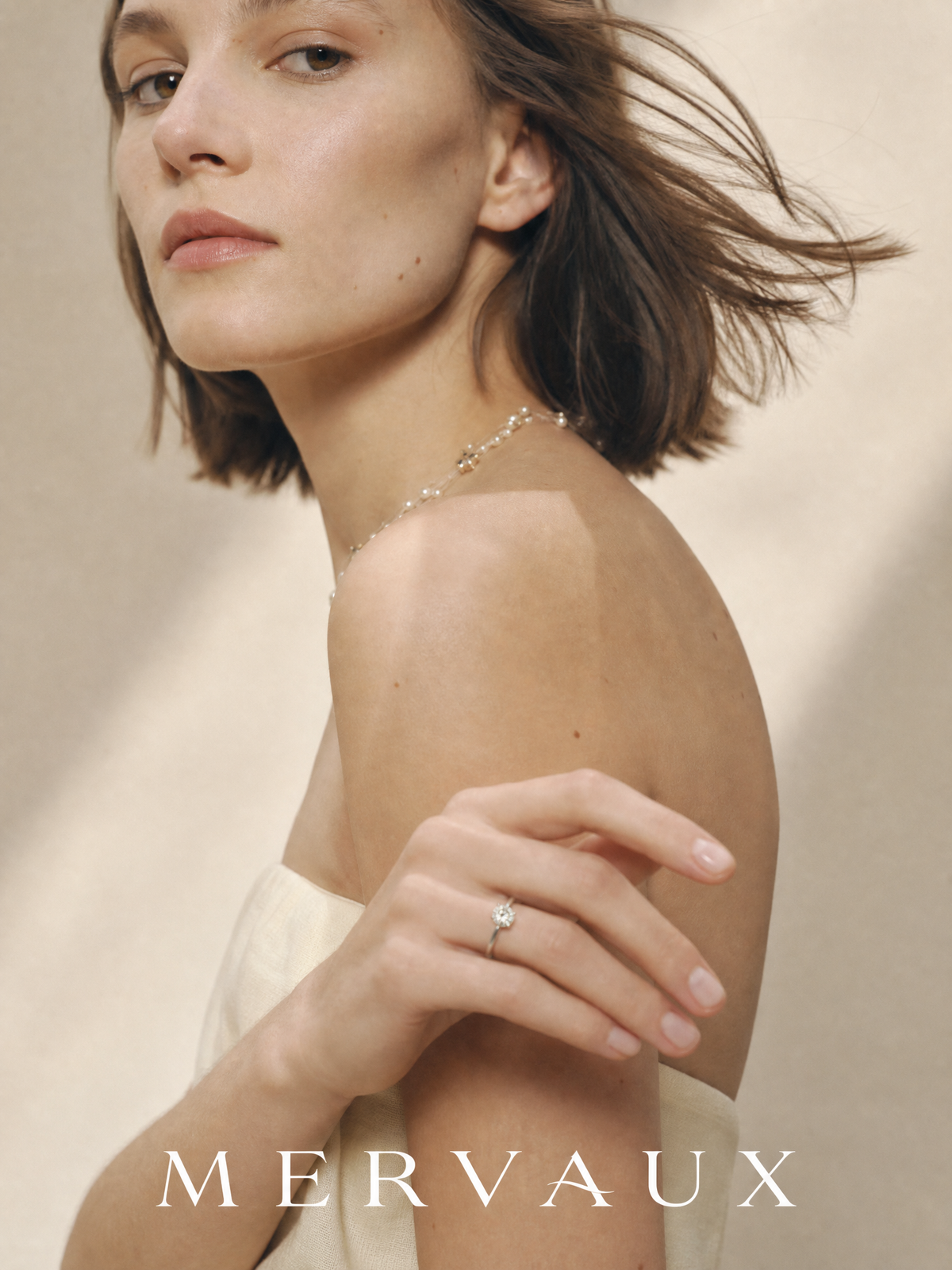
August 27, 2026
Fancy Color Diamond Grades Explained
Fancy color grades describe how much color a diamond shows. The ladder runs Faint, Very Light, Light, Fancy Light, Fancy, Fancy Intense, Fancy Vivid, with Fancy Deep and Fancy Dark alongside.
Cover image
3:4 portrait · 1536 × 2048 px or larger. Set it on the post in Admin → Content → Blog posts → Featured image.
Fancy color grades describe how much color a diamond shows, not which color it is. The ladder runs Faint, Very Light, Light, Fancy Light, Fancy, Fancy Intense, Fancy Vivid, with Fancy Deep and Fancy Dark sitting alongside rather than above. Fancy Vivid is the most saturated grade. It is not the darkest one.
That last distinction is where most buyers get turned around, and it costs real money.
What are the fancy color diamond grades, in order?
From least color to most: Faint, Very Light, Light, Fancy Light, Fancy, Fancy Intense, Fancy Vivid, then Fancy Dark and Fancy Deep. GIA publishes them in exactly that sequence.
What each step looks like
Faint, Very Light and Light are barely-there: against white paper you would call the stone tinted, not colored. Fancy Light is the first grade where a stranger across a table names the color unprompted. Fancy is unambiguous. Fancy Intense is where the color carries the stone rather than decorating it. Fancy Vivid is the cleanest, strongest expression of that hue the scale recognizes. The steps are not evenly spaced.
Are Fancy Deep and Fancy Dark the top of the ladder?
They point in a different direction. Fancy Vivid means high saturation at a moderate tone: strong, clean color. Fancy Deep and Fancy Dark mean the tone has gone darker, which reads as richness in some hues and muddiness in others. A Fancy Deep yellow can look like honey; a Fancy Dark brown can look like a stone that stopped returning light. Read them as a branch, not a summit.
Where our own stones sit on it
MERVAUX holds stones at Fancy Light, Fancy, Fancy Intense and Fancy Vivid, in pink, yellow and brown. Nothing at Faint or Very Light, so this is not a tour of the whole ladder. Blue exists here as one finished ring in solid 18K gold, not a loose stone.

Fancy color lab grown diamonds laid in a row and lit identically, stepping from a pale cast through to a fully saturated colour.
Why do two diamonds graded Fancy Pink look nothing alike?
Because the grade compresses three measurements into one word, and two stones can reach that word from different places. IGI grades color in three dimensions: hue, tone and saturation. Only hue is named separately; tone and saturation are folded into the single term on the report.
Hue is which color, and it is often more than one word
Hue is the color impression itself: pink, yellow, blue, brown. Very few diamonds are one clean hue. Most carry a second, which the report names as an adjective before the main color.
Tone is how light or dark the stone is
Tone runs light to dark and says nothing about how strong the color is. Two stones can be identically saturated and read completely differently because one is pale, the other deep.
Saturation is how much color is actually there
Saturation is the strength and purity of the hue, or how far it sits from gray. This is the axis Fancy Vivid measures, and the axis that photographs worst.
Put those together and Fancy Pink is a zone, not a point. Our 2.57 ct Fancy Light Pink princess and our 2.57 ct Fancy Pink cushion are the same weight, one grade apart, and do not read as versions of the same stone. Step once more, to the 2.15 ct Fancy Intense Pink oval, and the color stops being a quality of the stone and becomes the first thing you see.
What "Brownish Yellow" tells you that "Yellow" does not
It tells you a second hue is present and which one is dominant. Modifiers come first, ending in -ish or -y; the dominant hue comes last. "Brownish Yellow" is a yellow stone with brown in it. "Orangy Pink" is a pink stone with orange in it. Reverse the order and you have described a different stone.
Our 2.25 ct Fancy Intense Brownish Yellow radiant is the useful example, because the grade sounds like a downgrade and is not one. It sits at Fancy Intense, the same saturation step as our 2.32 ct Fancy Intense Yellow pear. Brown does not weaken the color there, it warms it. Compare the 3.09 ct Fancy Intense Brown princess, where brown is dominant rather than modifying, and what the word order does becomes visible in a second.
Why aren't fancy color diamonds cut as round brilliants?
Because a cutter working with colored rough orients the stone to build color, not to return white light. GIA puts it directly: colored diamonds are cut to maximize the intensity of their color rather than to maximize light return, and the best cut is the one giving the most attractive face-up color.
A round brilliant works against you here
Everything the round brilliant does well is aimed at white light. Its proportions shorten the path light takes through the stone and break it into flashes, which is the entire point in a colorless diamond and dilution in a colored one. GIA notes that yellow diamonds show more intense face-up color when cut in a shape other than round.
The shapes that hold color
Deeper pavilions and longer light paths give color more room to develop, which is why the same shapes keep appearing: radiants, cushions, ovals and princess cuts. GIA singles out mixed cuts like the radiant as intensifying yellow in particular.
What our own stones show
Every fancy color stone named in this article is a princess, a cushion, an oval, a pear or a radiant. Not one is a round. That is decided upstream, at the cutting wheel, not on a merchandising spreadsheet. Our 2.05 ct Fancy Vivid Yellow radiant is the clearest case: radiant is the shape that gets a yellow to Vivid and holds it face-up.
Does the metal you set it in change the color you see?
Yes, more than most people expect. A diamond reflects whatever surrounds it, so the mounting is part of the color. GIA states plainly that the color of the metal will affect a diamond's appearance.
Solid yellow gold under yellow stones, solid rose gold under pinks
Setting a stone in a metal of its own hue makes the color read fuller. A Fancy Intense Yellow in solid yellow gold shows more yellow than the same stone in white metal, because the mounting feeds that hue back through the pavilion. Solid rose gold does the same for a Fancy Light Pink, which is how a Fancy Light is made to look a grade higher. That cuts both ways: warm metal is also how a weak color is made convincing in a photograph.
When white metal is the better call
Solid white gold and Platinum 950 do the opposite. They give the eye a neutral reference, so the color reads as the stone's own rather than as part of the setting. If you want the honest version of what you bought, set it white. If the stone is already Fancy Intense or Fancy Vivid, white metal usually flatters it more: a Vivid needs no help, and contrast sharpens it.
The blue, as a worked example
Our 3.803 ct Fancy Intense Blue oval ring is set in solid 18K gold. Blue has no warm metal that agrees with it, so the choice is neutral, which disappears, or warm, which argues. This one argues.
What does the report tell you about how the color got there?
More than most people read. In a lab grown diamond, color is either grown in or added afterward, and the report is where that distinction is recorded.
Yellow and blue are usually grown in
Yellow comes from nitrogen, which absorbs blue wavelengths so that what passes through reads yellow. Blue comes from boron. GIA describes both as growth chemistry: nitrogen turns diamonds yellow and had to be kept out of the environment to grow colorless material, while adding boron results in blue crystals.
Pink is usually made after growth
GIA is equally direct: colors such as pink and red can be produced by post-growth treatment processes that involve radiation and heating. With a lab grown pink, assume the color was created after the stone finished growing, and use the report to confirm rather than guess. That is not a defect and not a trick. It is how the color exists at all, and what matters is that the step is disclosed.
Where the disclosure appears on an IGI report
In the comments. IGI states that any permanent treatment will be noted in the comments section, and that lab grown stones carry an "LG" prefix laser-inscribed on the girdle ahead of the report number. IGI's own announcement describes reports reading "as grown with no indication of post-growth treatment" where that applies. Read that field first. Our guide to reading an IGI report covers the rest.
One thing worth knowing, since we are a store telling you which lab our stones come from: GIA announced in 2025 that it would stop applying its natural-diamond color and clarity nomenclature to lab grown diamonds, moving to descriptive categories. The announcement did not address fancy color. Every stone we sell carries an IGI report, which is why the grade language here is IGI's. We compare the labs in IGI vs GIA.
How do you choose between two grades?
Decide hue first, face-up size second, grade last. That order sounds backwards, and it is the one that produces stones people keep wearing.
Compare in the same light, at the same size
Two grades are only comparable side by side, under one light source, at matched face-up dimensions. A larger stone at Fancy will often out-read a smaller one at Fancy Intense. Grade is intensity per unit of stone; what you see is intensity times area.
One step down is often the better stone
The gap between Fancy Intense and Fancy Vivid is real, and it is the gap the market prices hardest. If the choice is a Fancy Vivid at a size that disappears on your hand or a Fancy Intense with presence, take the presence. Our Fancy Intense Yellow pear and Fancy Vivid Yellow radiant sit a quarter carat and one grade apart, and which is the better buy is a question of which you would rather look at.
What the grade cannot tell you
It cannot tell you whether the color suits the way you live, and it does not rank you for choosing one. Color expresses a state. It never labels the person. A grade measures a stone under controlled light. Any guide that tells you what a yellow diamond says about you has stopped describing the object.
If you would rather work through hue, shape and size against your own hand than against a chart, start with the stone.
Where this gets unreliable, including on our own site
Photographs of fancy color diamonds are not trustworthy evidence of color. Ours included.
Three things move independently. Lighting: saturation photographs stronger under warm light, weaker under cool. White balance: a camera correcting for the background drags the stone's hue with it. Background: a white ground makes a pale stone look paler, a warm ground lends color the stone does not have. Then the same file renders differently on two screens, most of them phones running adaptive brightness.
A Fancy Light photographed well can look like a Fancy. A Fancy Vivid photographed badly looks flat. Nobody has to be acting in bad faith for this to happen.
What to do about it:
- Read the grade, not the image. It is the only part of a listing produced under controlled light by someone who was not selling you the stone.
- Ask for video, and ask what light it was shot in. Ten seconds of movement tells you more than any still.
- Compare only within one seller's photography. Two stones shot in the same studio are comparable. A stone here and one elsewhere are not.
- See it in person before committing to a Vivid. The higher the grade, the more of the money rests on something a screen cannot carry.
Common questions
Is a Fancy Vivid yellow diamond better than a Fancy Intense? It is more saturated, which is a specific claim rather than a general one. Which suits you depends on size, shape and setting metal.
Do lab grown colored diamonds get the same color grades as natural ones? The IGI vocabulary is the same and rests on the same hue, tone and saturation framework. The report also states color origin as laboratory grown and discloses permanent treatment.
Is a treated pink diamond still a real diamond? Yes. Treatment changes color, not material. It is diamond before and after, and the treatment is disclosed on the report rather than hidden in it.
What does "FIB" mean on a listing? Trade shorthand for Fancy Intense Blue. It turns up in tags and inventory fields, including on our own blue ring, though grade language belongs on the report, not a product tag.
The rule worth carrying out of this: choose the hue you would look at every day, buy the largest face-up stone that still shows that hue clearly, and let the grade land where it lands. The ladder describes what you are seeing. It was never meant to decide it for you. Everything we hold in color is listed with its grade, its shape and its report.
In the collection
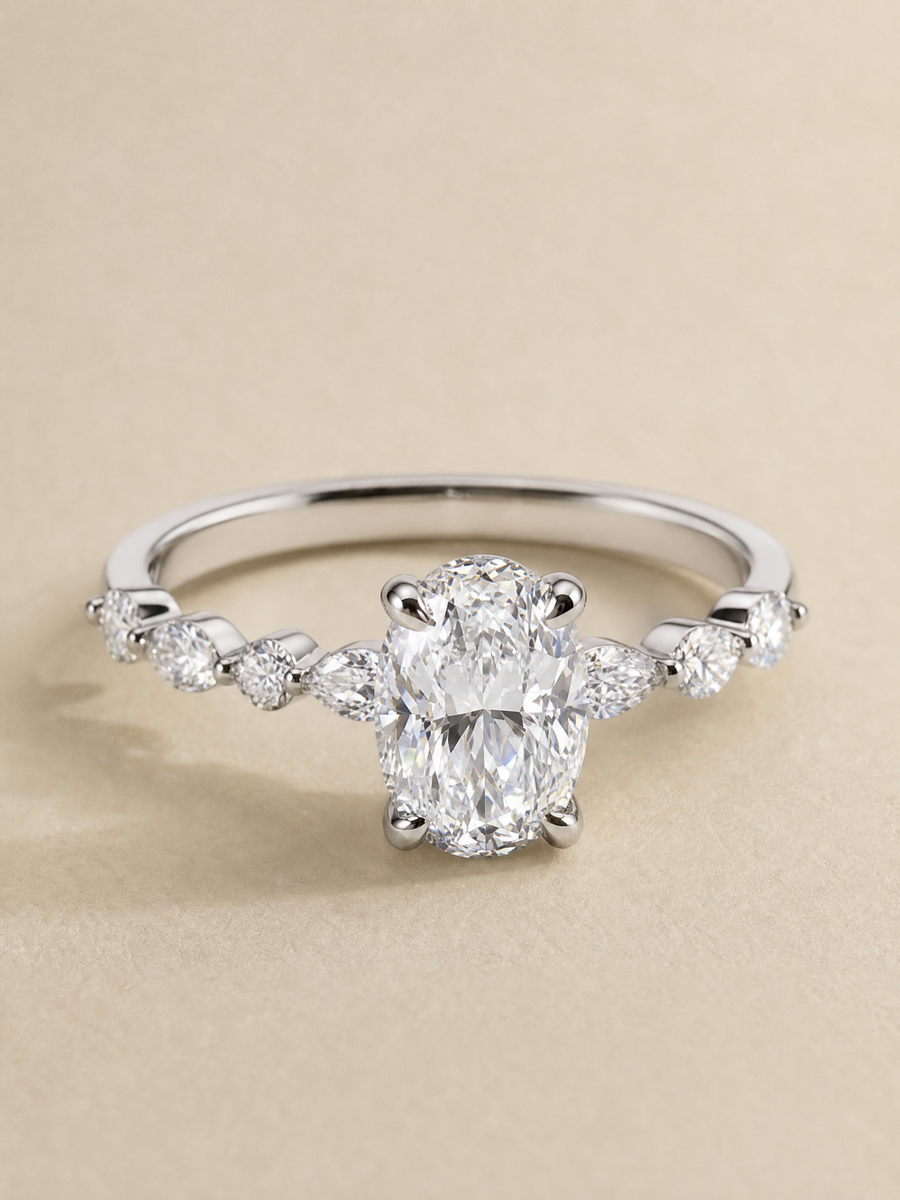
Platinum 950 Oval Brilliant Lab-Grown Diamond Ring - 1.22 ct Total
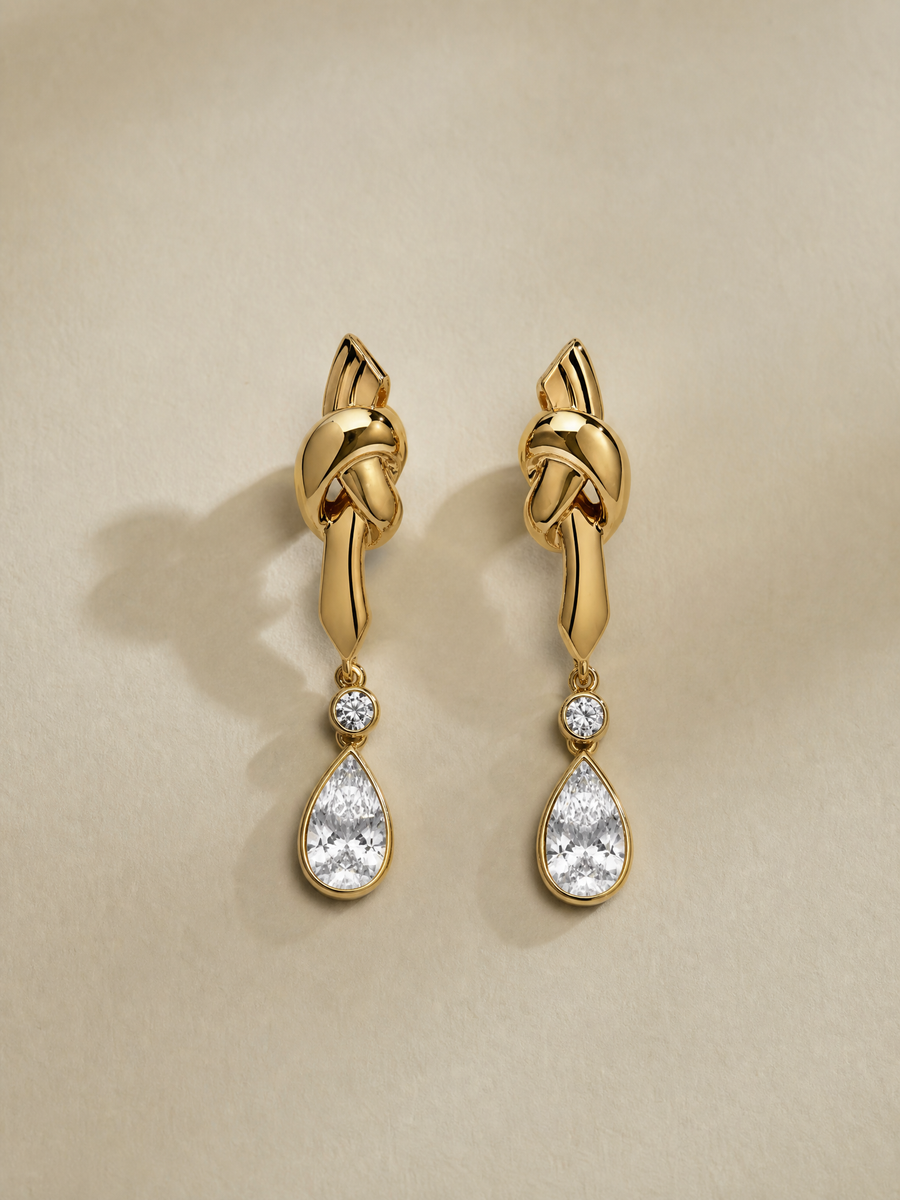
14K Yellow Gold Pear Lab-Grown Diamond Stud Earrings - 2.407 ct Total
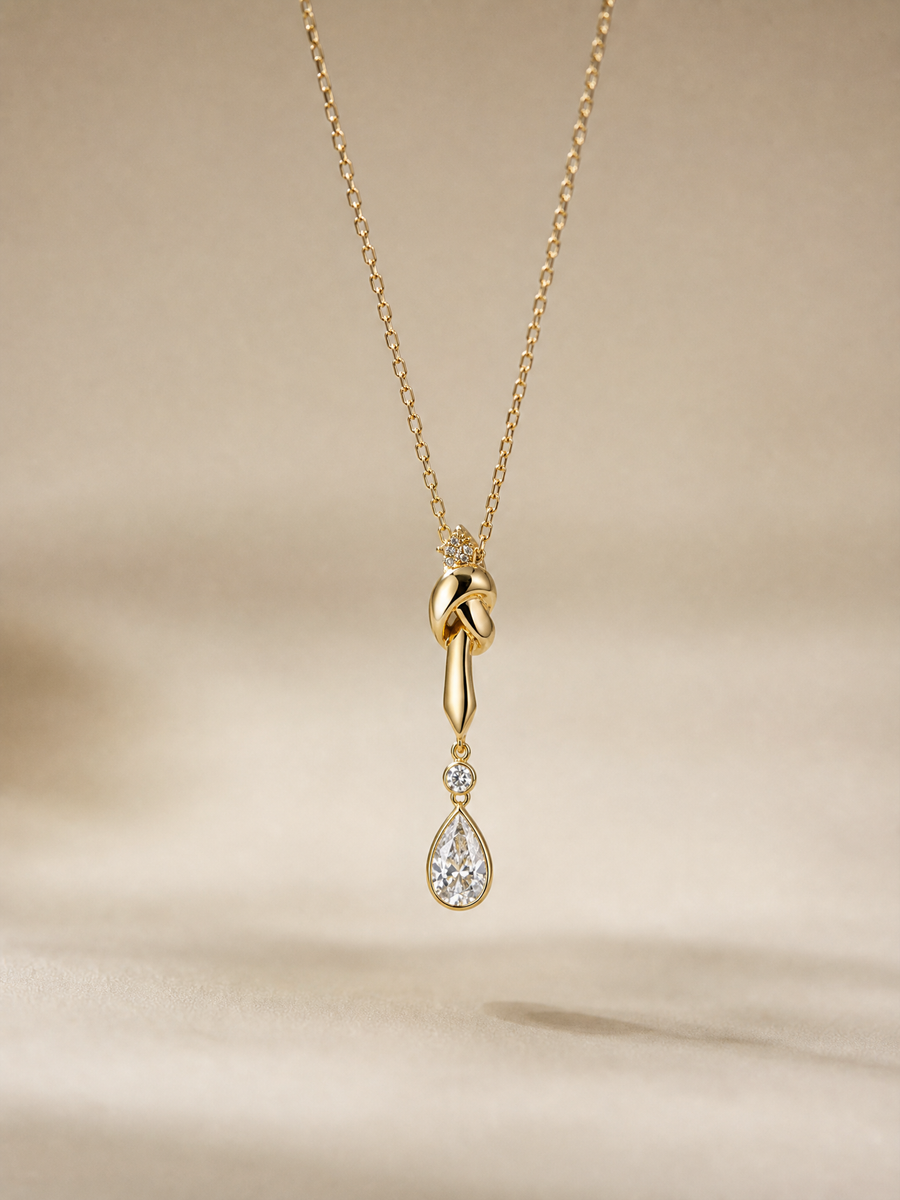
14K Yellow Gold Round Lab-Grown Diamond Necklace - 2.209 ct Total
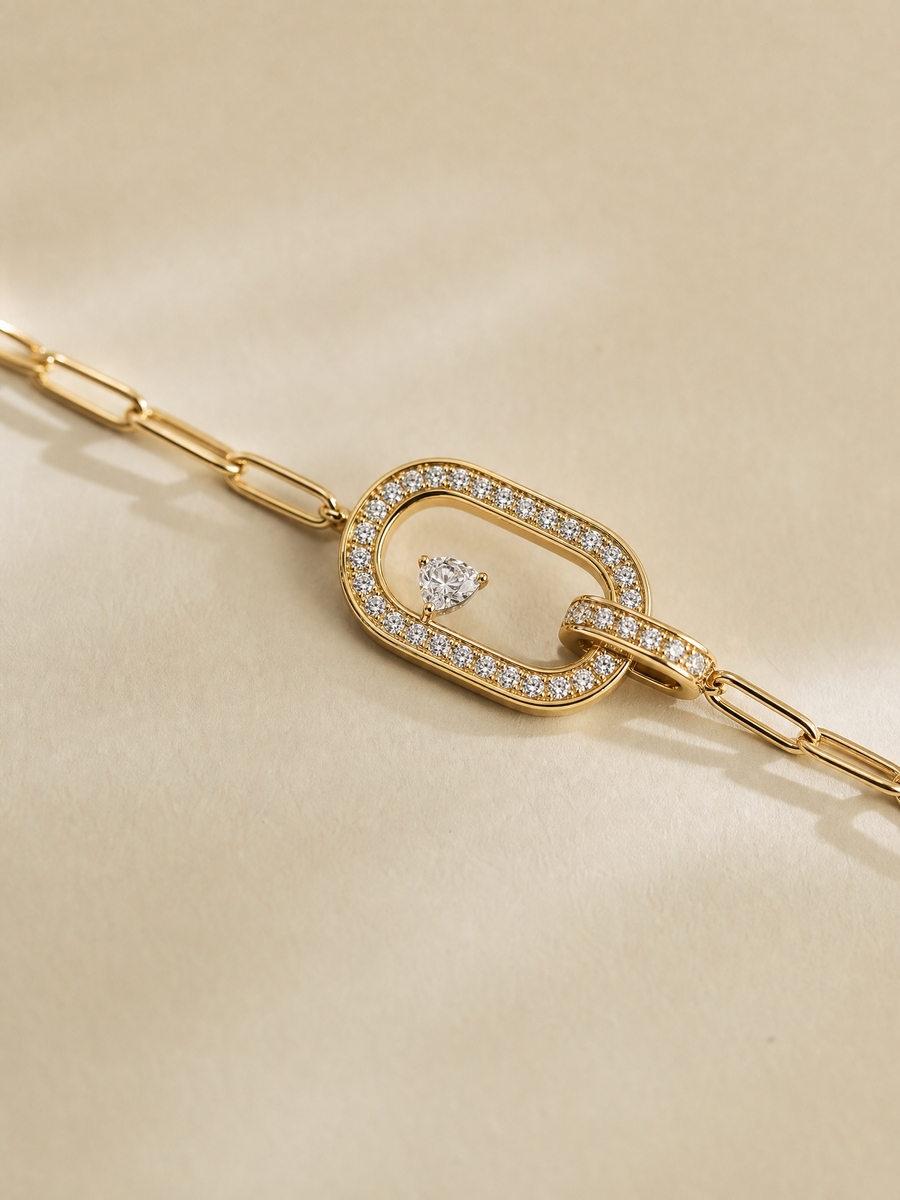
14K Yellow Gold Round Lab-Grown Diamond Bracelet - 0.633 ct Total
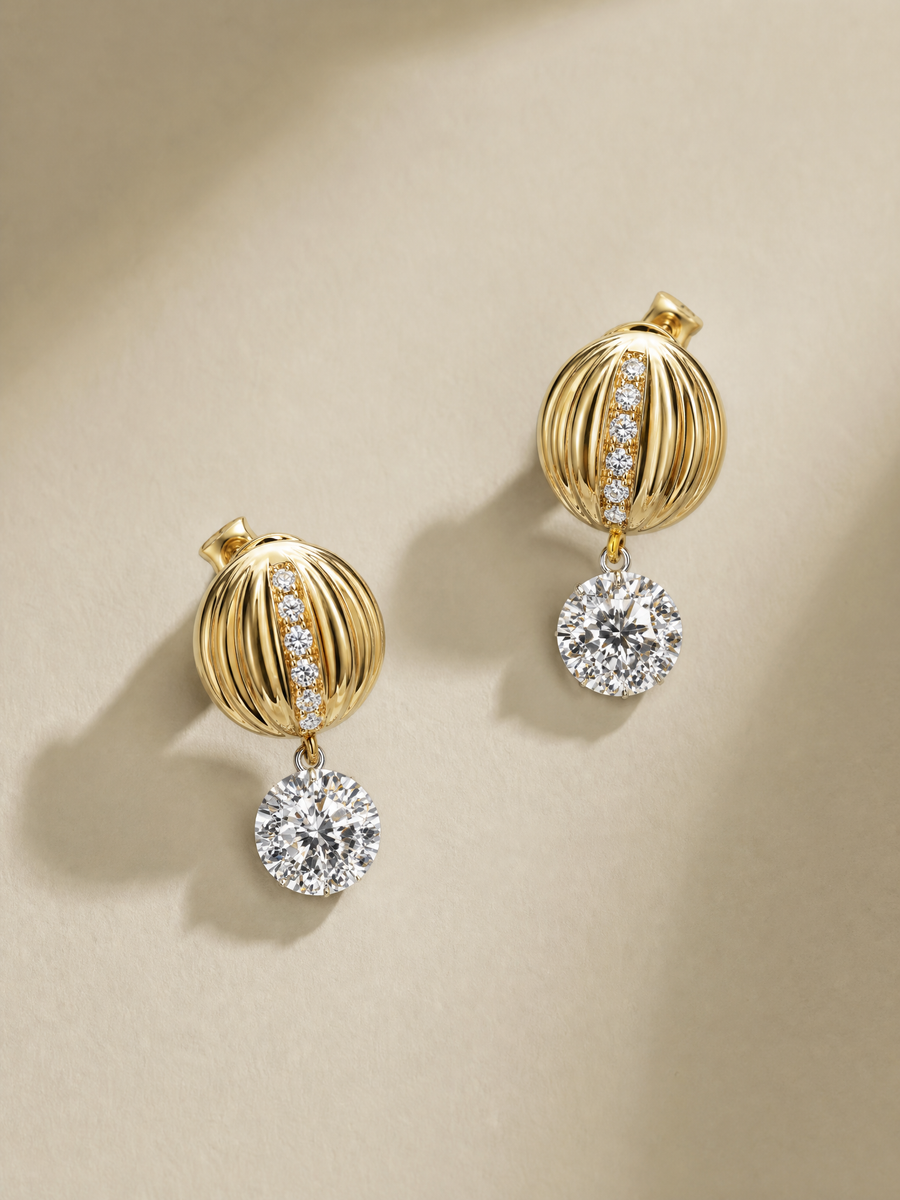
14K Two-Tone Gold Round Lab-Grown Diamond Stud Earrings - 1.654 ct Total
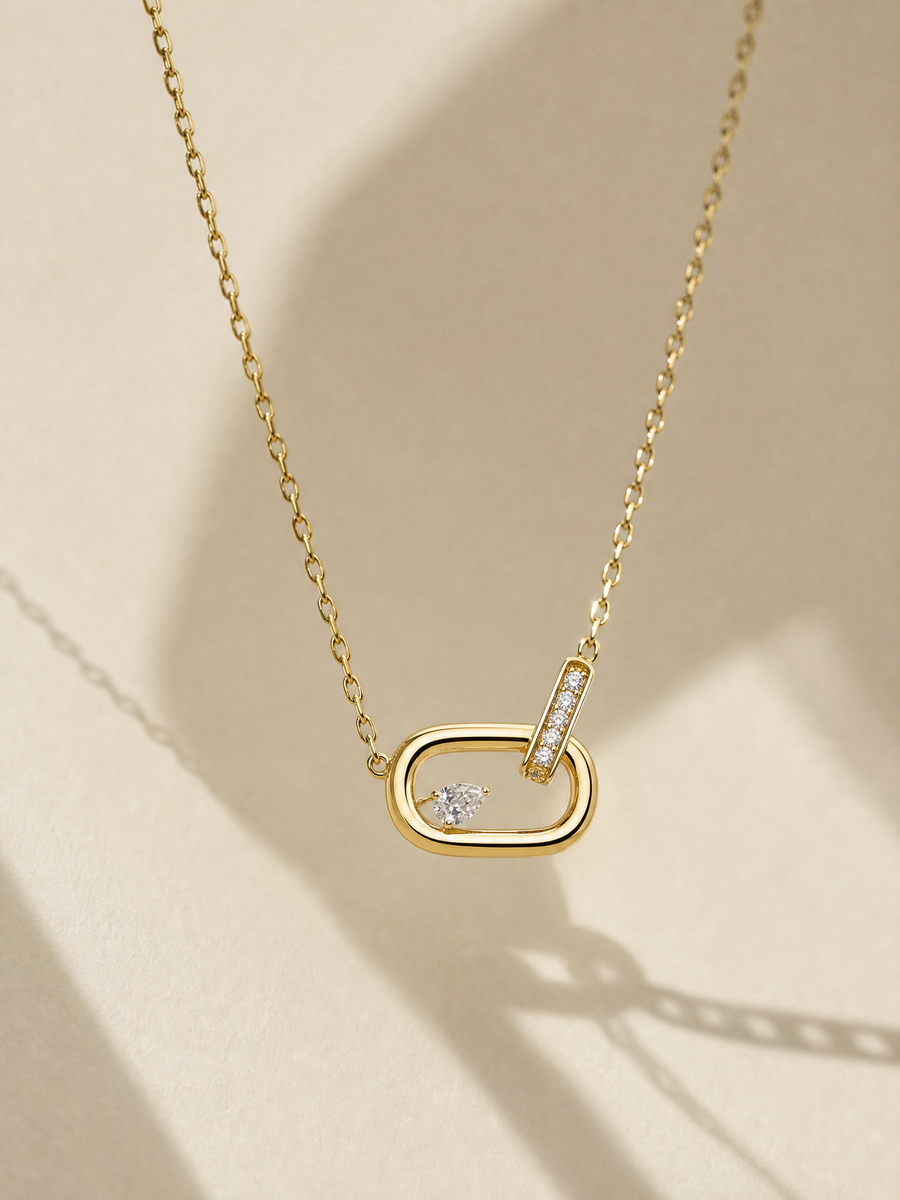
14K Yellow Gold Pear Lab-Grown Diamond Necklace - 0.245 ct Total
One note at a time.
New writing, new stones. Nothing else. Unsubscribe whenever you like.