August 27, 2026
How to Read an IGI Lab Grown Diamond Report
An IGI Laboratory Grown Diamond Report carries about a dozen fields. Only four change what you actually see: cut, color, clarity and the measurements. Read those first, then the rest in order.
An IGI Laboratory Grown Diamond Report carries about a dozen fields. Only four change what you actually see: the cut grade, the color grade, the clarity grade, and the measurements in millimeters. Everything else is identity, craftsmanship detail, or disclosure. Read those four first, then the rest in the order the document prints them.
Every field and procedure below was checked against igi.org and live report PDFs on August 27, 2026.

A laboratory grown diamond report read the way it is meant to be read, with the stone in hand and the report number checked first.
What is actually on an IGI lab grown diamond report?
The document is called a Laboratory Grown Diamond Report
That is its real name, printed across the top, and the phrase to use when you ask a seller for one. IGI describes it as covering "shape, cutting style, measurements and 4Cs assessments" (igi.org). The lab does not call it a certificate. A certificate asserts; a report records an opinion.
The specimen below is a stone we hold, a 2.01 ct D VVS2 round brilliant. Its report number lives on the listing, because a number belongs to one stone.
The report number and date make everything else checkable
What it says. A number beginning with LG on current reports, plus an issue date. A live report dated February 19, 2026 carries LG776604465 (pdf.igi.org).
What it means. Standards move, so the date tells you which rules applied. IGI extended cut grading to fancy shapes in September 2022 and added treatment wording in 2021.
What to check. That the same number appears in three places: paper, stone, listing.
Description, shape and cutting style are identity, not quality
What it says. Description reads "Laboratory Grown Diamond". Shape and Cutting Style reads "Round Brilliant" or "Cushion Modified Brilliant".
What it means and what to check. The specimen reads Round Brilliant. A brilliant cut returns light in flashes; a step cut behaves like a hall of mirrors, so an Asscher at identical grades looks nothing like it. Confirm the named shape matches the proportions diagram.
Measurements is printed in millimeters, and it decides size
What it says. Three numbers, like "8.01 - 8.05 X 5.06 MM": minimum diameter, maximum diameter, depth. On fancy shapes, length by width by depth.
What it means. Carat is weight, and weight hides below the girdle. Millimeters across the top is what sits on a hand.
What to check. This field, not carat weight, when comparing stones. A verified IGI report on a 2.01 ct round gives about 8.0 mm across; one at 7.8 mm is carrying weight downward.
What do carat, color, clarity and cut actually tell you?
Carat Weight is mass, printed to two decimals
What it says. "2.01 Carats". One carat is 0.2 grams, fixed by definition.
What it means and what to check. Prices step hard at round numbers, so 2.01 and 1.98 cost differently and look identical. Decide whether that step was worth paying for, since Measurements already gave you the size.
Color Grade runs D to Z, or leaves the scale for a Fancy grade
What it says. A single letter. IGI's printed chart groups them D–F colorless, G–J near colorless, K–M slightly tinted, N–R very light, S–Z light (IGI chart).
What it means. The letter records absence of tint, judged face-down against white in controlled light. Set and worn, adjacent letters are hard to tell apart. The specimen reads D, top of the scale.
What to check. Whether you are paying for a comparison you will never run again. A stone with real color leaves this ladder for a Fancy grade: see how fancy color grades work and a 2.15 ct Fancy Intense Pink oval.
Clarity Grade runs from IF down to I3
What it says. IGI's chart prints the ladder as I.F., VVS1, VVS2, VS1, VS2, SI1, SI2, I1, I2, I3.
What it means. The grade records what a trained grader sees at 10x magnification, not what you see. The specimen reads VVS2, which sits two rungs above VS1 on paper and is indistinguishable from it by eye on almost every stone.
What to check. Where the inclusions sit, not the letter. A VS2 with everything under the crown beats a VVS2 with a pinpoint under the table. VVS versus VS clarity goes deeper.
Cut Grade is the field most often misread
What it says. For a round brilliant, Excellent, or Ideal on IGI's Hearts and Arrows reports. For fancy shapes, a grade on a scale IGI describes as running Excellent to Poor.
What it means. Cut is the only one of the four about workmanship, and it decides whether the stone looks alive. Since September 2022 IGI has graded cut on fancy shapes: pear, oval, marquise, princess, heart, emerald, square emerald and two cushion variants (IGI). The specimen is a round, so its line is filled in.
What to check. Whether the field is filled in at all. Every stone we sell carries one of these reports, so the field is checkable before you buy. On many fancy-shape reports, and almost all older ones, it is blank. A blank cut grade means no grade was issued, not that the cut is poor. A fancy-shape Excellent is also not the same measurement as a round Excellent, so compare rounds to rounds and ovals to ovals (oval versus round).
What do polish, symmetry, fluorescence and the comments line mean?
Polish and Symmetry are two separate craftsmanship grades
What it says. Two words, each on IGI's finish scale: Excellent, Very Good, Good, Fair, Poor.
What it means and what to check. Polish grades the surface finish of the facets; symmetry grades whether facets meet where they should. Both feed the round brilliant cut grade and print separately, so you see which one moved.
Fluorescence describes a reaction to ultraviolet light, and usually reads None
What it says. None, Faint, Medium, Strong, or Very Strong. Both verified sample reports read "NONE".
What it means and what to check. Some diamonds glow, most often blue, under UV, and in ordinary light it makes no difference in the large majority of cases. Act on it only if it reads Strong or Very Strong, by asking to see the stone in daylight.
Growth method and post-growth treatment live in Comments, and only on request
What it says. Sentences inside the Comments field. Growth method reads "This Laboratory Grown Diamond was created by Chemical Vapor Deposition (CVD) growth process. Type IIa", or the HPHT equivalent. Type IIa is a classification of nitrogen content, not a quality grade. Treatment reads either "as grown with no indication of post-growth treatment" or "may include post-growth treatment", wording IGI introduced in January 2021 (IGI).
What it means. These are not standing fields. IGI states that "upon request the growth process used and presence of treatments will be noted in the comments section" (igi.org). Treatment usually means HPHT or LPHT processing to remove brown color, which IGI says "alters the gemstone's structure" and is permanent (igi.org).
What to check. The exact phrase, because "as grown" and silence differ. Whether CVD or HPHT changes the diamond is covered in are lab grown diamonds real.
How do I read the proportions diagram and the clarity plot?
Table percentage and depth percentage are the two numbers that matter most
What it says. A cross-section outline with numbers leadered to it: Depth %, Table %, and on many reports Crown Angle, Pavilion Angle, Girdle and Culet.
What it means. Table percentage is the top facet's width divided by the average girdle diameter; depth percentage is total height divided by that diameter. Both are ratios, so they compare across sizes. Too deep and weight hides in the belly, so the stone reads small for its carat; too shallow and light escapes through the pavilion. A large table buys brightness at the cost of the crown facets that make fire.
What to check. Resist a single magic number; IGI publishes none. Its round brilliant guidelines tabulate tables from 50% to 65% against pavilion angles from 40.0° to 42.4° (IGI). Two real reports, both Excellent, show the spread: a 2.01 ct round at 62.9% depth and 57% table, a 6.00 ct round at 59.8% depth and 62% table (LG749587738). Use the diagram to explain a cut grade, not to overrule it.
The clarity plot maps the inclusions and the Key to Symbols names them
What it says. Two outlines, crown and pavilion, marked with colored symbols, plus a legend headed "KEY TO SYMBOLS".
What it means and what to check. Red symbols are internal characteristics, green are external, and the legend names them: crystal, feather, needle, pinpoint, cloud. Look for anything plotted under the table.
Where is the laser inscription, and how do I check the report is real?
The inscription sits on the girdle and repeats the report number
What it says. The Inscription(s) field shows the IGI logo mark followed by the report number, for example "LG776604465".
What it means. IGI's Laserscribe service inscribes "the girdle or outside circumference" of the stone, the band at its widest point, and says this "permits fast identification of a gemstone under magnification" (igi.org).
What to check. Ask the jeweler to show it under their microscope before you pay. IGI publishes no required magnification and a pocket loupe is often not enough. Anyone selling a certified stone can scope it in a minute; if nobody will, that is your answer.
Verifying the report on igi.org takes about thirty seconds
- Go to igi.org.
- Click Verify Report in the top header. The same link sits in the footer and on the hero.
- Enter it in the field marked Report Number and click Verify. With the paper in hand you can Scan QR Code instead; sellers can use SKU Lookup.
- Compare the screen against the paper, field by field: carat, color, clarity, measurements, comments.
The point is not that the number resolves. It is that the fields match. A real number attached to a different stone surfaces line by line.
What the report does not contain
There is no price and no valuation. There is no authenticity guarantee for the setting: a loose-stone report says nothing about the solid 14K or 18K gold or Platinum 950 it later sits in, and a mounted piece needs its own IGI jewelry report. There is no statement about resale. IGI puts this in writing: the report "provides an opinion by IGI, and neither IGI's original client nor any purchaser of the article shall rely on this report as a guarantee, appraisal, or warranty" (igi.org). On resale, do lab grown diamonds hold value says it plainly.
What do people get wrong when they read an IGI report?
Reading a blank cut grade as a bad cut
It means no cut grade was issued. Fancy shapes only entered IGI's cut grading in September 2022, so an older report has nothing on the line. Judge the cut from the proportions and the symmetry grade.
Reading a missing treatment line as proof of no treatment
Growth method and treatment appear in Comments on request; an empty field tells you what was ordered, not what was done. The sentence you want is "as grown with no indication of post-growth treatment".
Comparing grades across labs as though they were one scale
An IGI VS1 and another lab's VS1 are two opinions applying two sets of standards, and they are not interchangeable. IGI versus GIA sets out how far apart the two documents now are.
What a report cannot protect you from
We sell lab grown diamonds, every one with an IGI report, so read this knowing where we stand. A report grades the stone, not the seller, and it does not tell you whether the price is fair.
Nothing on that page stops a stone with legitimate grades from being sold at twice what it costs elsewhere, or from being set badly in a mounting that loosens. IGI writes down what it observed; the transaction, the setting and the price sit outside its scope. A report is a floor, not a recommendation. It rules out the crude failures: a stone that is not what it was described as, an overstated weight, an undisclosed treatment. Nothing more.
Questions people ask next
Does every lab grown diamond come with one? No. Small accent stones usually do not. Every loose stone and center stone we sell carries one; expect that at this size.
Can a report be faked? The printed page can be. The record on IGI's server cannot be altered by a seller, which is why you type the number in yourself.
Why do two stones with identical grades look different? Four printed grades do not capture everything. Two Excellent-cut D VVS2 rounds can differ in spread and in where inclusions sit. Measurements and the proportions diagram show it.
The rule to take with you
Read the report in two passes. First, four fields: measurements, cut, color, clarity, in the order they change what you see. Second, everything else, looking not for grades but for absences: a blank cut grade, an empty comments line, an inscription nobody will show you. The grades tell you what the stone is. The gaps tell you what to ask before you pay.
The specimen above and a 2.05 ct D VS1 round sit two clarity rungs apart on paper and are not told apart by eye. Our diamonds page explains how we grade, and find your stone is where to start.
In the collection
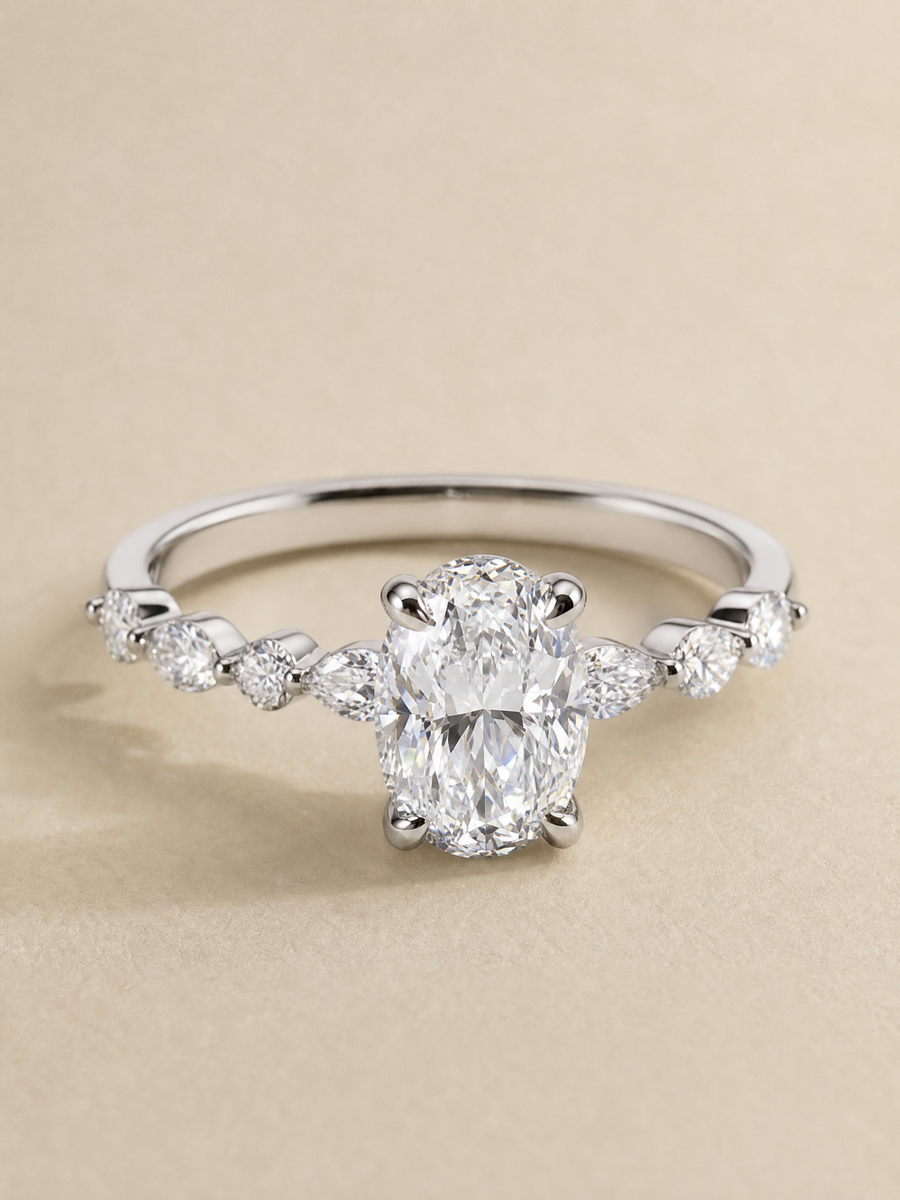
Platinum 950 Oval Brilliant Lab-Grown Diamond Ring - 1.22 ct Total
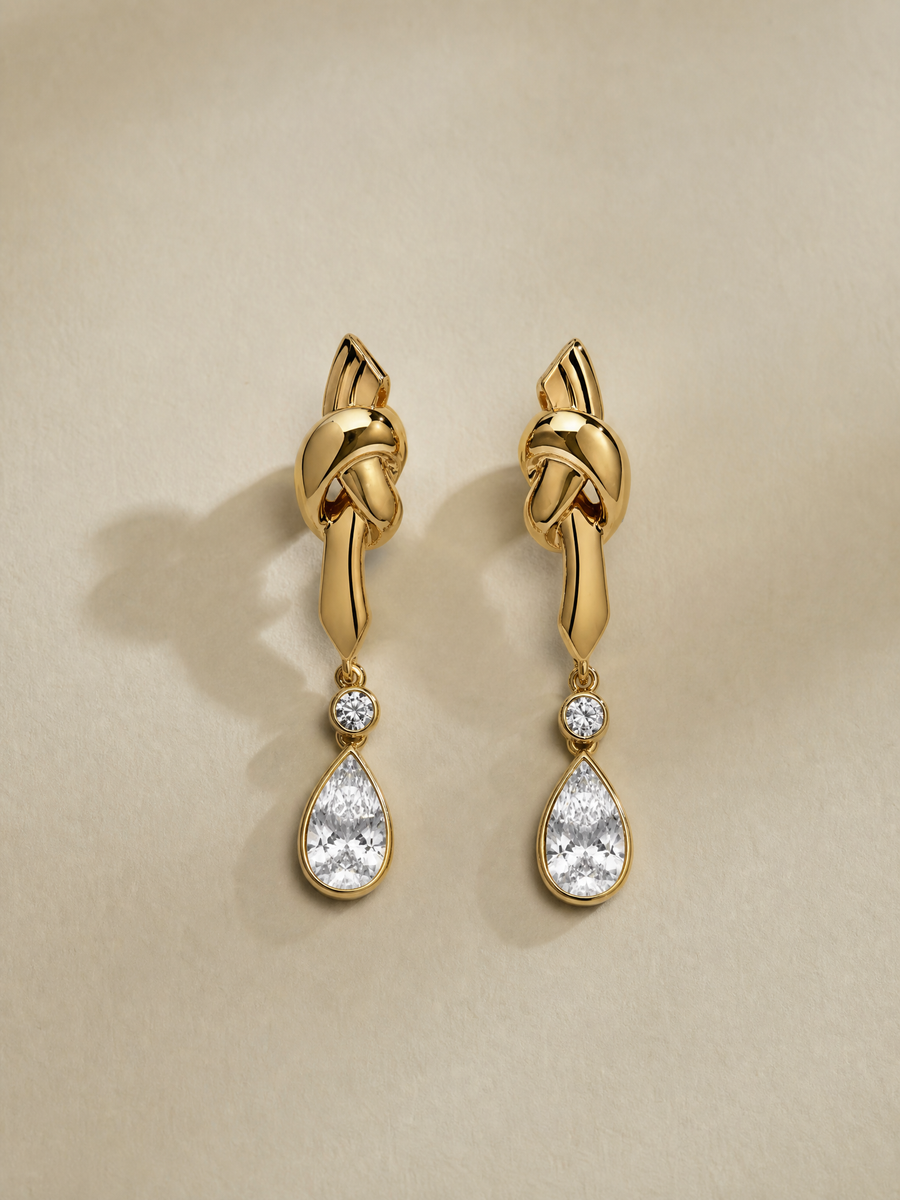
14K Yellow Gold Pear Lab-Grown Diamond Stud Earrings - 2.407 ct Total
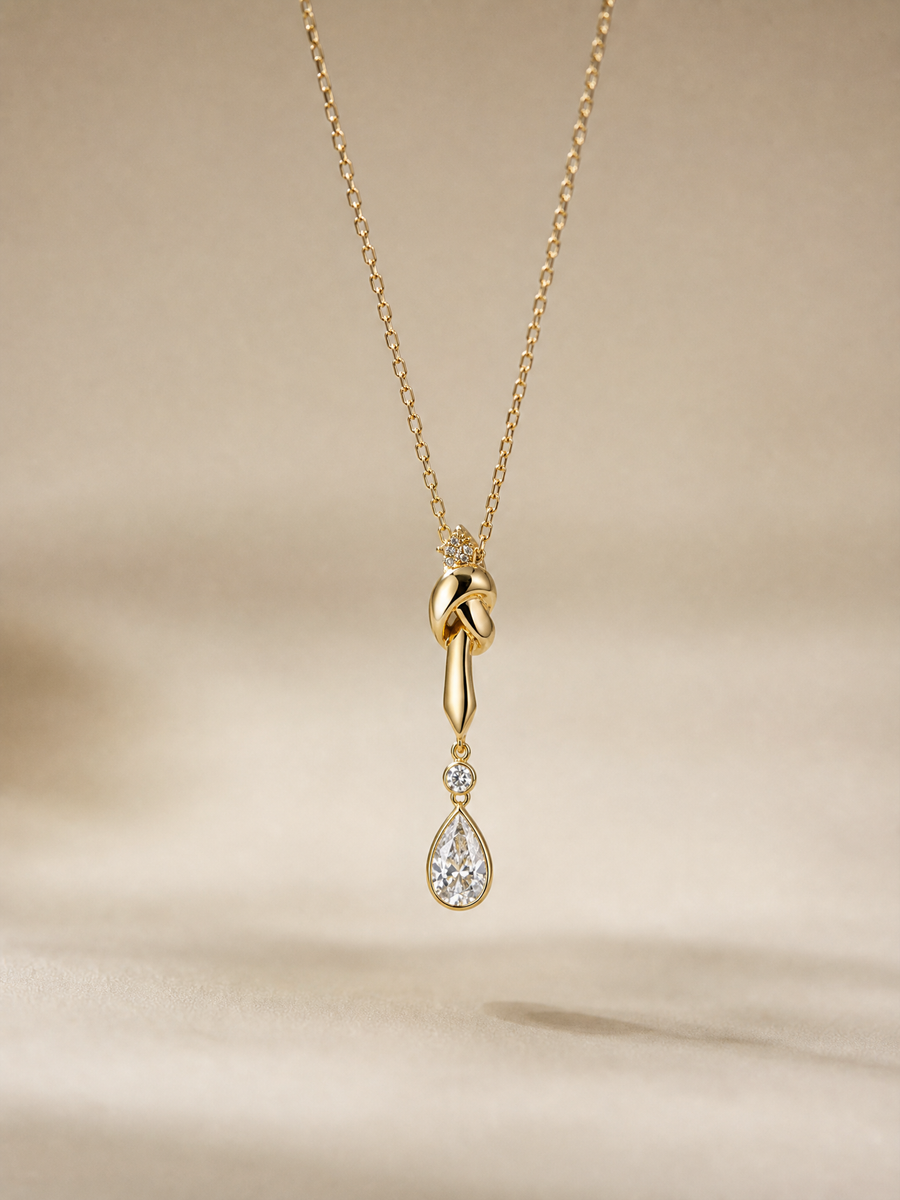
14K Yellow Gold Round Lab-Grown Diamond Necklace - 2.209 ct Total
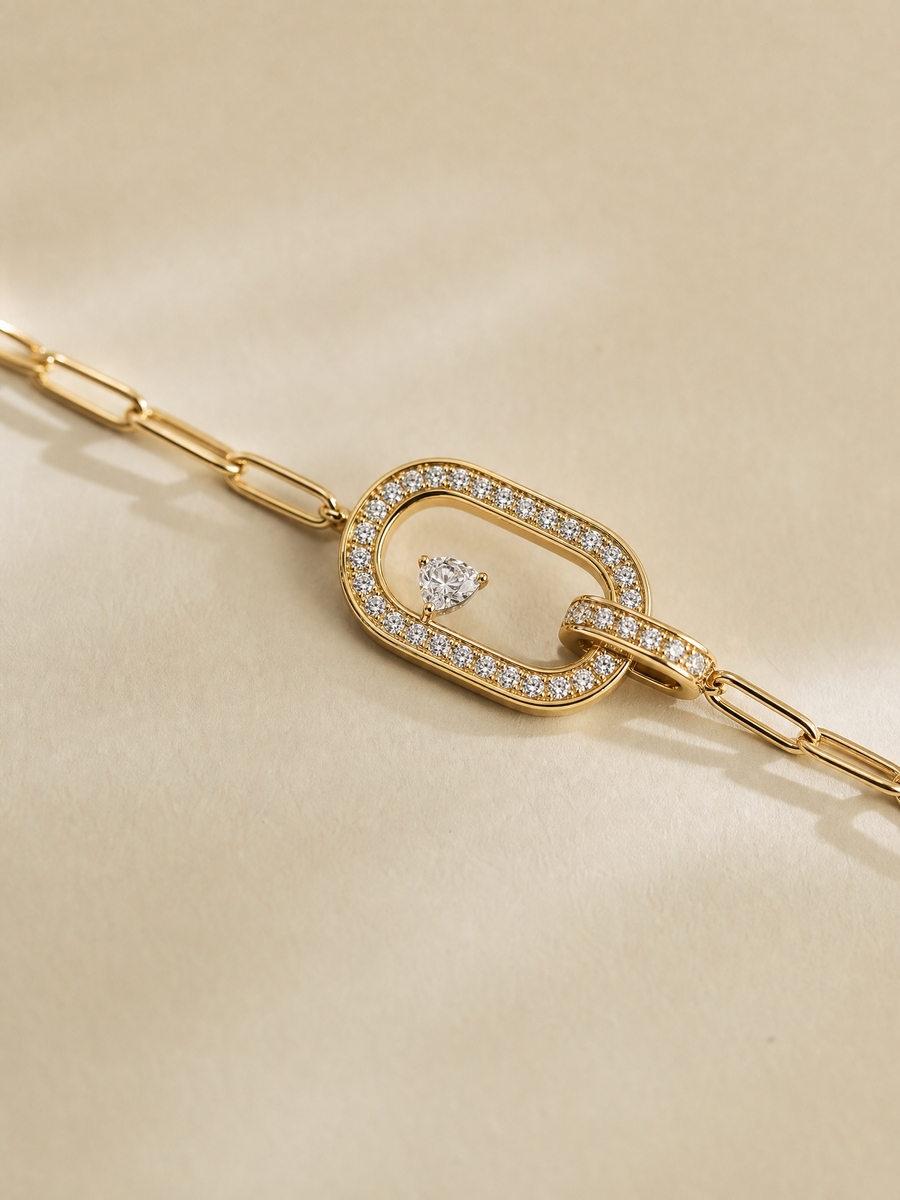
14K Yellow Gold Round Lab-Grown Diamond Bracelet - 0.633 ct Total
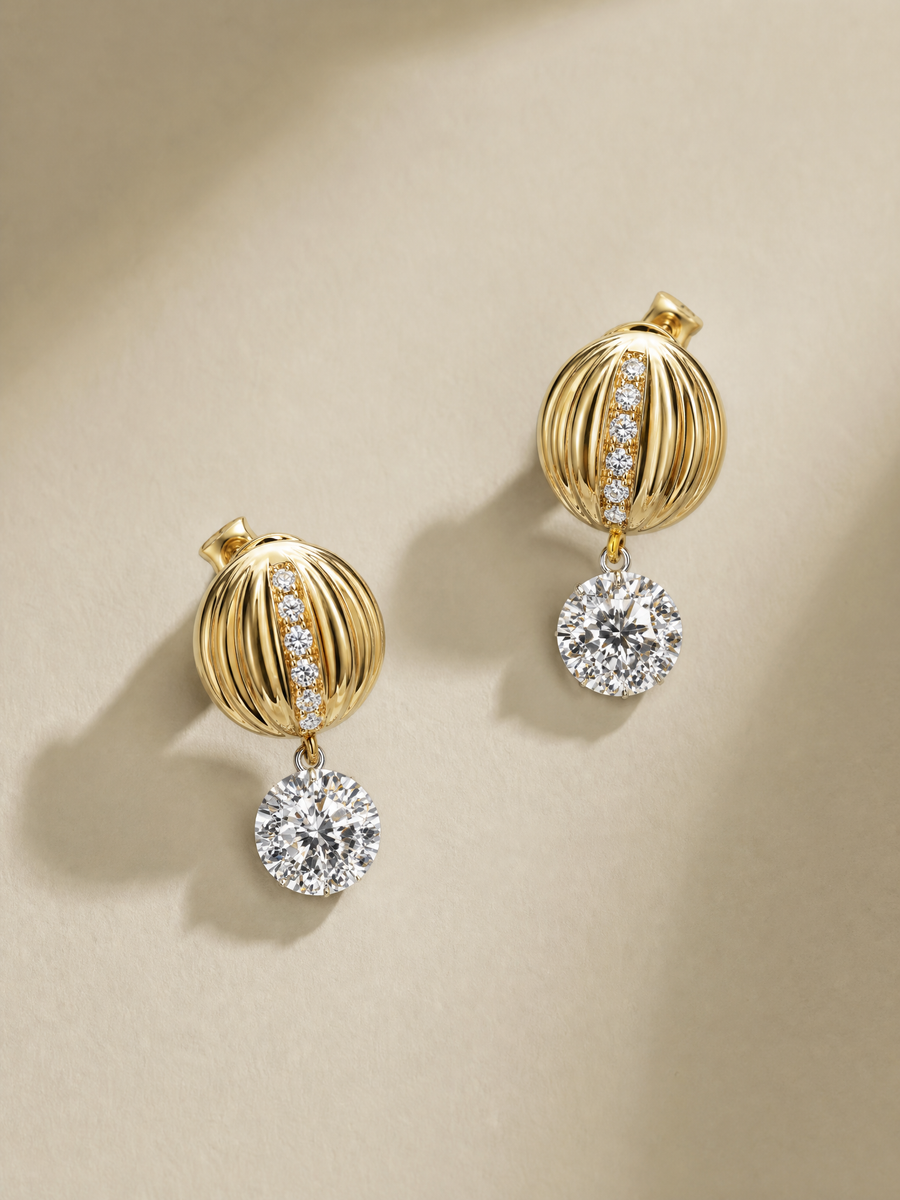
14K Two-Tone Gold Round Lab-Grown Diamond Stud Earrings - 1.654 ct Total
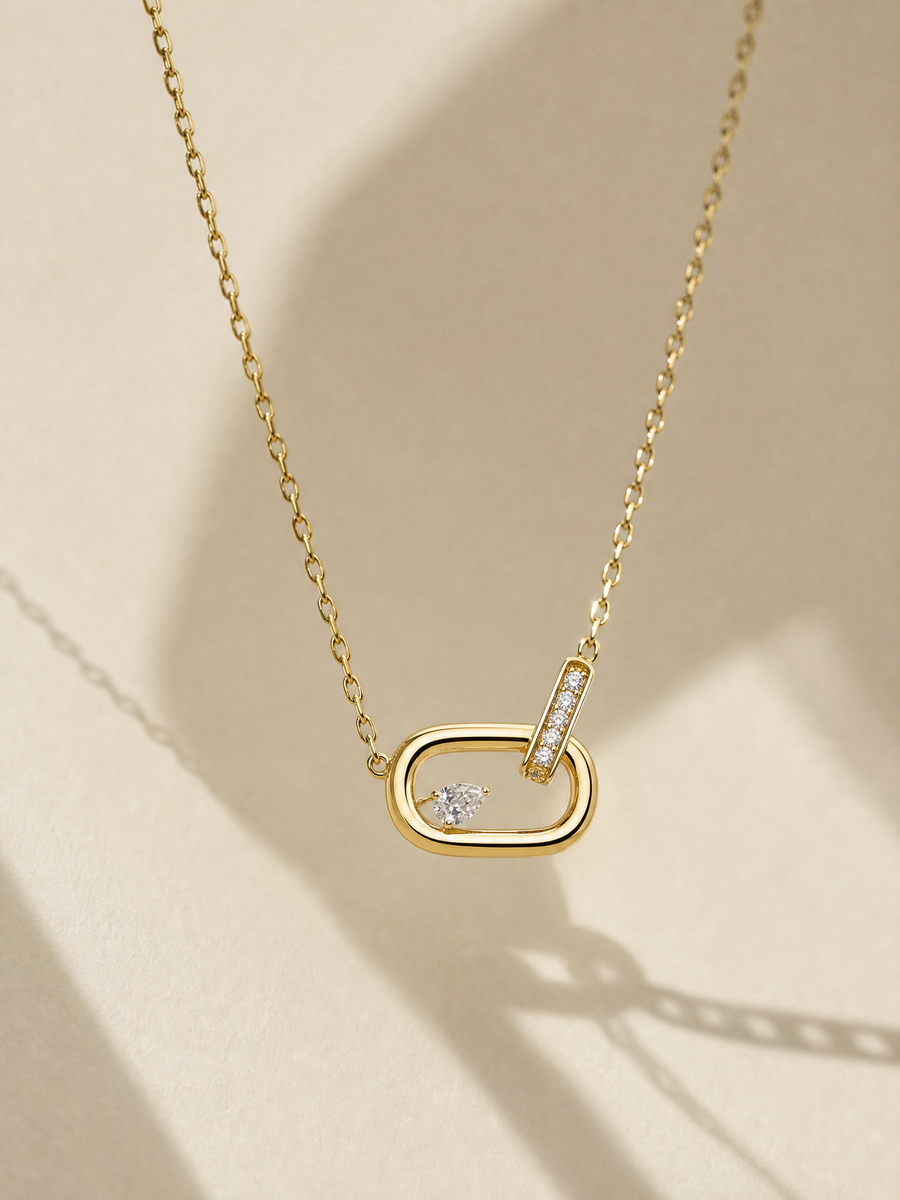
14K Yellow Gold Pear Lab-Grown Diamond Necklace - 0.245 ct Total
One note at a time.
New writing, new stones. Nothing else. Unsubscribe whenever you like.