August 27, 2026
Are Lab Grown Diamonds Real Diamonds?
Yes. A lab grown diamond is carbon in the same crystal lattice, with the same hardness and the same refractive index as a mined stone. The only difference is where the crystal grew.
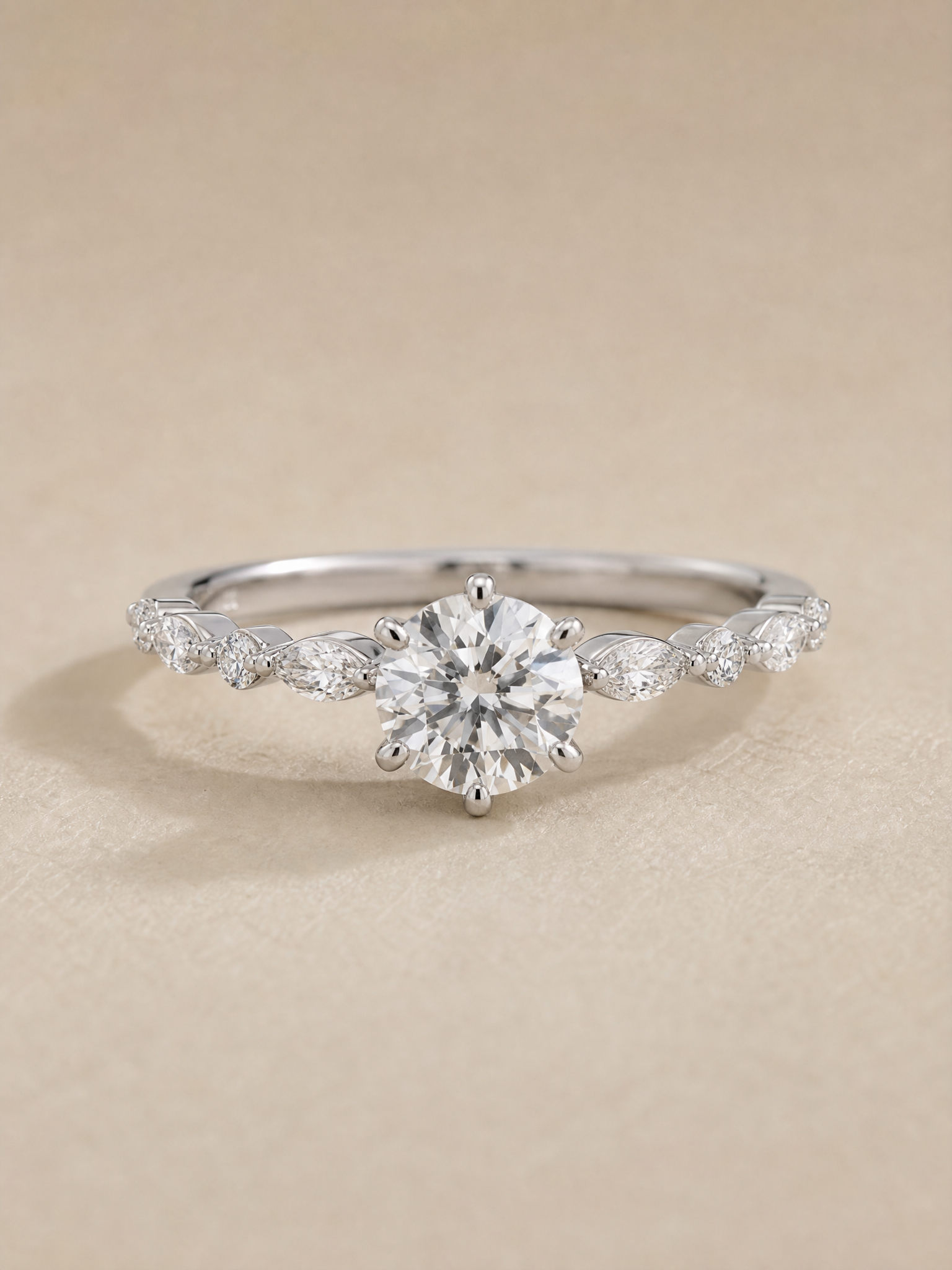
Yes. A lab grown diamond is a diamond. Same carbon, same crystal lattice, same hardness of 10 on the Mohs scale, same refractive index of 2.42, same behavior in light. The only difference is where the crystal grew: in a chamber over weeks, instead of in the earth over a very long time.
The harder question is what a lab grown diamond is not: not a moissanite, not a cubic zirconia, not a simulant. Those four terms get blurred together constantly, and the blur is where money gets lost. You are reading this on a jewelry brand's site, so hold us to the linked sources.
What actually makes a diamond a diamond?
One element, carbon, locked into one arrangement: every atom bonded to four others in a rigid tetrahedral network. That lattice is the whole reason a diamond is hard, transparent and does what it does with light.
The definition that governs the word in the US
Under the FTC's Jewelry Guides at 16 CFR §23.12(a), "A diamond is a mineral consisting essentially of pure carbon crystallized in the isometric system." No clause about geology, age, or where the crystal formed. A stone grown in a reactor meets it on its face.
The word natural used to sit in that sentence. In its 2018 revision of the Jewelry Guides the Commission removed it. A laboratory grown stone is therefore a diamond in the FTC's own terms, and the disclosure rules exist to say which kind you are buying, not that one kind is fake.
Carbon does not remember its address
Nothing measurable about a finished stone encodes its origin. Hardness, refractive index, dispersion, specific gravity, the way light leaves the crown: identical. Origin survives only in microscopic defects and growth history, which is why it belongs on the report we publish for every stone as a stated fact, not an inference.
What is the difference between a lab grown diamond and a moissanite or cubic zirconia?
Three different materials. A lab grown diamond is carbon, a moissanite is silicon carbide, a cubic zirconia is zirconium dioxide. Only the first is a diamond; the other two are simulants, built to look like one.
The properties side by side
| Property | Diamond (mined or lab grown) | Moissanite | Cubic zirconia |
|---|---|---|---|
| Composition | Carbon | Silicon carbide | Zirconium dioxide |
| Mohs hardness | 10 | 9.25 | 8.5 |
| Refractive index | 2.42 | 2.65–2.69 | 2.16 |
| Double refraction | None | 0.043 | None |
| Dispersion (fire) | 0.044 | 0.104 | 0.060 |
| Specific gravity | 3.52 | 3.22 | 5.80 |
| Reads as diamond on a thermal probe | Yes | Yes | No |
| May be called a diamond under FTC guides | Yes, with disclosure | No | No |
Those figures come from GIA's comparison of synthetic moissanite against diamond and cubic zirconia, physical constants that do not move with the market. Read the hardness row carefully: Mohs is ordinal, not linear, so the gap between 8.5 and 10 is far wider than it looks, and CZ facet junctions round off with wear.
What those numbers do to your eye
Dispersion is the number to watch. Moissanite's 0.104 is more than double diamond's 0.044, which is why it throws far more colored flash. Some prefer that; it is not what a diamond does. Moissanite is also doubly refractive, so through the crown at an angle its pavilion facet junctions appear doubled, printed slightly out of register.
Cubic zirconia fails the other way. An index of 2.16 against 2.42 returns less light to your eye, so it reads glassy face up, and its specific gravity of 5.80 against 3.52 is a tell you can feel: a CZ of the same millimeter size is noticeably heavier.
Why the word matters legally, not just aesthetically
Neither simulant may be sold under the unqualified word "diamond": §23.12(b) makes that deceptive for anything failing the definition above, and §23.25(b) requires a qualifier such as "imitation" or "simulated" immediately before the stone name, with equal conspicuousness. "Diamond simulant" is honest; "diamond hybrid" and "diamond essence" are constructions the FTC has written to sellers about.
Can a jeweler tell the difference just by looking at it?
No. Not between a lab grown diamond and a mined one, not with a loupe, a light box or thirty years at the bench. Anyone who says they can eyeball it is describing a skill that does not exist.
What a loupe can and cannot resolve
A trained eye can usually separate a simulant from a diamond at 10x: moissanite by those doubled facet junctions and its fine white needles near-perpendicular to the table, cubic zirconia by rounded facet edges and a different surface luster.
Grown versus mined is not. Both are carbon in the same lattice, and the clues are microscopic growth features that need deep-UV imaging and spectroscopy, not magnification.
The thermal tester trap
The pen-style "diamond tester" measures thermal conductivity, because diamond conducts heat better than any other bulk material. Moissanite's thermal behavior is close enough that GIA reported "all thermal probe testers tried gave a 'diamond' reaction for synthetic moissanite." The probe rejects a cubic zirconia instantly and calls a moissanite a diamond.
It also never tells you origin. A probe reading "diamond" has confirmed the material only; origin comes from the report and nowhere else. For the two labs most likely to have written yours, here is IGI and GIA compared.

A loose lab grown diamond under a loupe, where the facet junctions stay single and crisp rather than doubling as they would in moissanite.
How does a lab actually know a diamond was grown?
By reading growth history written into the crystal. The techniques are public and rest on no judgment calls.
Growth patterns under deep ultraviolet
Nitrogen is the first filter: almost all colorless lab grown diamonds are type II, with no nitrogen detectable by infrared, while most natural diamonds are type Ia.
The decisive step is deep-UV fluorescence imaging, which shows how the crystal was built. A CVD stone grown layer by layer shows striations parallel to the growth direction, from defects at each growth interface. An HPHT stone grown outward from a seed shows a cuboctahedral pattern, fluorescence shifting sharply between growth sectors. A natural diamond shows neither. Photoluminescence adds chemical evidence: the silicon-vacancy defect near 737 nm, picked up from silicon in the reactor, is a long-standing CVD marker, though GIA now reports many CVD stones with no detectable peak.
Why the inscription exists
Because the stone cannot say any of this out loud. A laser inscription on the girdle ties the object to one report, and the report is where origin, grades and measurements live. GIA's service inscribes "Laboratory-Grown" plus an assessment number; every stone we sell carries an IGI Laboratory Grown Diamond Report, inscribed the same way.
Verify the number on the lab's own site rather than trusting the engraving: GIA has documented a synthetic moissanite carrying a fraudulent GIA inscription copying a real report number from a natural diamond of the same weight. An inscription is a pointer, not a proof. For the walkthrough, see how to read the report.
What am I legally entitled to be told when I buy one?
That the stone is laboratory grown, stated clearly, close to the product name, before you pay. In the US that comes from the FTC Jewelry Guides and is not optional.
The disclosure rule in plain terms
The qualifier has to be immediate and conspicuous. §23.12(c)(3) names the acceptable forms: "laboratory-created," "laboratory-grown," "[manufacturer name]-created," or a phrase of like meaning. The closer the disclosure sits to the claim, the better; a footnote does not clear the bar. A compliant listing names the grading lab and report number too. Apply that test to our finished jewelry and everyone else's.
The word the FTC would rather nobody used
Here is the part that works against every brand publishing an article with this title, us included. §23.27 says it is unfair or deceptive to use the words "real," "genuine," "natural" or "precious" to describe a product that is manufactured or produced artificially. So the complete answer runs two sentences: materially, and by the FTC's own definition, a lab grown diamond is a diamond, and "real" is a word the guides tell us not to attach to it in our own selling copy.
Will it wear differently over twenty years?
No. Identical material, identical behavior. A lab grown diamond scratches, chips, cleans, resizes and survives the bench exactly as a mined stone of the same cut does.
Hardness is not toughness
Hardness resists scratching; toughness resists breaking. Diamond wins the first outright and is only respectable at the second. GIA's phrasing: diamond is "very stable and extremely hard, but only somewhat tough," and "relatively brittle and will chip or fracture if it is not handled and protected against shock." Cleavage planes are where that damage starts.
Shape decides your exposure. Corners are the weak point, and GIA names emerald cuts, triangles, radiants and princess cuts as higher risk. A round brilliant has no corners; an oval has two shallow points. For the princess outline, ask for V-shaped prongs or a partial bezel over the corners, as GIA recommends.
Cleaning, resizing and the torch
Cleaning is dull: warm water, a drop of dish detergent, a soft brush behind the stone where the film sits. GIA warns that ultrasonic and steam cleaners can loosen stones in their settings, so have yours checked first.
Resizing is the same job on a grown stone as a mined one, with one caution. Torch heat is a risk to any diamond left in the mounting, and GIA notes that irradiated diamonds "may be more sensitive to the heat involved in repair procedures." Several fancy colors get where they are by irradiation or annealing, so if your stone is a treated color, tell the bench and expect it to be unset before the shank is heated. True of a 2.15 ct Fancy Intense Pink oval as of a mined pink; the ladder those grades sit on is set out here.
Where a lab grown diamond is genuinely not the same
The material is the same. The market is not, and pretending otherwise is the dishonesty this page exists to avoid.
Price has been falling and is still moving. Lab grown diamond prices have dropped for several years running: good news the week you buy, bad news the day you sell, and nobody credible will say where it settles.
Resale is worse than you think, and worse than for mined stones. Offers land far below what you paid, the gap is wider than for natural diamonds, and it has been widening. We wrote a guide on what happens when you try to sell one and it has no happy ending. Buy the stone for the wearing.
Some people care where the crystal grew, and that is not a mistake. A mined diamond formed under conditions that have nothing to do with us. If that origin is what makes an object mean something to you, no spectroscopy result changes it and no salesperson should argue you out of it. Wanting the geology is a preference about meaning, not a misreading of chemistry.
The grading language is diverging. From October 2025, GIA stopped applying the D-to-Z color and standard clarity scales to lab grown stones, replacing them with two descriptive categories, "premium" and "standard." IGI still applies the full 4Cs on its Laboratory Grown Diamond Report. Two vocabularies, one stone, and knowing which you hold is the buyer's job.
Questions people ask next
Do lab grown diamonds pass a diamond tester? Yes, because they are diamonds and the tester measures thermal conductivity. Moissanite passes too, so a pass tells you little and never tells you origin.
Is a lab grown diamond the same thing as a CZ? No. Cubic zirconia is zirconium dioxide, hardness 8.5, index 2.16. A lab grown diamond is carbon, hardness 10, index 2.42. Unrelated materials, and only one may be called a diamond.
Will a lab grown diamond get cloudy over time? No. Diamond is chemically inert and does not degrade with wear. Cloudiness is almost always soap, lotion and skin oil filming the pavilion, which is why cleaning from behind works.
Do lab grown diamonds have inclusions? Yes, on the same clarity ladder, though the types differ: a grown stone can carry metallic flux or graphite rather than a mineral crystal. On how far up that ladder to go, we compared VVS against VS.
How to decide
Stop asking whether the stone is real and start asking what it has to do.
If it has to be a diamond as a material, hard, brilliant, inert, gradeable, permanent on a hand that lives a normal life, a lab grown diamond does that completely. A 2.01 ct D VVS2 round is the same object under a microscope as its mined twin.
If it has to be a store of money, no diamond of either origin is good at that, and a grown one is worse.
If it has to carry the fact of the earth, buy the mined stone and let nobody tell you the difference is imaginary. The difference is not in the carbon. It is in what you want the carbon to mean, and chemistry has never answered that for anyone.
Work out which of the three the stone is for and the rest, shape, size, color, gets quieter. To start from shape rather than argument, begin here.
In the collection
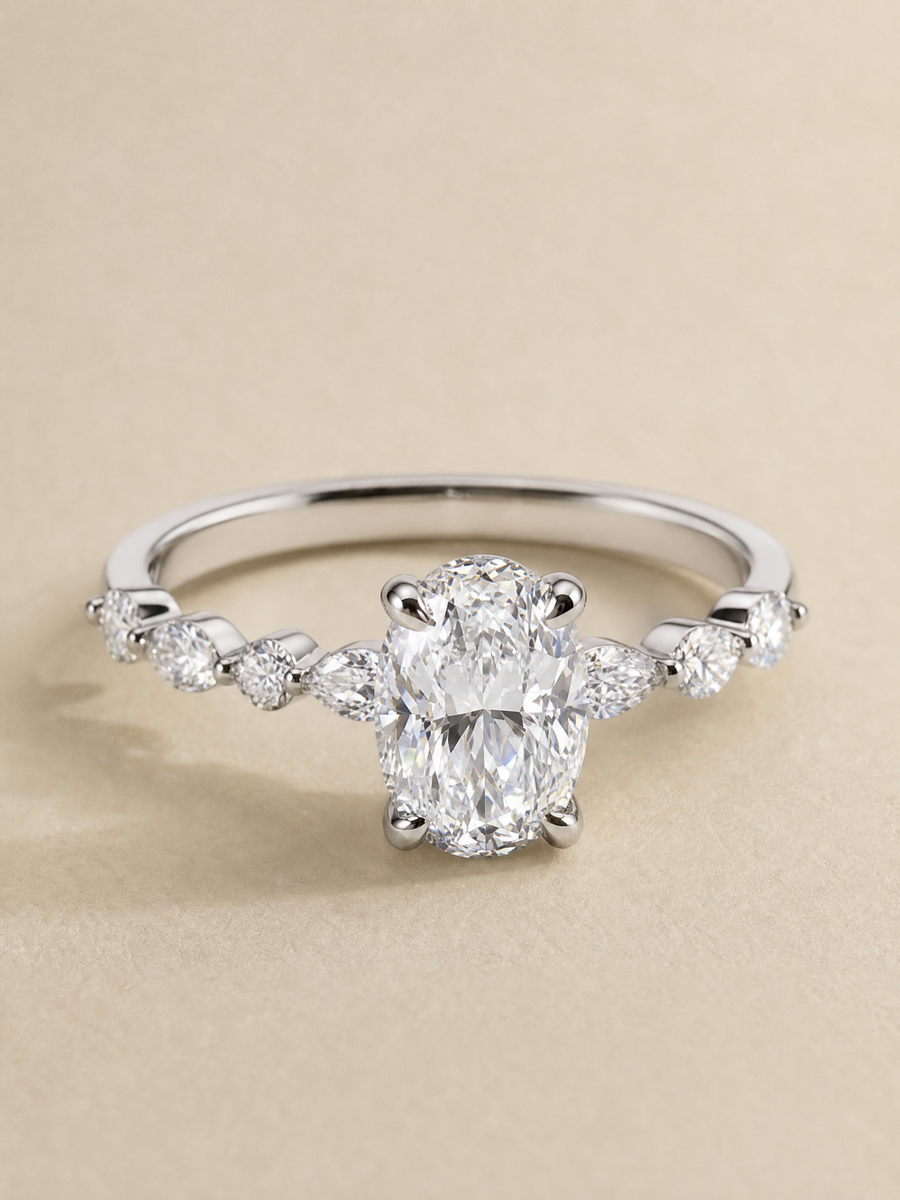
Platinum 950 Oval Brilliant Lab-Grown Diamond Ring - 1.22 ct Total
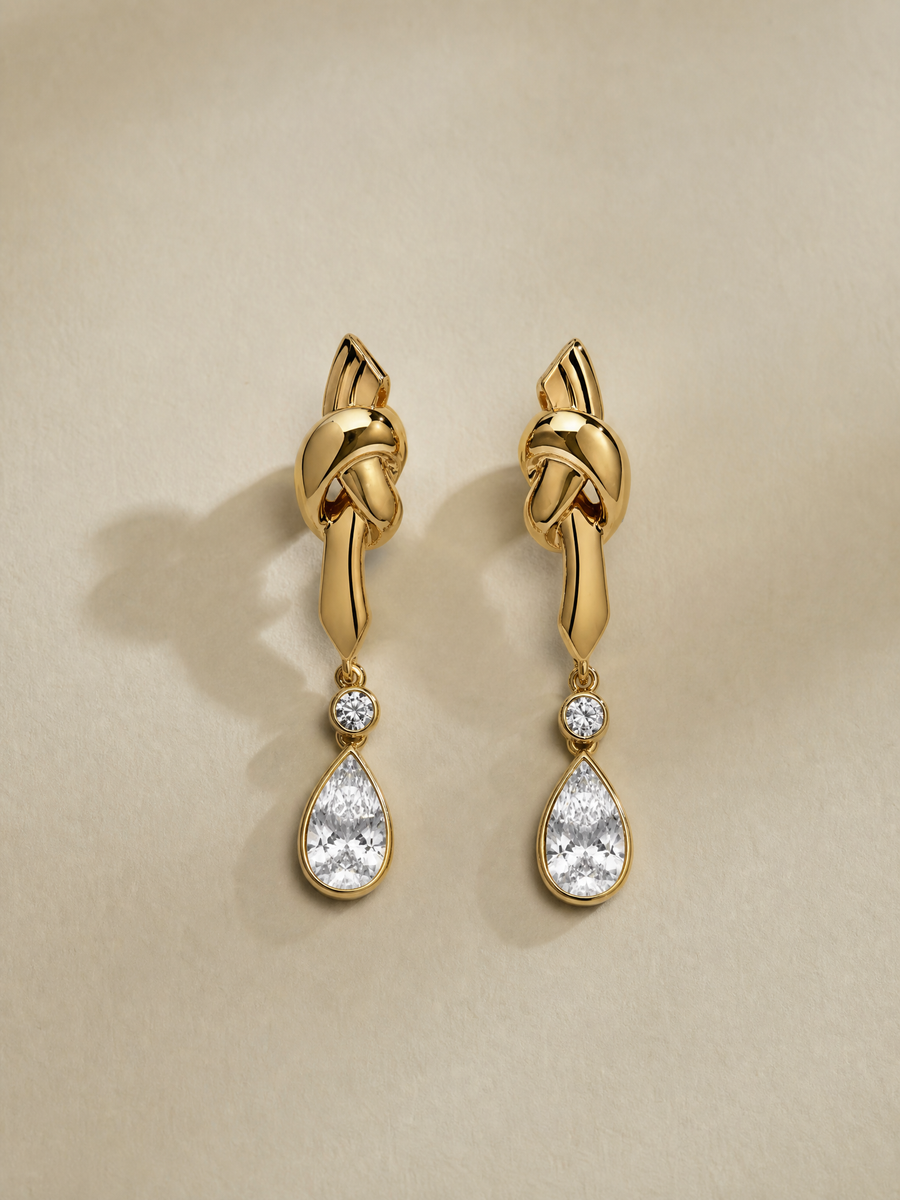
14K Yellow Gold Pear Lab-Grown Diamond Stud Earrings - 2.407 ct Total
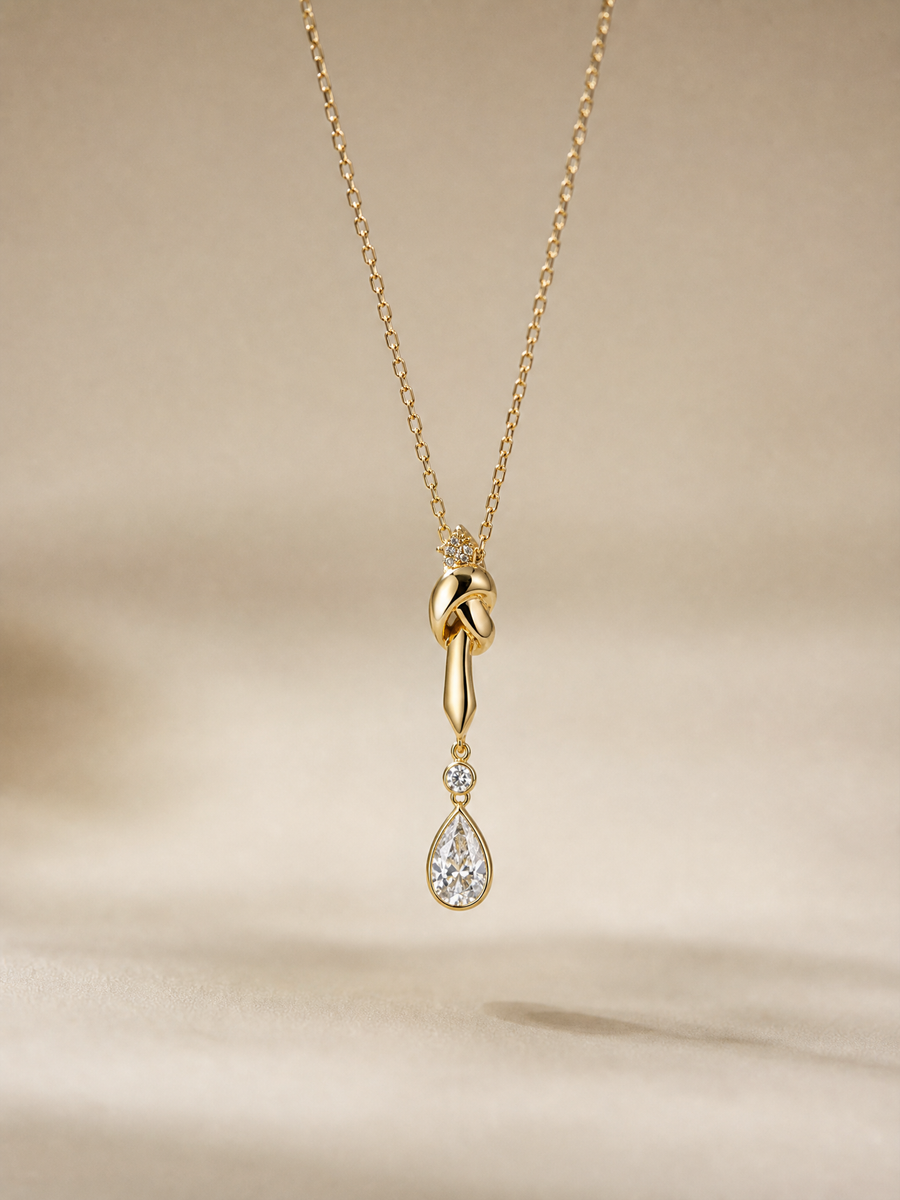
14K Yellow Gold Round Lab-Grown Diamond Necklace - 2.209 ct Total
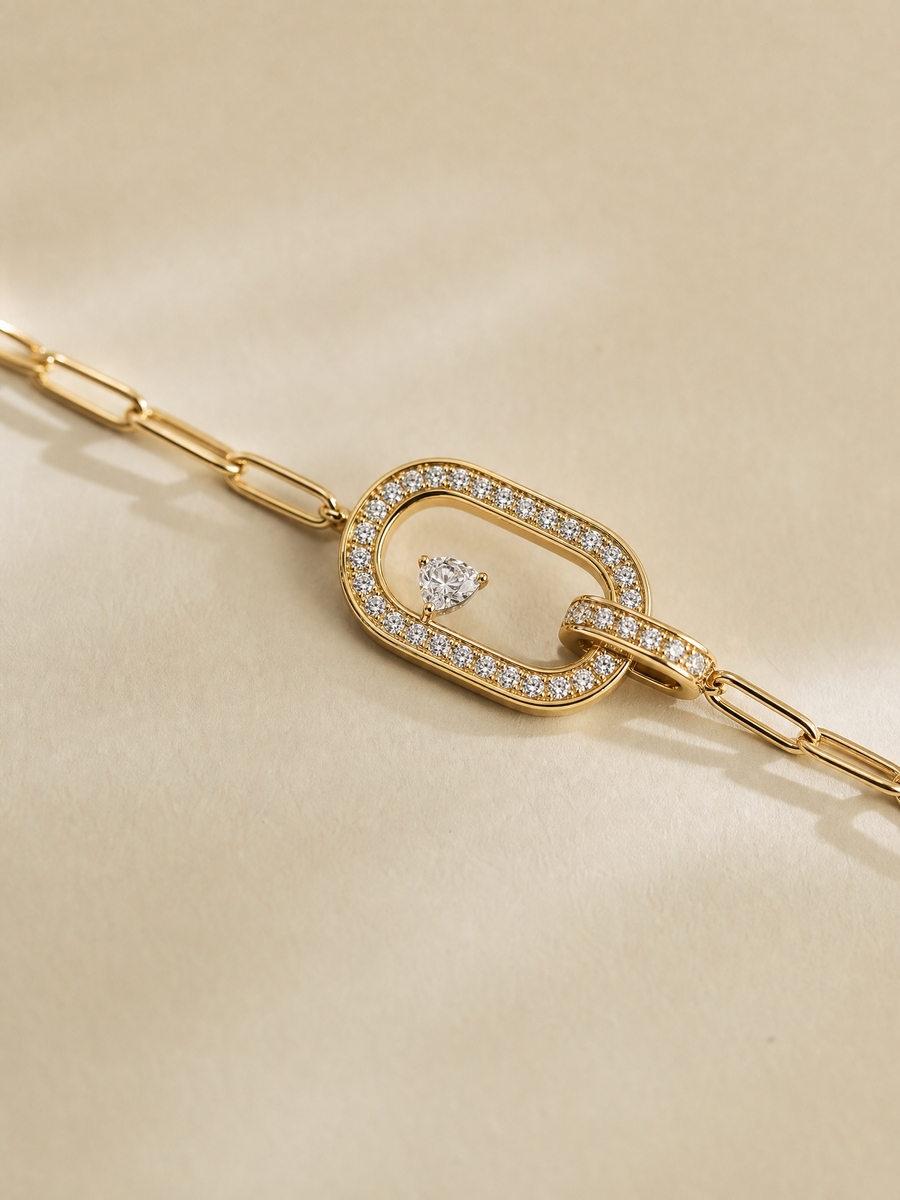
14K Yellow Gold Round Lab-Grown Diamond Bracelet - 0.633 ct Total
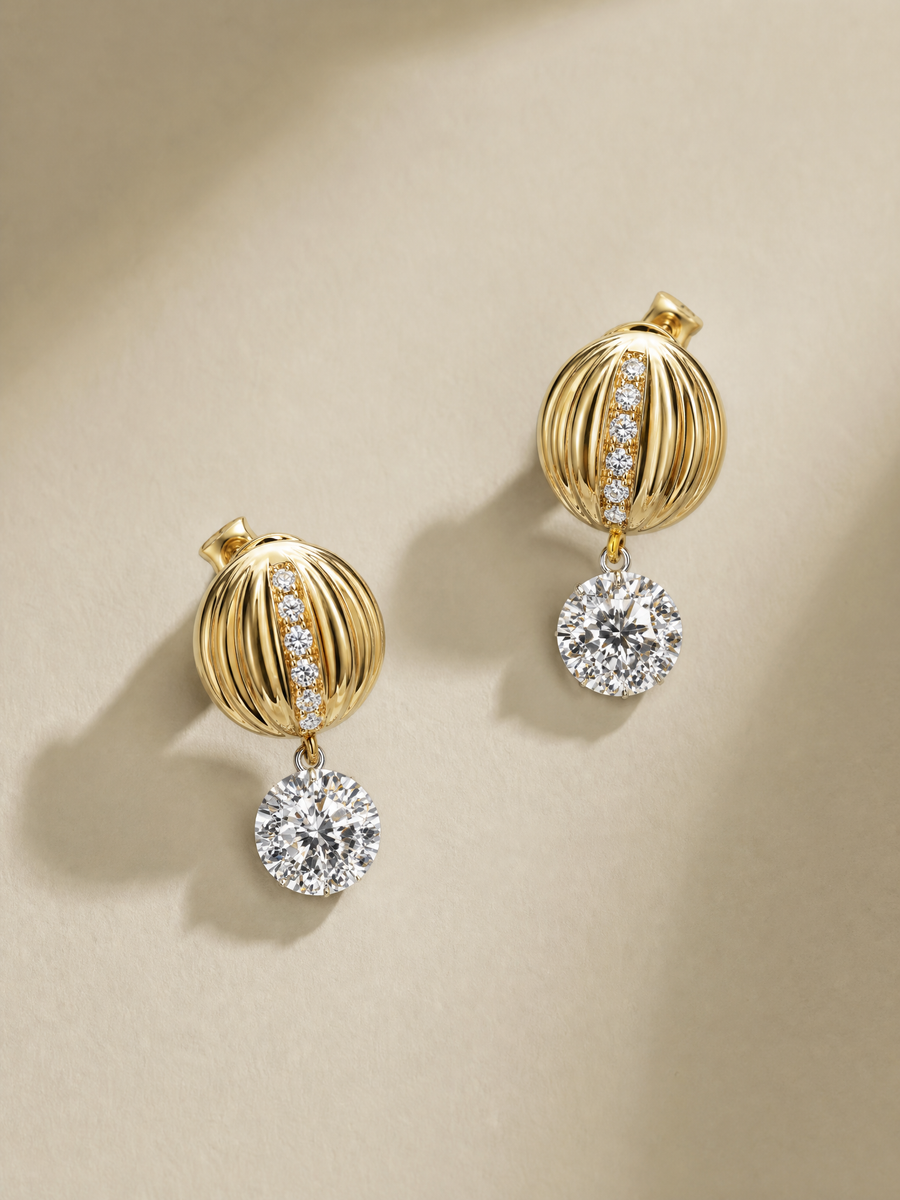
14K Two-Tone Gold Round Lab-Grown Diamond Stud Earrings - 1.654 ct Total
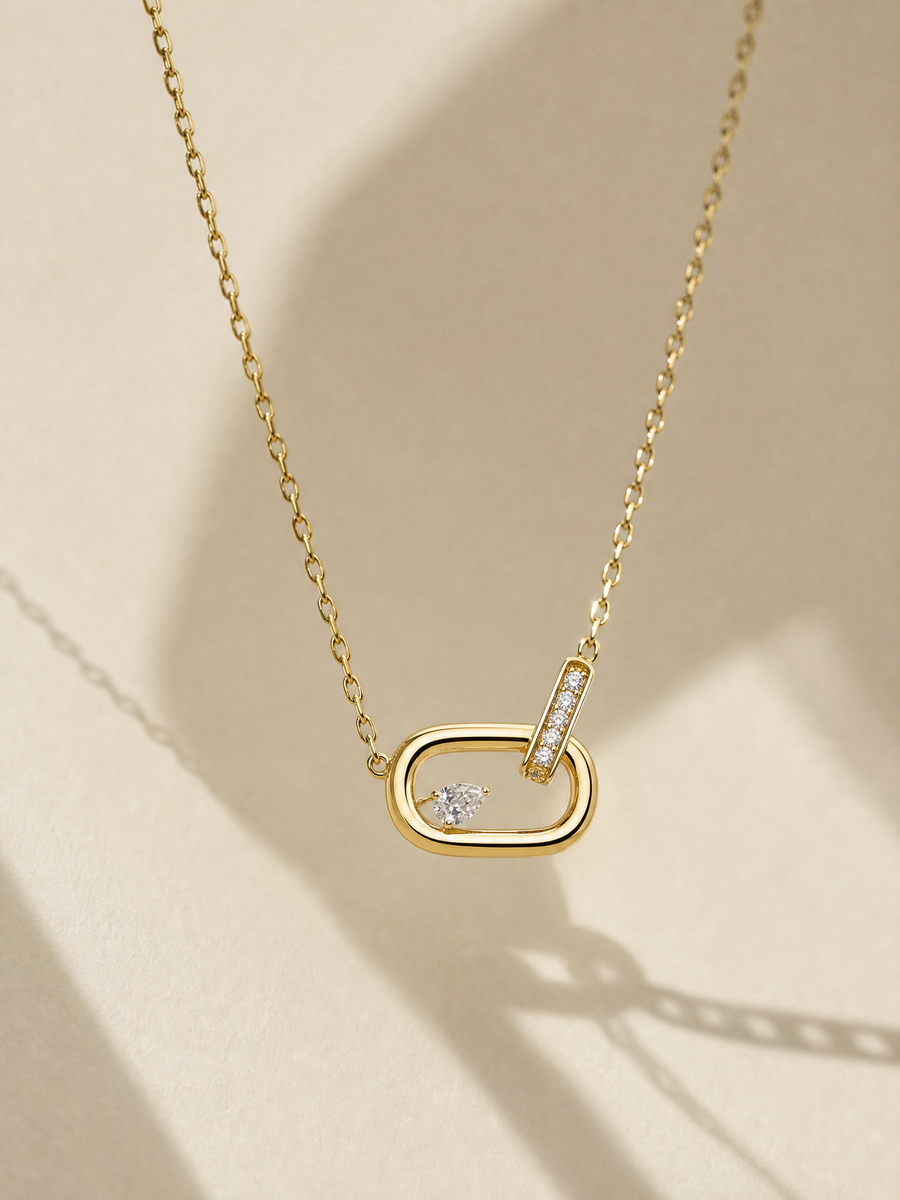
14K Yellow Gold Pear Lab-Grown Diamond Necklace - 0.245 ct Total
One note at a time.
New writing, new stones. Nothing else. Unsubscribe whenever you like.