August 27, 2026
Three States, One Day
The pieces spend the night in a dish by the sink, cold, giving back nothing. By nine they are at body temperature and you have stopped noticing them entirely.
The pieces spend the night in a dish by the sink. Cold, in the way metal is cold. Not cold like water. Cold like something that has been holding still.
By nine they are at body temperature and you have stopped noticing them. By four, the sun has come around the building and they are the brightest thing on the table. By eight, the same stone that gave back nothing at seven in the morning is doing the most interesting thing it will do all day.
Nothing was done to it. The day moved.
We think about this more than is reasonable. Not what a piece looks like in a photograph, which is one hour of light chosen out of sixteen, but what it does across all of them.

A round diamond stud being fastened at the ear in early overcast light, when diffuse light gives a brilliant cut nothing to return and the stone reads as a small dark point.
Early, and unlit
A round brilliant works by taking a light and dividing it. It needs a source small enough to cut. A gray sky is not a source; it is a wash, coming from everywhere and therefore from nowhere in particular, and the stone has nothing to do with it.
So at that hour a pair of 0.317 ct studs in solid 14K white read as two dark points. Closer to punctuation than to light. You see the setting instead of the stone: four prongs, their height, the thin band of shadow under the girdle where the stone lifts off the ear.
The hands are doing small mechanical work. A stud back pushed on with a thumbnail. A clasp found behind the neck by feel, without a mirror, because there is no light to use one by. Wool pulled over the head, and afterward a chain lifted out of the collar with two fingers and turned until the links lie flat again.
What you notice at that hour is weight. In low light you learn a piece the way you learn a doorway in the dark, by mass and edge. The ring is a known small weight on the third finger. The studs weigh so little you check them with a fingertip rather than a mirror, and you do it twice.
This hour never appears in a photograph of jewelry. It is also where a piece spends a good part of its life.
The middle of everything
By noon the sky has resolved into a single source. Direct sun through a window is a small hard light, and a small hard light is exactly the thing a brilliant cut was made to break apart.
Now a 1.09 ct round in 14K white gold throws its whole argument onto the table. Not a steady shine. A scatter of white flashes that switch on and off as the hand crosses the light, plus a few narrow spectral flecks, red and blue, thrown onto paper a few inches away.
The hands are fast here. Typing. A palm flat on a page, sliding it across a table. A glass lifted, set down, lifted. The ring turns on its own through the morning so the stone ends up facing the palm, and it gets turned back without looking, four or five times, the way you push up a sleeve.
Then the hands go under a tap, and there is soap, and the stone dulls. Diamond attracts oil. That is a property of the material, not a defect of the piece, and it is the reason a stone worn through an ordinary morning goes slightly flat by early afternoon. Breath on it and a wipe against a cotton shirt brings it back. A stone that never needs this is a stone nobody is wearing.
What you notice now is motion, and you notice it is not the stone's. At 6:40 the studs were legible standing still. At noon the ring is only legible when the hand moves, which means what you are actually watching is the speed of a gesture. The metal has gone quiet, too. Overhead light flattens white gold to a plain gray band, and the stone outruns it by a distance.

A hand sliding paper across a sunlit table, the ring off-center, with small spectral flecks thrown by the stone visible on the paper beside it.
Late, and low
After dark the sources go down to two or three, and they move low and to the side. A lamp on a table. A candle. Whatever is coming through from the next room.
This is the hour the stone stops throwing white and starts throwing color. Fewer sources, warmer, and lower to the eye, so the flashes arrive one at a time and hold: an orange, then a red you do not get at noon, then nothing for a second while the head is still. Fire reads best in exactly this light, which is the light jewelry was designed under for a very long time before anyone had a ceiling fixture.
The hands slow down. An arm coming out of a sleeve. Hair pushed behind an ear, and the stud found there with a fingertip on the way past. A glass set down and not picked up again.
The chain that carried a 0.468 ct stone under a collar all day is on skin now, and it has moved. It sits a little lower than it did this morning, in the hollow at the base of the throat, warmed the whole way through, the same temperature as the throat it is lying against. You cannot feel where the metal stops. That is not a figure of speech. Gold takes body heat in a minute or two and then holds it, and after a few hours there is no edge left to find.
The white gold reads warmer at this hour, too. Not because anything happened to it. Because everything does.
What stayed the same
The stud is the stud. Same stone, same four prongs, same weight it had in the dish at six in the morning. Nothing in the object moved between the dark point and the orange flash.
What moved was the light, the setting it was in, and the speed of the hand carrying it. Brilliance is not a property an object holds by itself. It needs a source, an angle, and something willing to move.
Not every piece will do this, and we would rather say so than sell the idea to pieces it does not fit. A 4.06 ct round in solid 18K is not built to disappear into a Tuesday. It catches a wool sleeve. It turns under a keyboard. It will make its own occasion whether or not the day has supplied one, and that is a fair description of what it is for. The pieces that come through a whole day intact are smaller, set closer to the skin, and easier to forget you are wearing. That is a real limit and it is worth knowing which of the two you are buying.
But for the ones that do come through it, this is the whole point, and it is a claim about the jewelry rather than about you. A stone is never one thing. Not because it changes, but because light does, and a piece worn through a real day gets handed sixteen hours of different light and answers each one differently. That is the idea underneath the house, rather than a single best hour and a lot of waiting.

A chain and stud on skin under low lamplight while a coat comes off, showing the warm single flashes a diamond gives in the evening rather than the white sparkle of midday.
The pieces go back in the dish by the sink. For a minute or two they are still warm, which is the only mark the day leaves on them, and it is on its way out. By morning they will be cold again, and give back nothing, and wait for the sun to come around the building.
In the collection
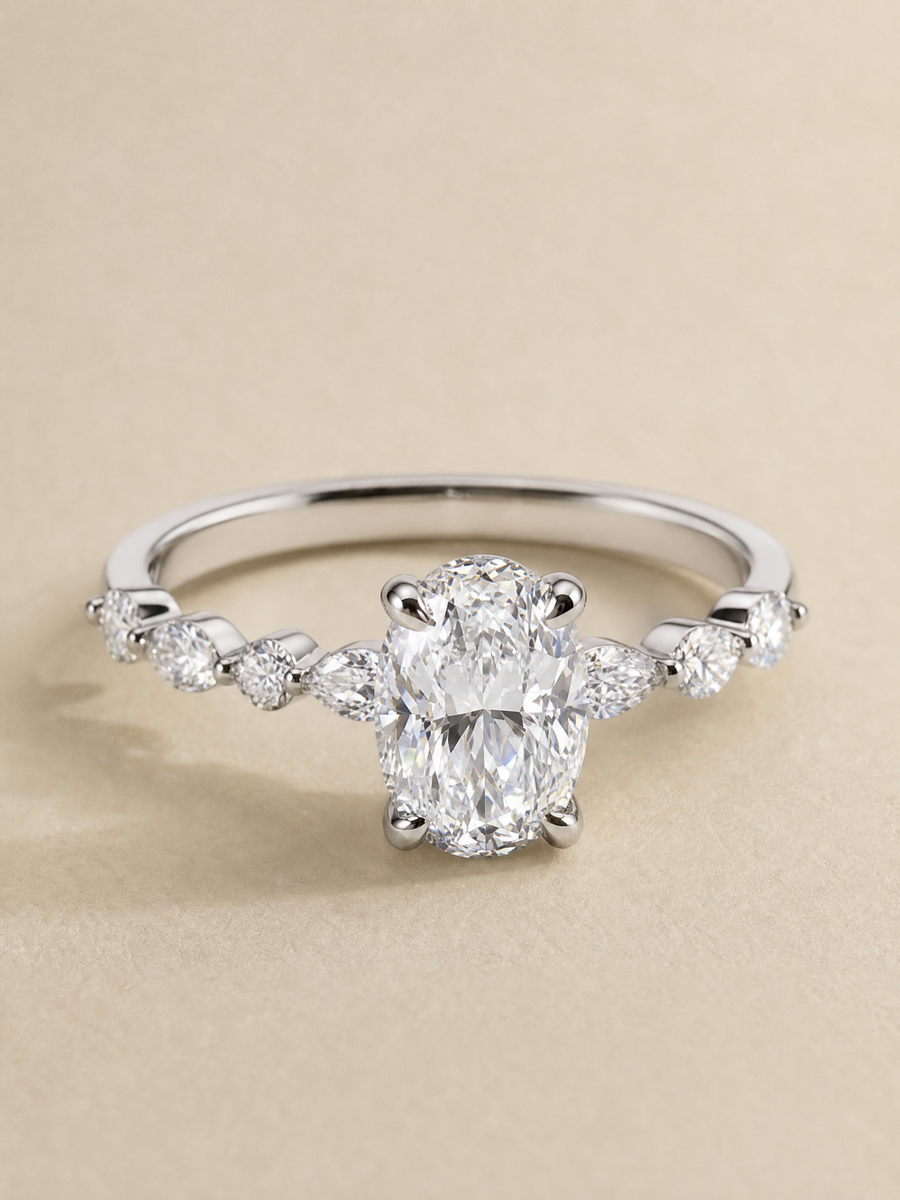
Platinum 950 Oval Brilliant Lab-Grown Diamond Ring - 1.22 ct Total
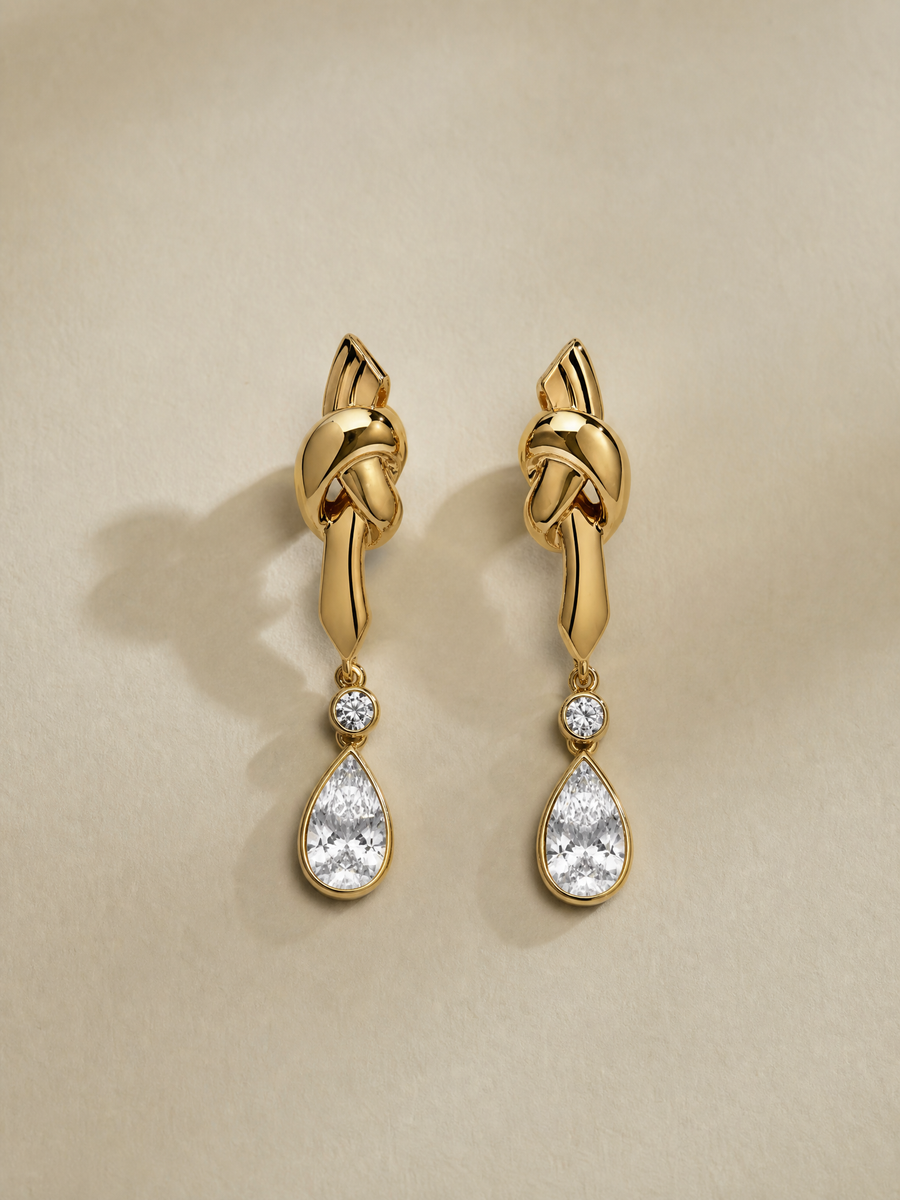
14K Yellow Gold Pear Lab-Grown Diamond Stud Earrings - 2.407 ct Total
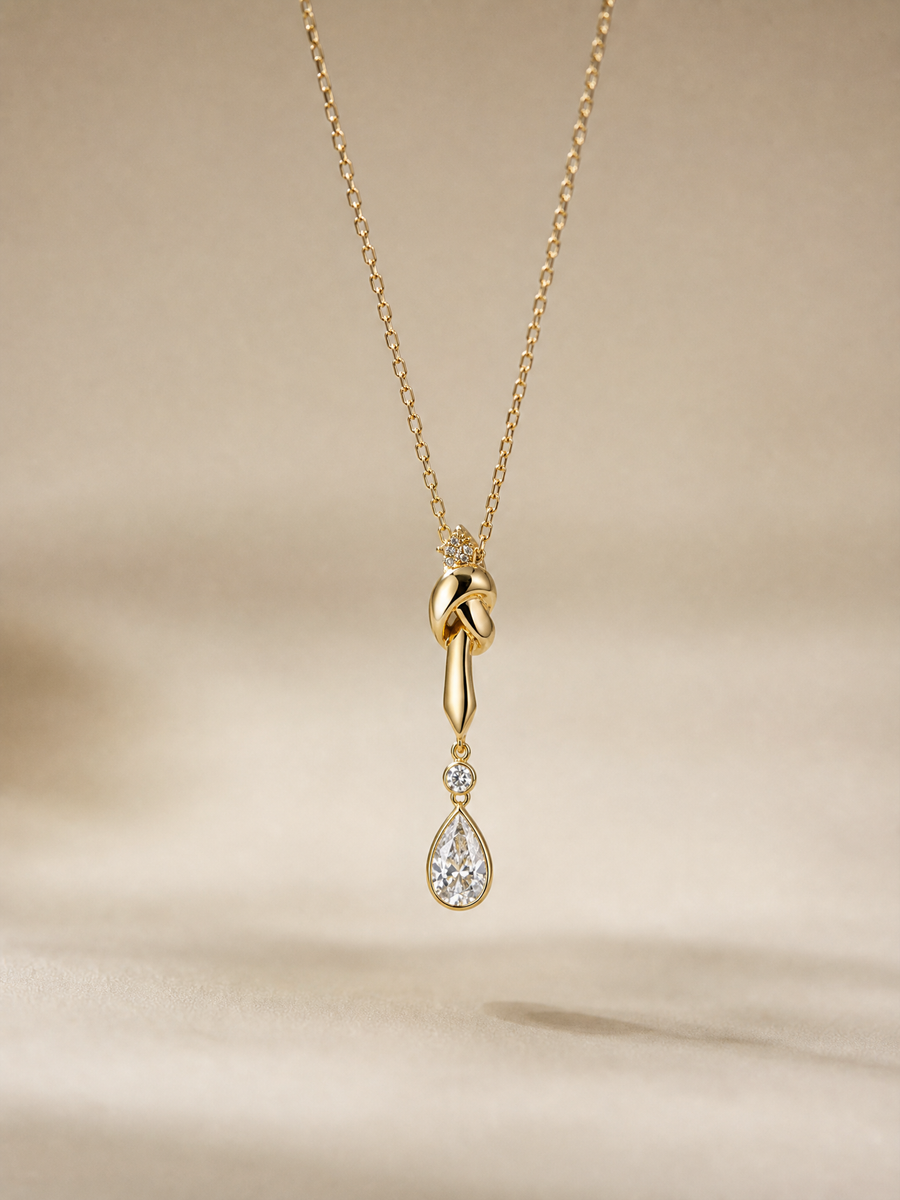
14K Yellow Gold Round Lab-Grown Diamond Necklace - 2.209 ct Total
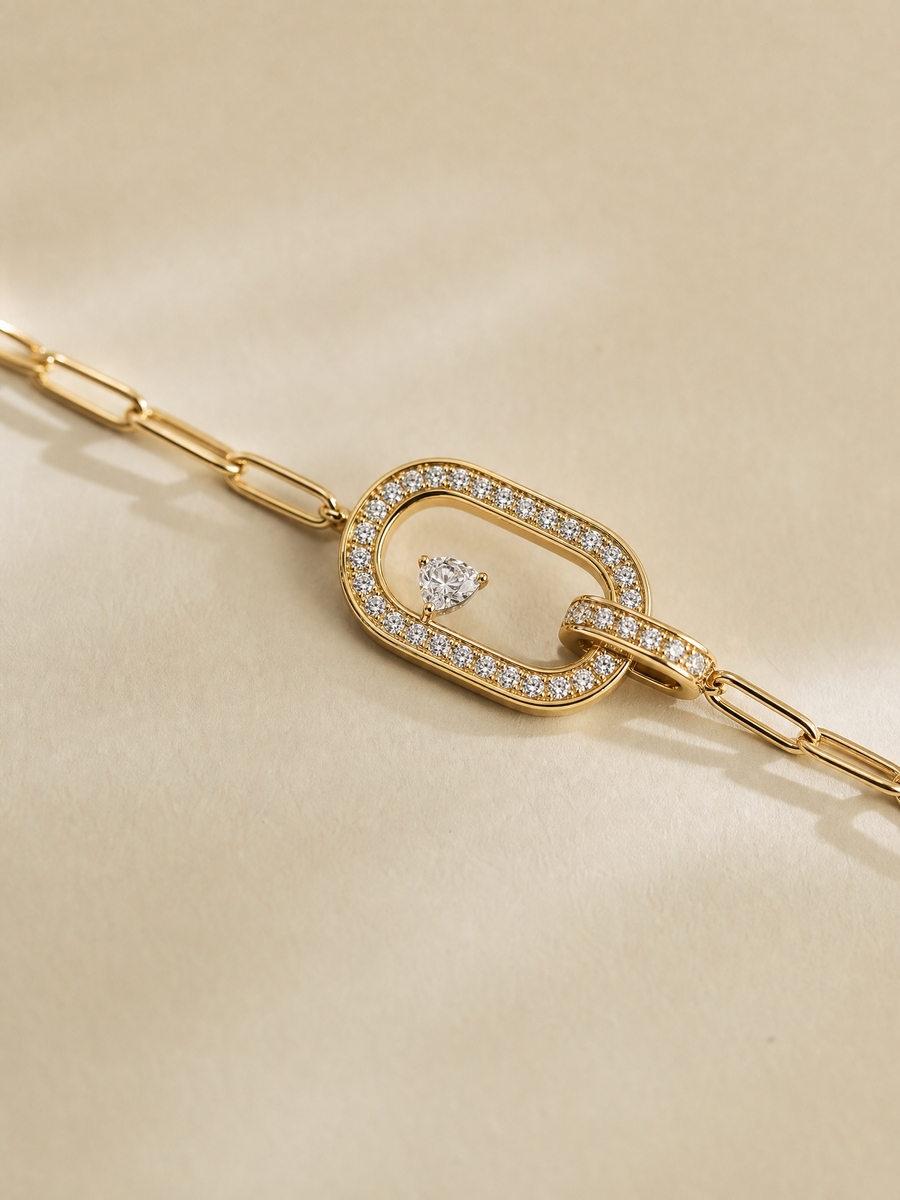
14K Yellow Gold Round Lab-Grown Diamond Bracelet - 0.633 ct Total
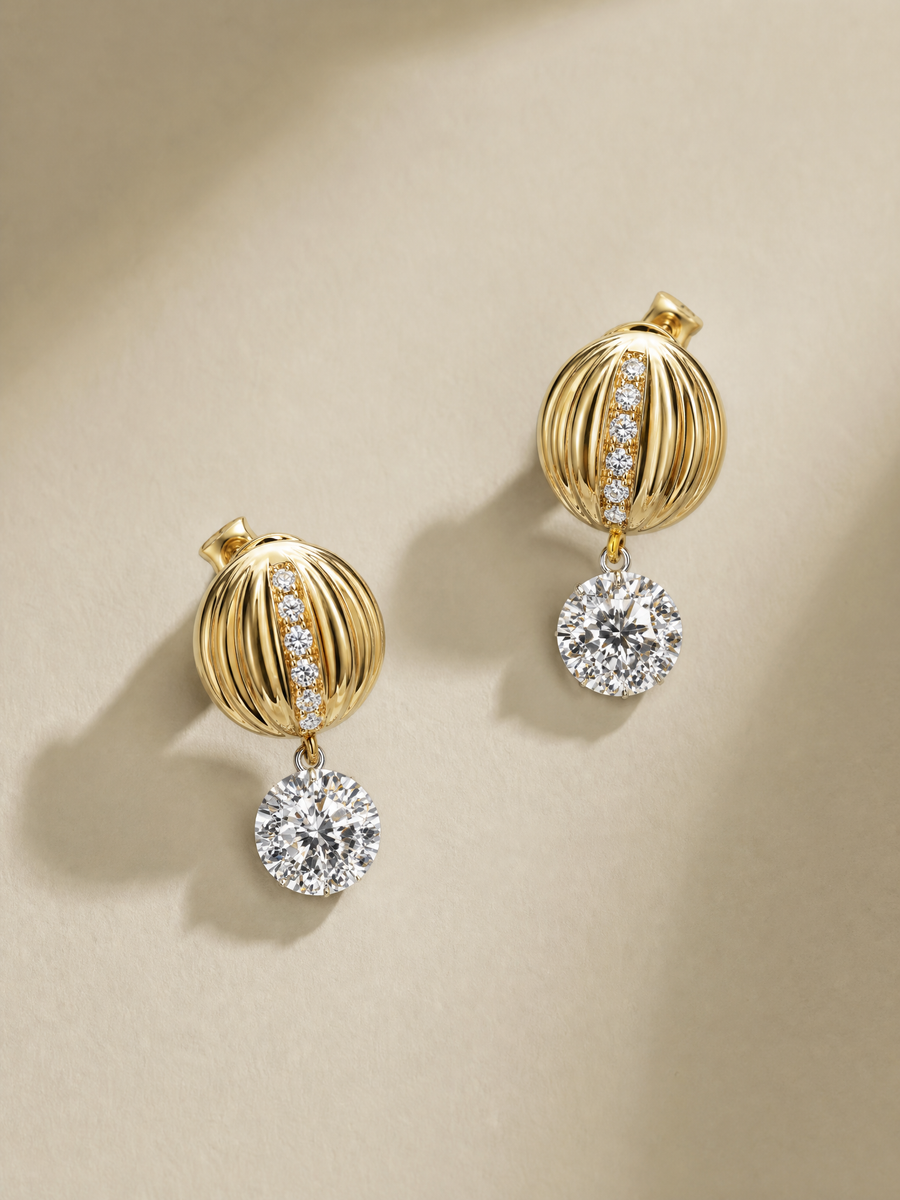
14K Two-Tone Gold Round Lab-Grown Diamond Stud Earrings - 1.654 ct Total
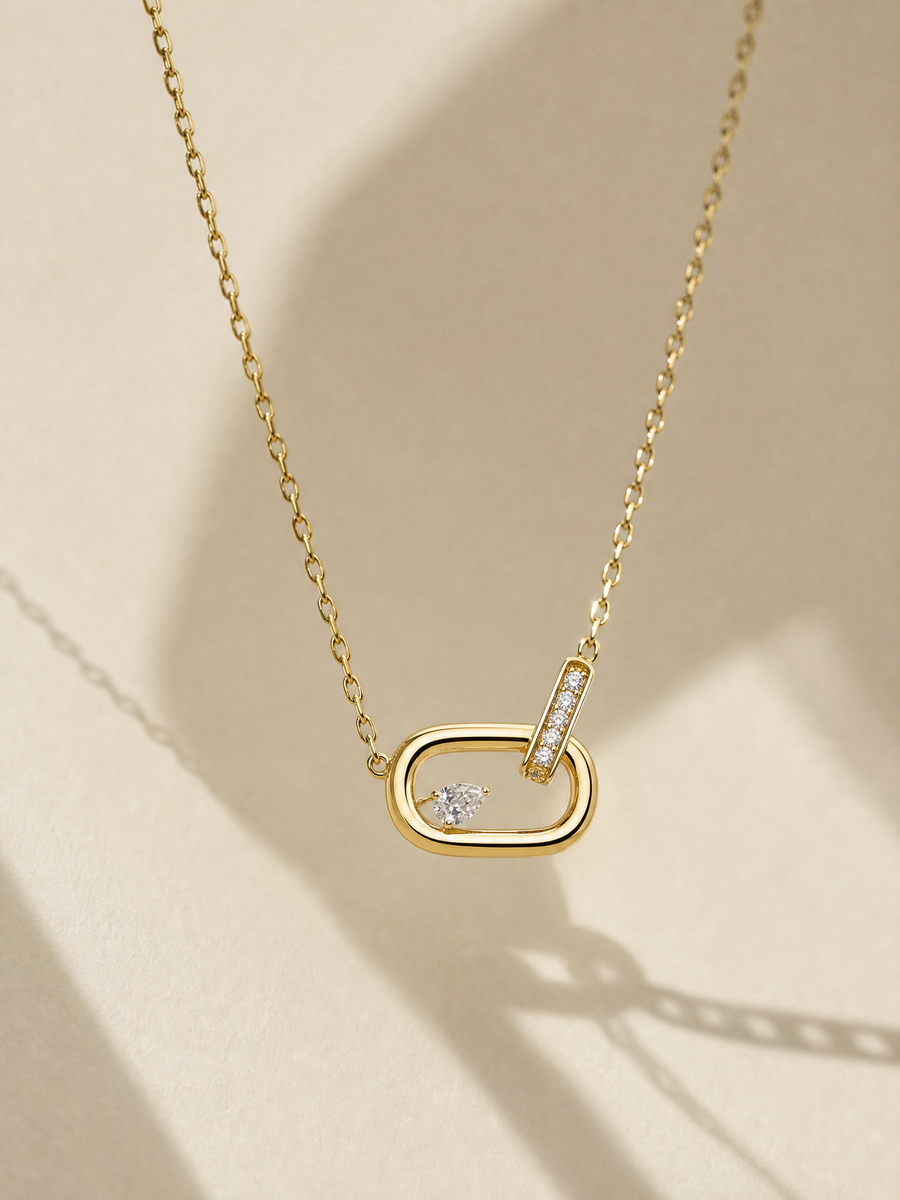
14K Yellow Gold Pear Lab-Grown Diamond Necklace - 0.245 ct Total
One note at a time.
New writing, new stones. Nothing else. Unsubscribe whenever you like.