August 27, 2026
How to Wear Diamond Studs Every Day
Most of a stud earring is behind the ear, where nobody looks. The post and the back are also the parts that fail first, and the ones nobody writes about.
Most of a stud earring is behind the ear. The stone is the part that gets photographed, and the part chosen in the case. The post and the back do the work, and nobody sees them. They are also the two that fail.
A stud worn every day is in continuous contact with hair, wool, towels, pillowcases and the inside of a scarf. Nothing else in a jewelry wardrobe takes that. A ring comes off at the sink. A necklace comes off at night. Studs stay on through all of it, which is the appeal, and it means the decisions behind the ear matter more than the one made at the front.
So, plainly, before the reasoning. For a stud meant to be worn continuously: take a screw back or a locking back over a plain friction back, take a setting that keeps metal around the stone rather than reaching over it, and take a stone between a quarter and a half carat on each ear if you want it to disappear into a day. Everything below is why.

A single round diamond stud worn in ordinary daylight, the reference point for everything that follows about size, back and setting.
The back is the part that fails first
Three families are in general use, and they fail in three different ways.
A friction back, also called a push back or a butterfly, is a straight grooved post with a small sprung back that grips it. It is the flattest against the head and the most comfortable to sleep in. Its failure mode is that a spring is a spring. Every jumper pulled over the head, every scarf wound and unwound, walks it a fraction down the post. It relaxes rather than letting go, which is why the first sign is usually a stud already on the floor. Pinching the back tighter restores the grip, and it works until the day it does not.
A screw back has a threaded post and a nut that turns onto it. It is the most secure of the three, and the trade recommends it for heavier and more valuable studs. It fails from the other direction: over years of turning the thread smooths, and a smoothed thread lets the nut spin without biting. It is also the least pleasant to sleep on, because the nut stands proud of the lobe and presses.
A locking back, sometimes sold as a guardian back, clips into a groove on the post with a double catch. It holds better than friction and goes on faster than a screw. Its weakness is not on the ear at all: it is small, flat and easily dropped on a bathroom floor.
The back that lies flat enough to sleep on is also the least secure of the three. That is a genuine trade, not a solved problem, and anyone who tells you one back wins on both counts is selling one back.
What weight does, slowly
Weight is not the stone alone. The setting carries its own mass, and a heavier basket, a thicker collar or a longer post adds grams the diamond gets blamed for. Our 1.67 ct pair in rose gold is listed at 5.72 g of gold, most of which is not diamond.
Below roughly half a carat on each ear, weight is not something you think about. Around a carat on each ear it declares itself: the front tips forward and down, the back rides up behind the lobe, and the stone stops pointing where you meant it to.
The practical fix is not a lighter earring. It is a back with a larger disc. A wide back spreads the load across more of the lobe instead of one point behind the hole, and the extra surface works as a counterweight keeping the stone facing forward. It is the least glamorous component in the box and the one deciding whether a heavier stud is wearable all day. If the back matters to you, ask before you order.
The post is the part you never see
Two numbers govern a post: how thick it is, and what it is made of.
Retail fine jewelry posts are commonly around 20 gauge, about 0.8 mm, which matches the hole left by a piercing gun. Studios pierce heavier, usually 18 gauge at 1.0 mm or 16 gauge at 1.2 mm. A thinner post in a wider channel has room to move, which is much of why some studs will not sit straight however carefully they are put in. That is not a defect but a fit.
Metal is the longer story. Solid 14K is a little under 60 percent gold; solid 18K is 75 percent. The remainder is alloy, and alloy supplies the stiffness. Higher gold content is softer, so at the same diameter an 18K post bends more readily than a 14K one. Posts seldom break outright. They accumulate small bends and small straightenings, and that cycle is what costs you one.
Platinum 950 behaves differently again. It is far denser than gold, about 70 percent heavier than 14K white gold for the same volume, and you feel that in the hand. Its surface marks readily, but when platinum is scratched the metal is displaced rather than removed: the scratch leaves ridges at its edges and the material is still there. Gold, scratched and polished across years, gets thinner. A platinum post ends up marked. A gold post ends up thin. Both cases are set out in platinum against white gold and in 14K against 18K for daily wear.
One thing goes under-said: white gold is not one material. Some white gold alloys are built on nickel, others on palladium, and they differ in stiffness, in color before plating and in how they age. Most of either kind is finished with rhodium plating, which wears and is replated as ordinary upkeep. This is why the alloy matters more than the karat number: two 14K white golds from two makers are not the same metal, and comparing them by karat alone compares the wrong thing.
Everything we make is solid, whether that is 14K gold, 18K or Platinum 950. Nothing is plated or filled. The honest footnote is that our platinum runs to six pieces. If platinum is the answer for how you wear things, the choice is narrow here, and we would rather say so than talk you into gold.

Two earrings worn in the same ear, where the setting of each decides how far the stone stands off the lobe.
A prong catches on wool. A bezel does not.
Prongs are small tips of metal reaching up and over the edge of the stone. They catch on sweaters, scarves, hair, pockets, towels and blankets, and every catch is a bending force on a thin piece of metal. Repeated for long enough, a tip lifts or wears thin and the stone begins to move in its seat. That is the ordinary way stones are lost. It is undramatic.
A bezel is a continuous collar of metal around the stone. It has no tips. Nothing stands above the girdle for a fiber to hook under, so the mechanism that loosens prongs never starts. For an earring worn every day, near hair, under scarves, against pillows, that one fact matters more than anything else about the setting, and it is almost never the sentence you find on a stud earring page.
The cost is real and we will name it. A bezel covers the outer rim of the stone and blocks light entering from the side, so the same diamond reads a touch smaller and quieter than in a four-prong. If size and brightness per carat are what you want, prongs win and the maintenance comes with them. A low basket with short, heavy prongs sits between the two. What a bezel does to light is a longer subject.
Between quiet and deliberate is about two millimeters
Start with the convention, because it misleads more buyers than anything else here. Stud carat weights are quoted as the total for the pair, so a pair described as 1.00 ct total carries roughly 0.50 ct on each ear. Halve every number you read before you picture it.
Then the measurements, which are smaller than almost anyone expects. A round diamond of 0.30 ct measures about 4.31 mm across. At 0.50 ct, about 5.1 mm. At a full carat, about 6.4 mm. Tripling the carat weight adds a little over two millimeters of diameter, and two millimeters is the whole distance between a stud that stays in the background of a face and one that is clearly a decision.
Across our own range: the 0.317 ct pair in white gold puts about 0.16 ct on each ear, fine and close to the lobe. The same design in the larger size is 0.538 ct total, a shade under 0.27 ct each, just below that 4.31 mm mark. The 1.006 ct rose gold pair is where a stud stops being background: half a carat on each ear, near 5.1 mm. The 1.67 ct pair lands at roughly 0.84 ct each, a little under 6 mm, and arrives in a room slightly before you do.
The rest sits in earrings, and every stone carries an IGI Laboratory Grown Diamond Report with its measurements printed on it, so none of this has to be taken on trust.

Two round diamonds photographed at the same scale under a loupe, where a small difference in diameter is easier to see than a difference in carat weight.
Where this stops being good advice
We make studs. We would like you to buy a pair. Here is the part that works against us.
A stud you never take off is a maintenance commitment, and the only piece of jewelry with no natural moment to notice something has gone wrong. A ring is looked at all day. A necklace is fastened and unfastened. Studs go in once and are forgotten, which is exactly why they are the pieces that get lost. Backs relax. Threads smooth. Prong tips lift. None of it announces itself.
Trade guidance on having prong settings checked runs from about every six months to every twelve to eighteen months, depending on how hard a piece is worn. A stud worn continuously belongs at the frequent end. In between there is a two-minute check, done over a table rather than a sink. Push the stone with a fingertip: if it shifts or clicks, stop wearing it. Draw a fingernail across the prong tips: if one snags differently from the others, it has lifted. Take the back off and put it on again: if it slides without resistance it is done, and a back is the cheapest part of the earring to replace.
And the sentence we would rather not write. If none of that is going to happen, do not buy the prong setting because it looked better in the case. Buy the bezel and the locking back, accept the slightly quieter stone, and keep the pair.
The stone is the part you choose. The post and the back decide how long you keep it, and they are still behind the ear, where nobody is looking.
In the collection
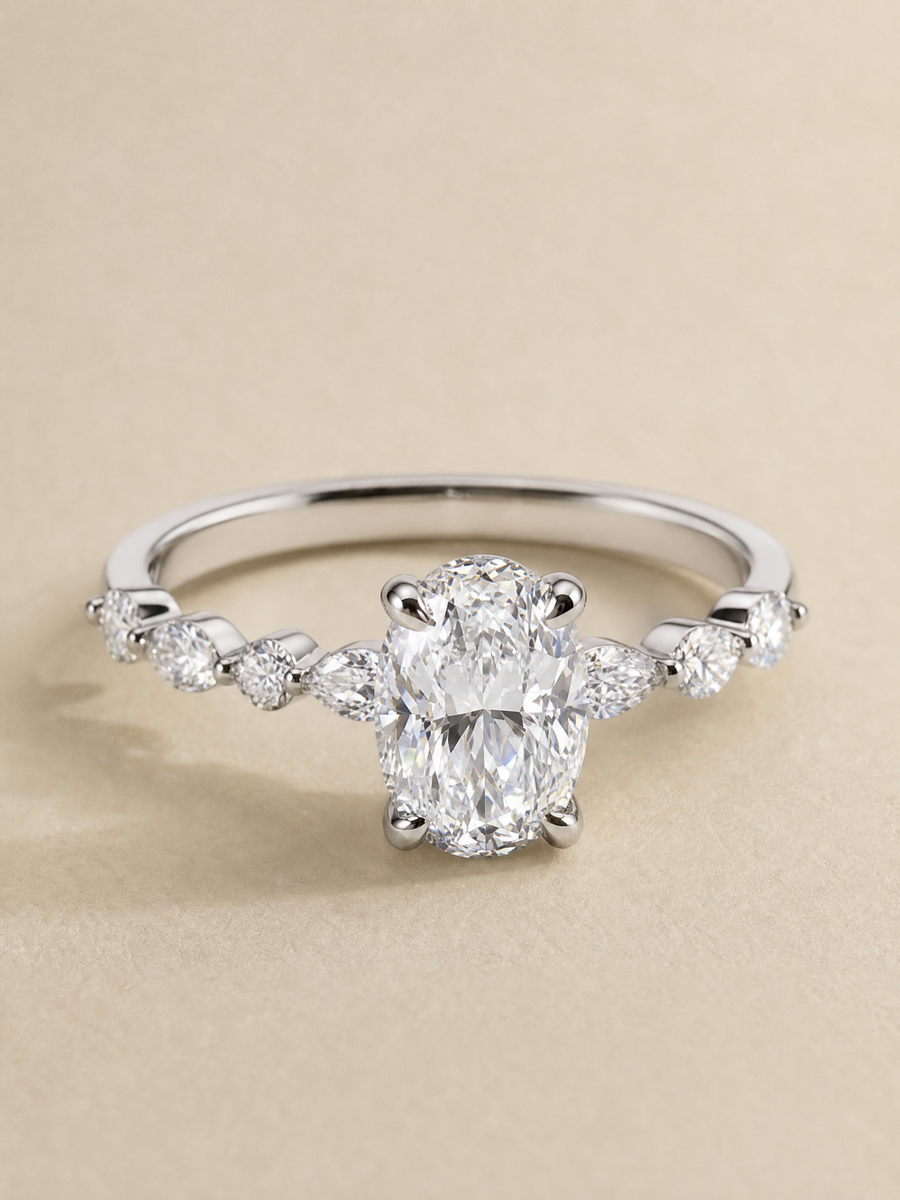
Platinum 950 Oval Brilliant Lab-Grown Diamond Ring - 1.22 ct Total
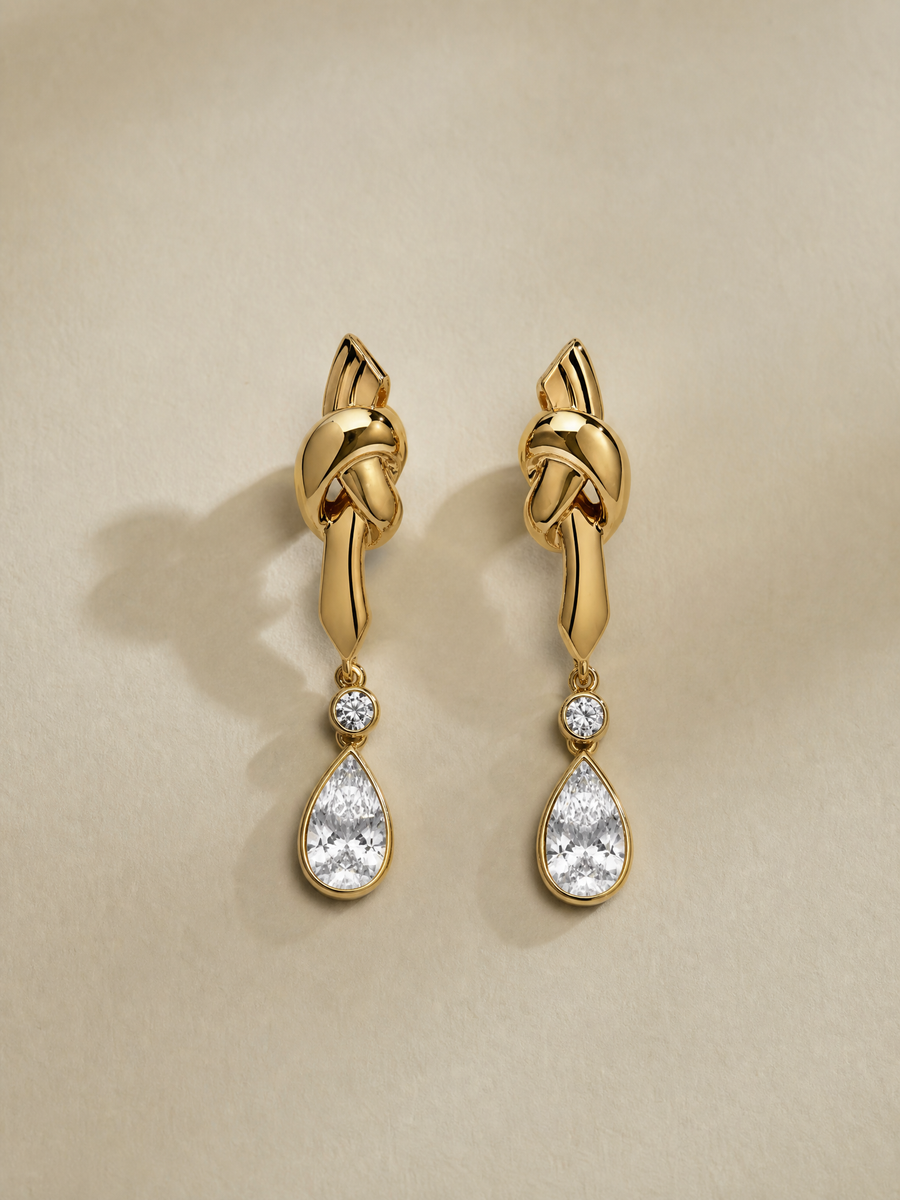
14K Yellow Gold Pear Lab-Grown Diamond Stud Earrings - 2.407 ct Total
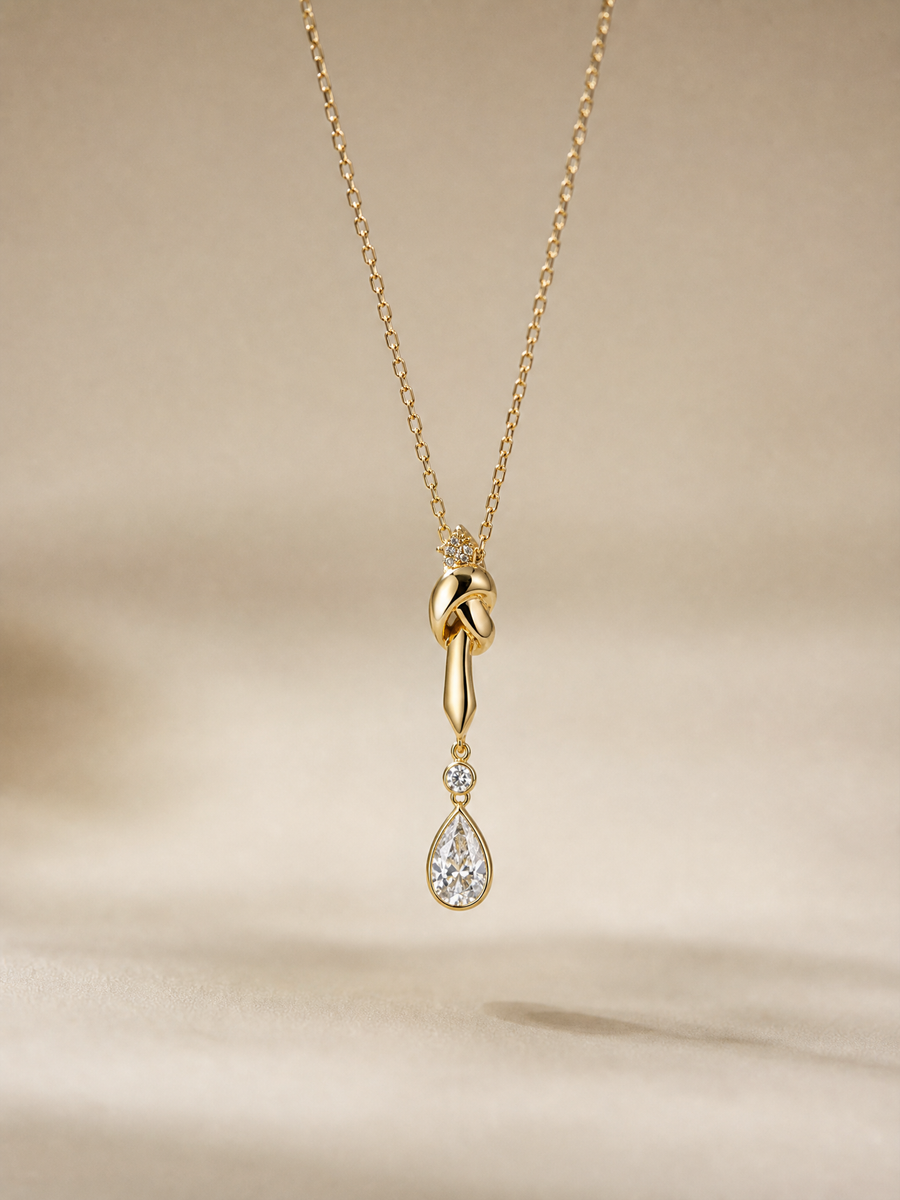
14K Yellow Gold Round Lab-Grown Diamond Necklace - 2.209 ct Total
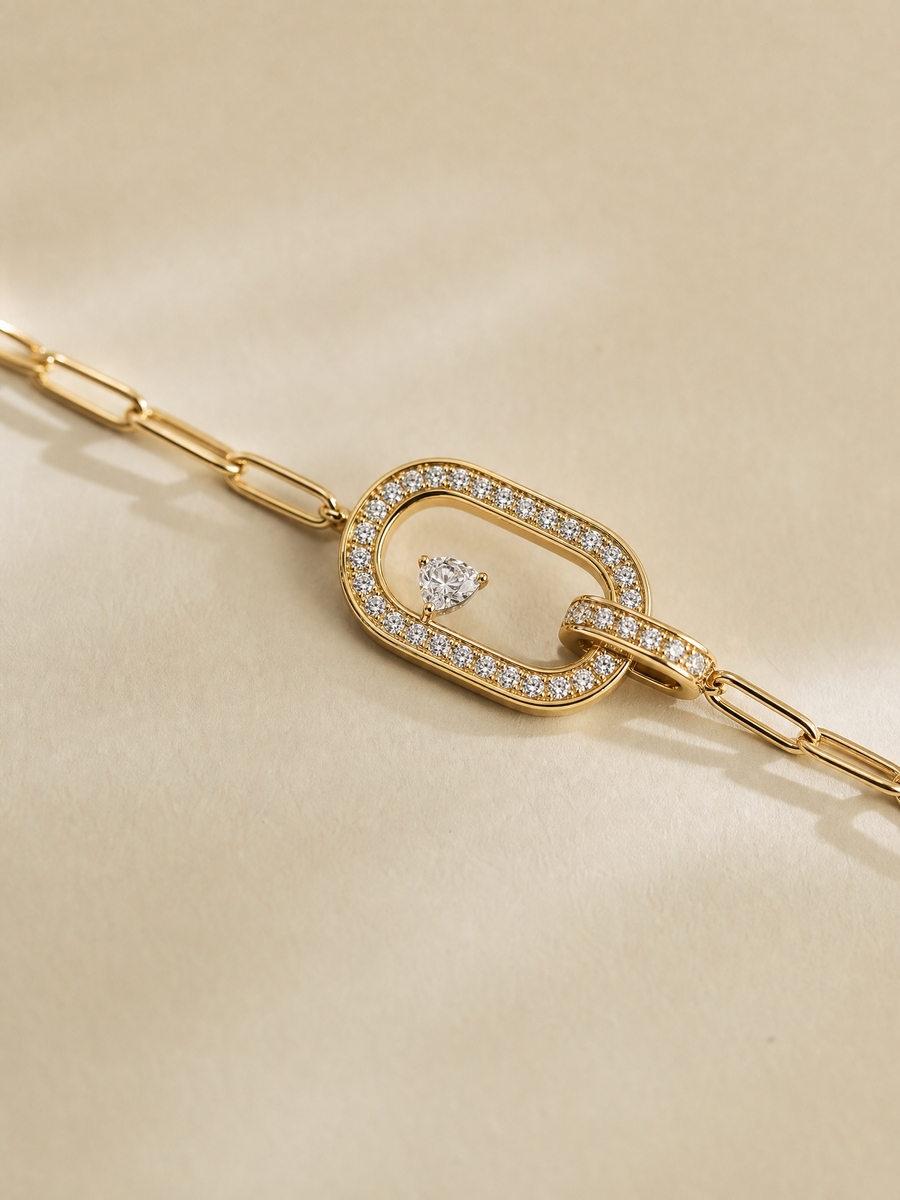
14K Yellow Gold Round Lab-Grown Diamond Bracelet - 0.633 ct Total
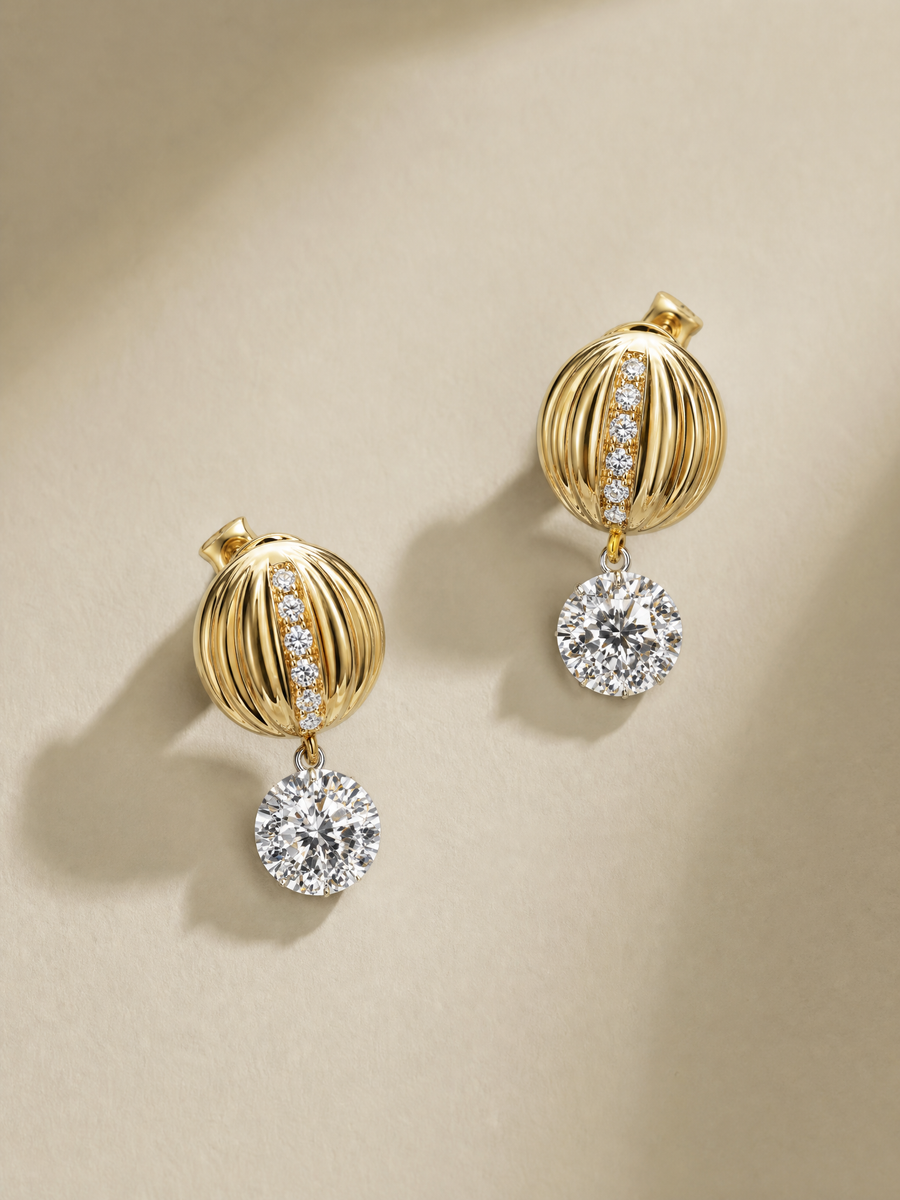
14K Two-Tone Gold Round Lab-Grown Diamond Stud Earrings - 1.654 ct Total
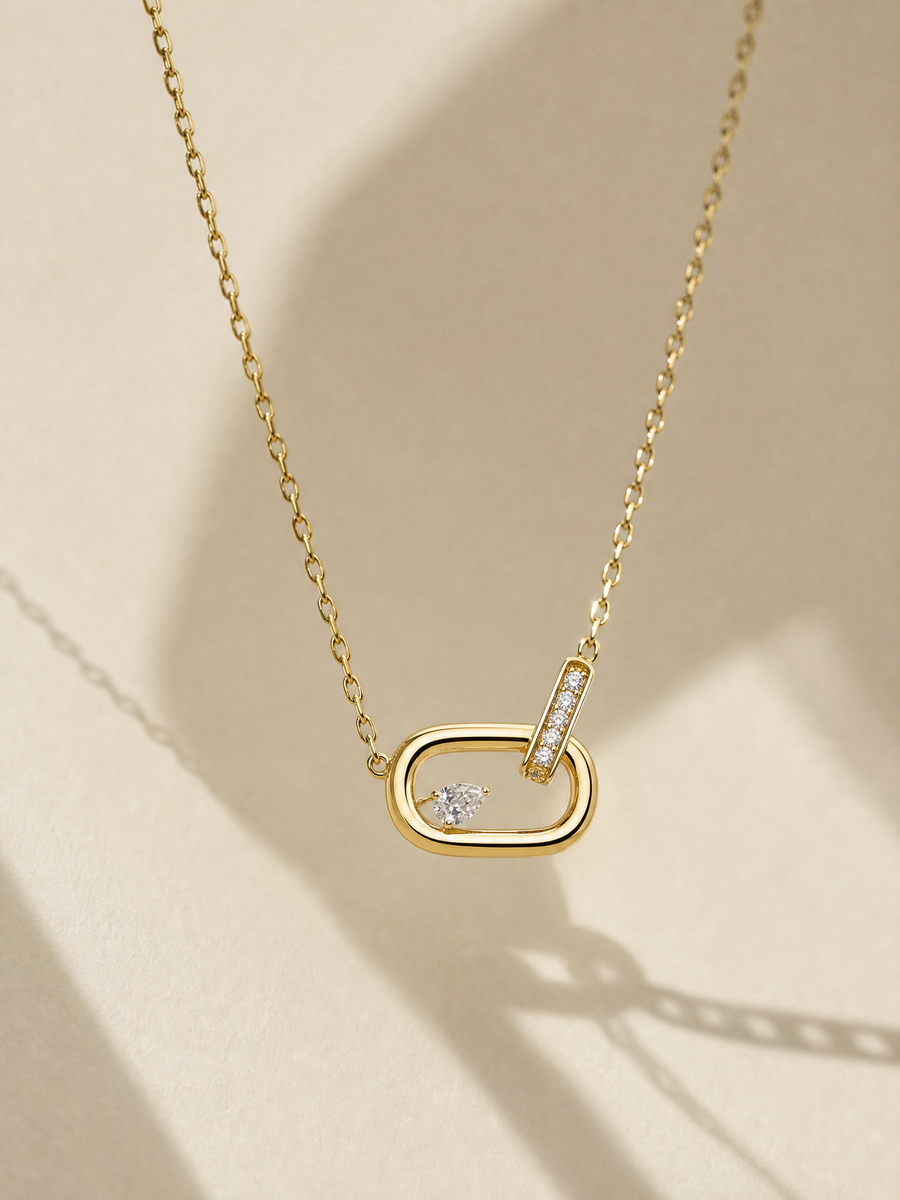
14K Yellow Gold Pear Lab-Grown Diamond Necklace - 0.245 ct Total
One note at a time.
New writing, new stones. Nothing else. Unsubscribe whenever you like.