August 27, 2026
14K vs 18K Gold for Everyday Wear
18K is 75 percent gold and reads warmer. 14K is 58.5 percent and harder. On hands worn every day, 14K usually wins. On ears and necks, 18K's color is worth having.
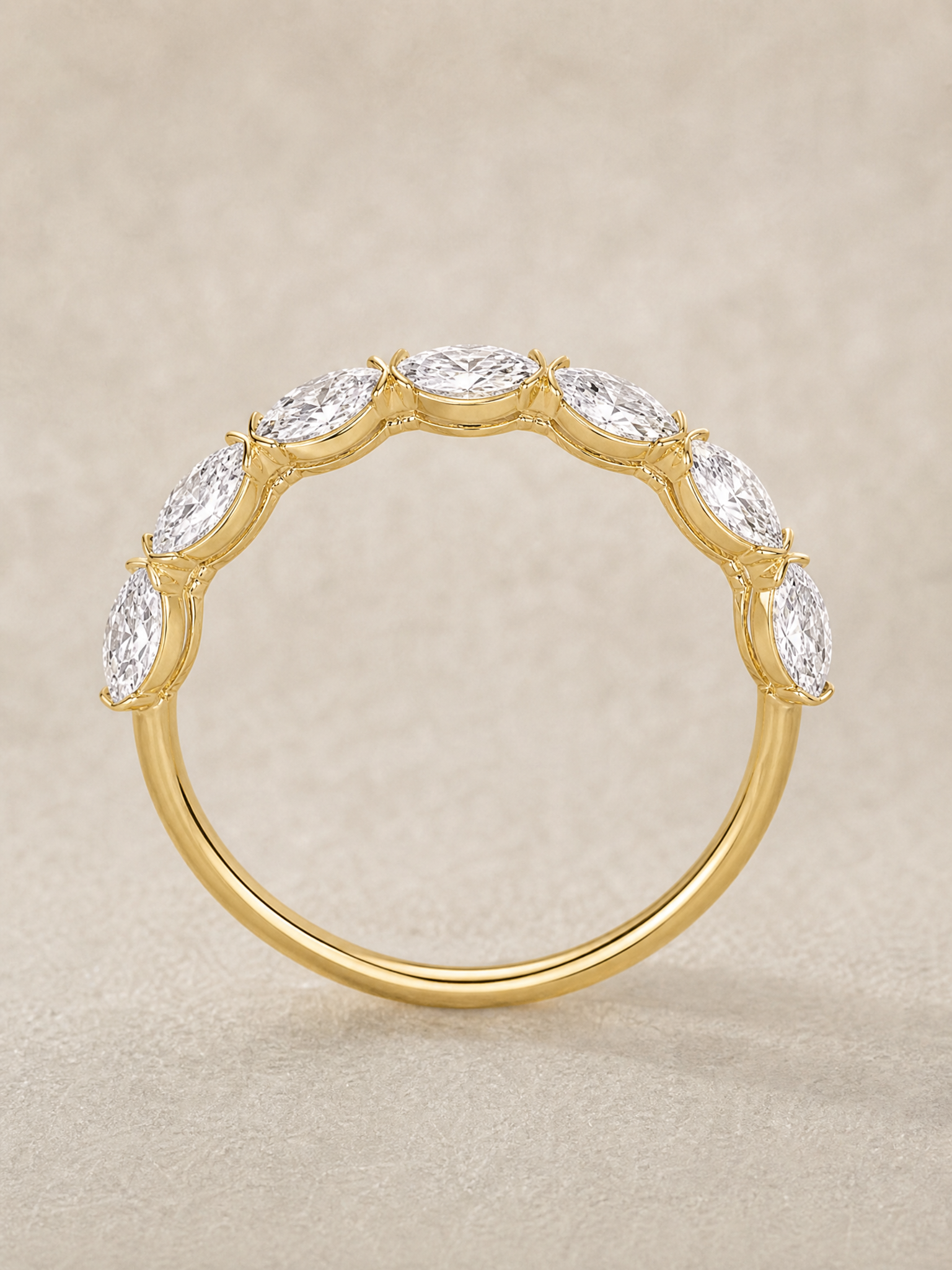
18K gold is 75 percent gold and 14K is 58.5 percent, so 18K looks warmer and more saturated. 14K is harder and takes daily abrasion better. For a piece worn every day on the hands, solid 14K is usually the more practical choice. On ears and necks, where rubbing is minimal, 18K's color is worth having.
That is the whole answer. The rest explains where it breaks.
What does 14K or 18K actually mean?
The numbers are exact and they do not move
Karat is a fraction with 24 on the bottom. 14 parts of 24 is 58.333 percent; 18 parts is 75.0 percent. As fineness, in parts per thousand, that is 585 and 750, which is what the stamp inside a band reads.
US 14K is mixed to 58.5 percent rather than 58.3 for a reason. The FTC's jewelry guides allow a National Stamping Act tolerance of three parts per thousand, so alloys are formulated above the line rather than on it. That is why the stamp reads 585 and not 583.
The other 25 or 41.5 percent does all the work
Pure gold is soft: about 2.5 on the Mohs scale and around 20 to 25 HV on the Vickers scale annealed. Nothing worn daily is pure gold.
Everything an alloy does that pure gold cannot comes from the metals mixed in, and the same metals set hardness and color at once. Yellow runs copper and silver roughly in balance. Rose pushes copper up and silver down. White swaps that pair for nickel or palladium, which bleaches the yellow out, then takes rhodium on top.
14K has more room to be hardened
14K has 41.5 percent of its mass available for hardening metals. 18K has 25 percent. The karat number does not make metal hard; it sets the ceiling on how hard the metal is allowed to be.
Which one holds up better to everyday wear?
14K, in standard alloys, for anything on your hands
A ring lives against keyboards, car doors, countertops and other rings. Solid 14K takes that better than solid 18K across the alloy families most American fine jewelry uses. If you want one rule and no footnotes, that is it. Browse rings accordingly.
Know which failures are cosmetic and which are structural
Scratches and loss of polish. Cosmetic. Both do it within weeks and a polish restores it. You notice it first; it matters least.
The shank going out of round. Cosmetic at first, structural eventually. A ring squeezed by a grip goes oval, and the thin point of that oval is where it wears. 18K gives way sooner; this is what people mistake for "18K scratches more."
Prongs thinning. Structural, and the failure that loses stones. Prongs stand proud of the metal around them, so they take the most contact. Thinned prongs get retipped; ignored ones get expensive.
The band wearing thin underneath. Structural. Ten to fifteen years of daily wear takes real thickness off the underside and ends in a reshank.
The published hardness numbers overlap more than the marketing does
Vickers hardness measures resistance to an indenter pressed into the surface, a fair proxy for scratching. It says nothing about how easily a shank bends, which is yield strength and stiffness. 18K's real disadvantage on a ring is deformation, a different property from the one hardness tables report.
And the tables do not rank the karats cleanly anyway. One trade range puts common 18K alloys at roughly 125 to 180 HV and common 14K at 150 to 200 HV, which supports the usual story. Casting-grain figures from another supplier list 14K yellow at 140 HV against 18K yellow at 155 HV, and 14K white at 165 HV against 18K white at 210 HV, contradicting it. A standard 18K yellow measures about 150 HV annealed and 224 HV after cold work, so temper alone spans the whole argument. Karat tells you what an alloy is permitted to be, not what a given alloy is.
| Property | Solid 14K | Solid 18K |
|---|---|---|
| Gold content | 58.5 percent, stamped 585 | 75.0 percent, stamped 750 |
| Hardness | Harder in like-for-like alloys; ranges overlap | Softer, deforms sooner; a hardened 18K can beat a soft 14K |
| Color saturation | Lighter, cooler yellow; whiter white before plating | Deeper, orange-leaning yellow; warmer rose |
| Price per gram | Lower; the gap tracks gold content, not design | Higher; about 28 percent more gold by weight |
| Best use | Rings, bangles, anything against hands and cuffs | Earrings, pendants, chains, anywhere color is the point |
Can you actually see the difference between 14K and 18K?
Side by side yes, at conversational distance mostly no
Hold a solid 14K yellow band against a solid 18K yellow band, touching, in daylight, and the step is obvious. Move them three feet apart on two hands and most people stop seeing it. The difference is real, small, and smaller than the gap between two 14K alloys from different makers.
Yellow shows it, white hides it, rose changes the question
Yellow. Where the extra gold reads. 18K yellow is deeper and leans orange; 14K yellow is lighter and slightly cooler. A solid 14K yellow gold piece like this 2.779 ct diamond bangle is the counter-argument: on a wrist meeting desk edges all day, the harder metal makes the better object.
White. You are looking at rhodium, not gold. Both karats plate to the same bright white, and the difference surfaces only as the plating wears. Underneath, 14K white starts whiter because it holds less yellow gold, as in our 1.09 ct round in solid 14K white gold. If you want white without a maintenance cycle, the comparison that matters is platinum against white gold, not 14K against 18K.
Rose. Rose is the special case, because copper is both what makes it rose and what hardens gold, so the usual softness penalty for going up in karat is partly offset. One supplier's casting-grain data puts 18K rose at 195 HV against 18K yellow at 155 HV. A solid 18K rose gold piece such as this 1.474 ct D VS1 ring is not making the trade the karat number implies.
Does 14K or 18K matter if you have sensitive skin?
Karat is the wrong variable. The alloy is the right one
Nothing about being 14K or 18K makes a piece more or less likely to irritate skin. What matters is which metals fill the non-gold fraction. 18K holds less non-gold metal, so the same recipe carries less nickel at 18K, but that is far smaller than the effect of choosing an alloy with no nickel at all.
What nickel has to do with it
Nickel is among the most common contact allergens, and jewelry is a route of exposure. The European Union caps how much nickel an article may release: REACH Annex XVII, entry 27 sets 0.5 micrograms per square centimeter per week for items in direct and prolonged skin contact, and 0.2 for posts inserted into pierced ears. The United States has no equivalent jewelry rule.
This is not medical advice. If metal has given you trouble before, a dermatologist can patch test, and that answer is worth more than any purchasing rule.
White gold alloys vary, so ask
Some white golds are nickel-based, others palladium-based. They look alike under rhodium and behave differently on skin. Yellow and rose alloys are typically copper, silver and zinc with no nickel in the recipe, which is why people with metal sensitivities often end up in yellow gold without being told why. Ask what an alloy is before you buy, from us or anyone. Ask us and we will answer.
What changes over ten years of repairs, resizing and replating?
Resizing is easier in 18K, and you will do it more often
18K is more malleable, so a bench jeweler moves it more easily and gets a cleaner join. That is a real 18K advantage, seldom mentioned. The offset is that 18K rings distort more, so they arrive needing to be trued more often. The two roughly cancel.
Retipping and reshanking are the same job in both
Retipping is routine for any raised stone in any metal at any karat: once or twice a decade on a daily ring. A piece like this 4.06 ct D VS1 round in solid 18K gold wants an annual prong check for the same reason a heavy stone in 14K does. Prongs carry the load, not the metal under them.
Rhodium plating is the real ten-year difference, and it applies only to white
A rhodium finish is fractions of a micron thick and wears off with contact. Rings go first, at the underside and shoulders; earrings and pendants run a decade untouched. Trade practice is to quote replating every one to two years for a ring worn daily. Yellow and rose have no cycle: they patina, and a polish brings them back. It applies equally to 14K and 18K white, making plating a white-gold question, not a karat question. If that sounds like a chore, look at earrings and necklaces in yellow or rose.
Does the metal change how the diamond looks?
Yes, and more than most people expect
A round brilliant is a set of small mirrors reflecting the prongs holding it and the band beneath it. GIA says so directly: the facets reflect their surroundings, including the color of the band and the prongs, so yellow gold prongs can impart some yellow to a colorless stone.
A warm metal both flatters and costs you
Set a stone in the I to K range in yellow gold and the warmth in the metal absorbs the warmth in the stone. It reads cleaner mounted than loose on a white tray. It is a legitimate way to buy: spend the difference on size or cut rather than on a grade nobody sees once it is set.
It runs the other way too. Set a D in solid 18K yellow and you have paid for colorless, then warmed it back up with the setting. Nothing is wrong with that piece; you have bought a grade you cannot see. If colorless is the point, a white metal keeps it.
Fancy colors have their own rules
Pinks and blues generally want a white metal, because a warm surround competes with the hue instead of supporting it. Yellows and browns go either way: a yellow setting deepens them, a white one makes them read as more distinct. The 3.803 ct Fancy Intense Blue oval in solid 18K gold shows how deliberate that choice has to be. Working in color, read how fancy color grades are assigned first: grade and metal get decided together.
Where this advice works against us
We stock far more solid 14K than solid 18K. So when this article says 14K is usually right for everyday hands, it is running with our inventory rather than against it, and you should weigh it accordingly. Put solid 14K beside solid 18K and the imbalance is visible.
Here is the case where 18K is the better buy, and we mean it.
If you want yellow gold to look like yellow gold, buy 18K. The color is the product. 14K yellow is a good metal and a slightly muted one, and if you have a picture in your head of a deep warm yellow, 14K will quietly disappoint you for years without your ever identifying why. No amount of hardness compensates for the wrong color.
The same holds for rose: copper hardens as it colors, so 18K rose gives you the deeper color without the softness penalty you would expect. And if a piece does not live on your hands, the durability argument barely applies. Earrings touch a pillow; pendants touch fabric. Take the 18K.
Questions people ask next
Is 18K too soft for an engagement ring? No. 18K engagement rings have been made for a very long time and they survive. They need prong checks and they go out of round sooner. If you use tools, lift, or cook constantly, 14K asks less of you.
Does 14K gold turn your finger green? Sometimes. It is copper reacting with sweat, lotion or cleaning products, not a defect. 14K holds more copper, so it is marginally more likely. It washes off and harms nothing.
Is 18K worth more when you sell it? Per gram yes, because there is more gold in it. That says nothing about what a finished piece recovers: resale offers land far below retail at either karat.
How to decide, in one rule. Choose by where the piece sits on your body and what your hands do all day. If it goes on your hands and your hands are in things, take solid 14K: rings, bangles, anything that meets a desk edge or a set of keys. If it sits on your ears or your neck, take solid 18K, because nothing there abrades it and you get the color you wanted. If it is rose, take 18K either way; the copper is doing both jobs. And decide the metal before the color grade, because a grade you cannot see once it is mounted is a grade you did not need to buy. Start with the stone, then pick the metal that lets it read the way you want.
In the collection
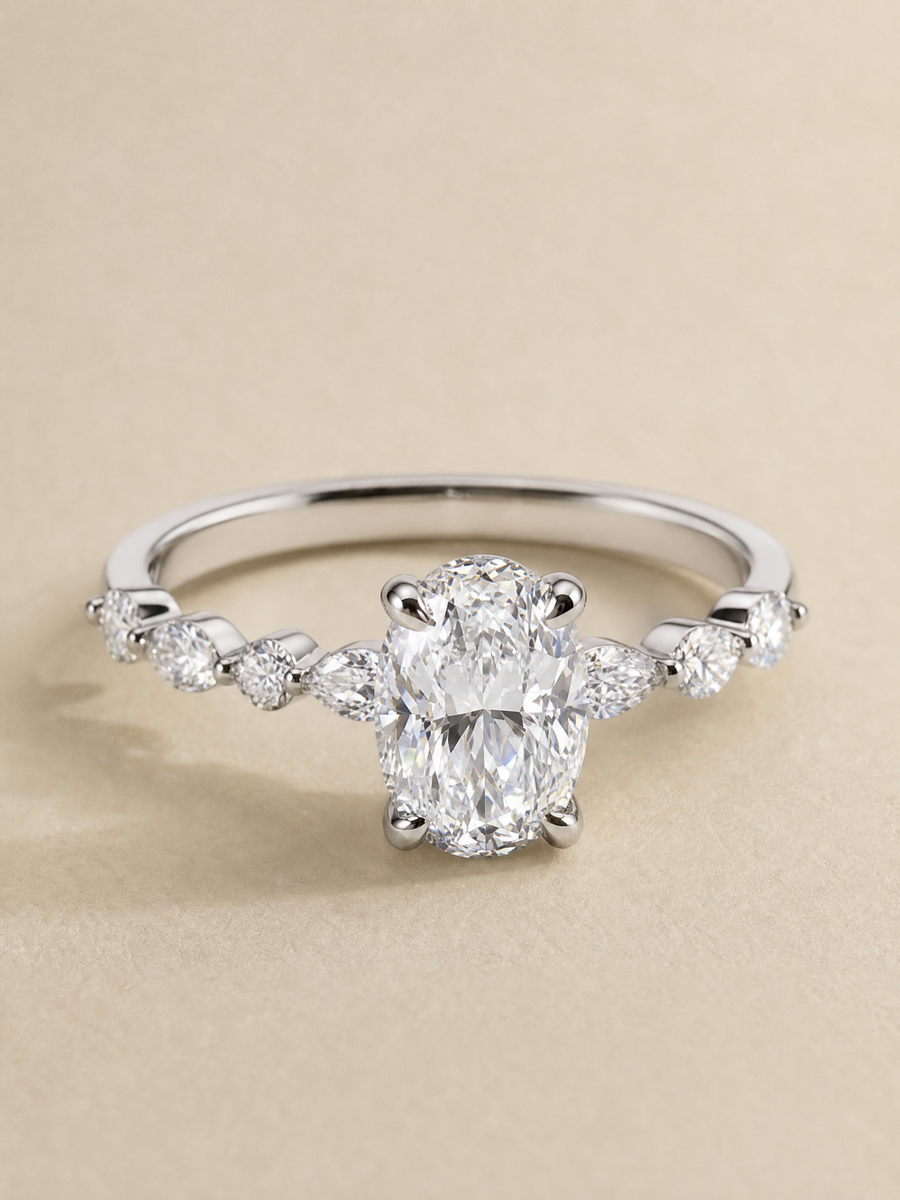
Platinum 950 Oval Brilliant Lab-Grown Diamond Ring - 1.22 ct Total
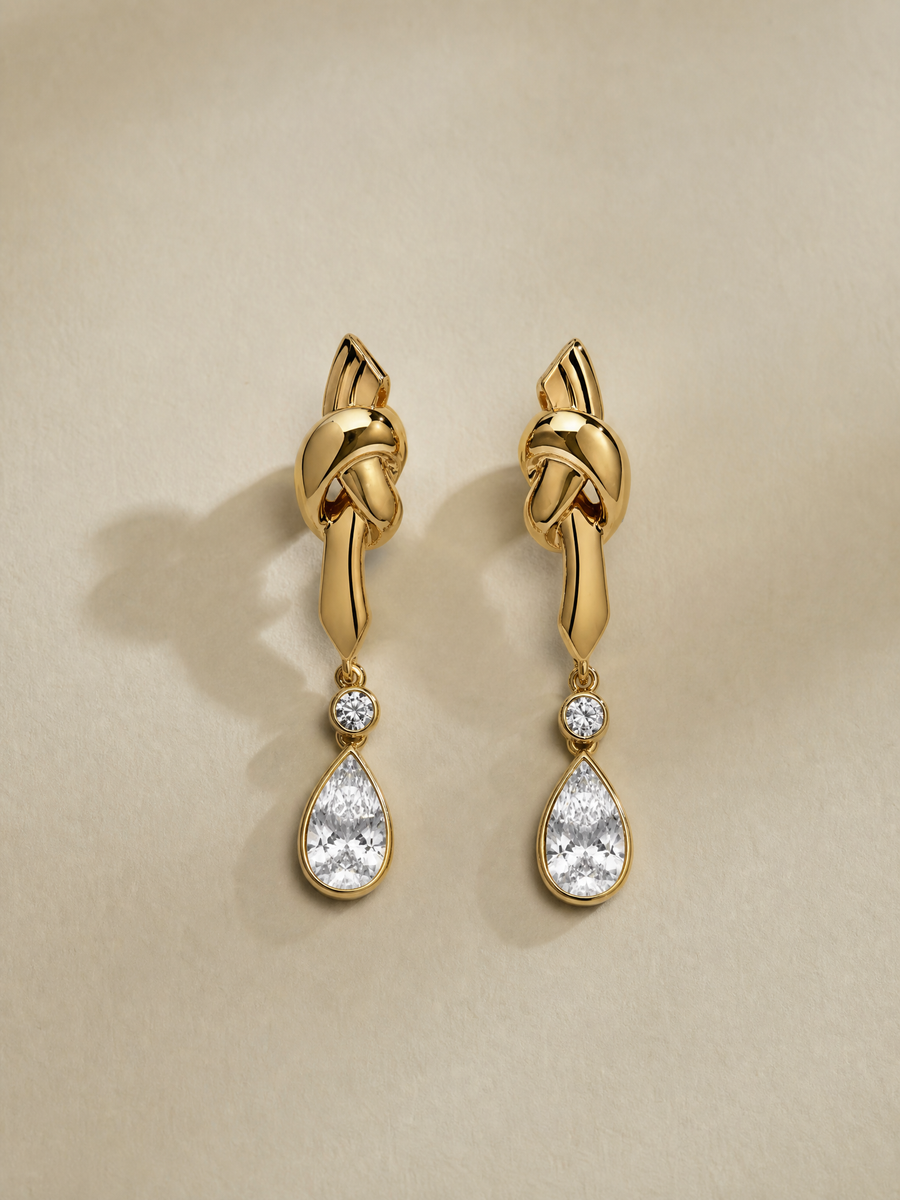
14K Yellow Gold Pear Lab-Grown Diamond Stud Earrings - 2.407 ct Total
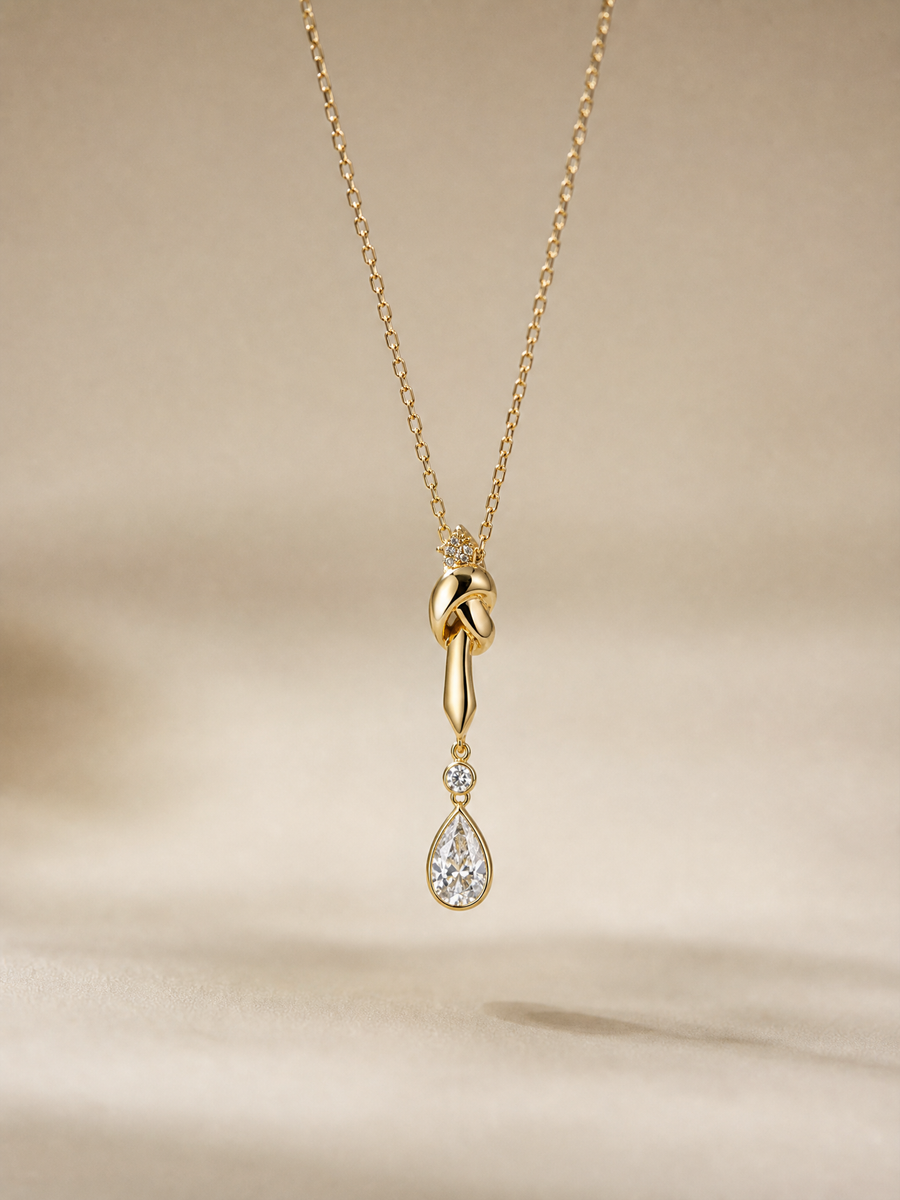
14K Yellow Gold Round Lab-Grown Diamond Necklace - 2.209 ct Total
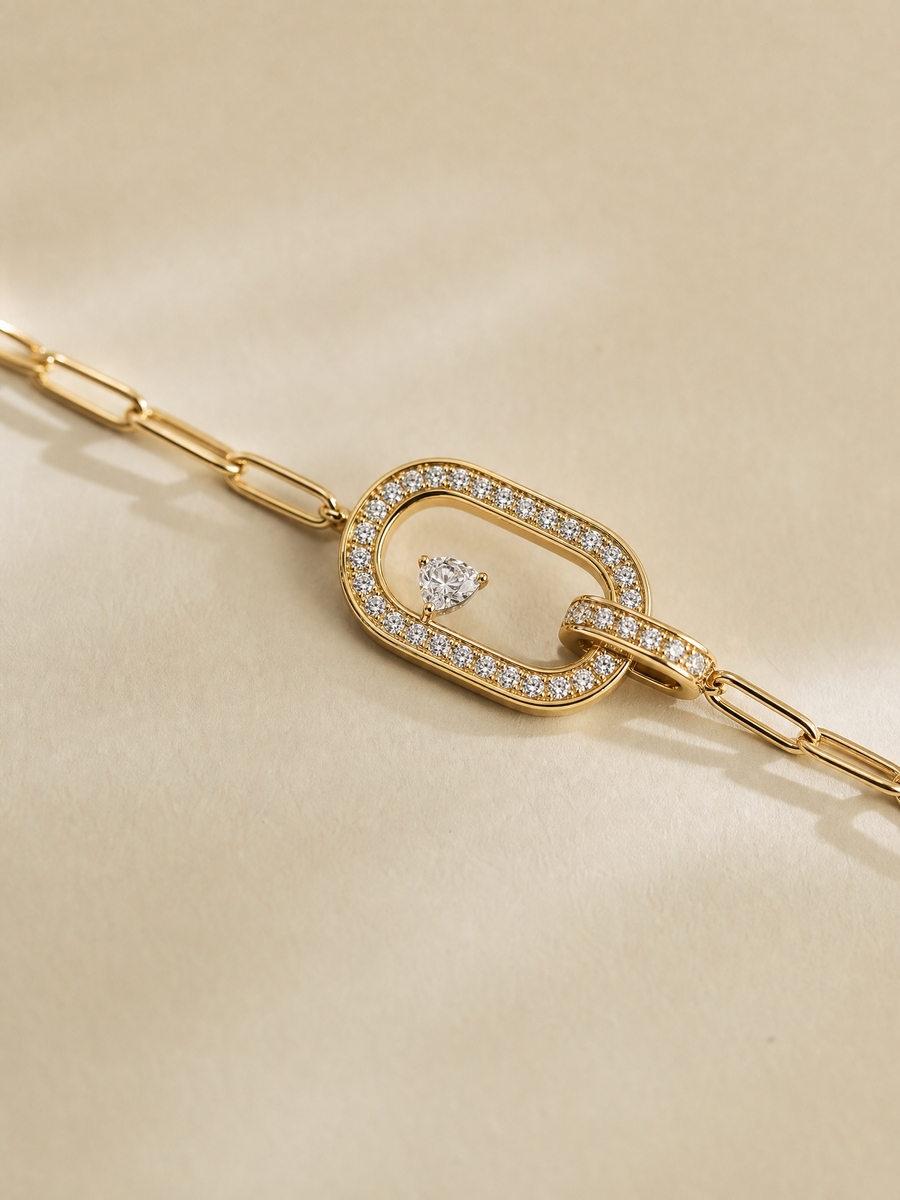
14K Yellow Gold Round Lab-Grown Diamond Bracelet - 0.633 ct Total
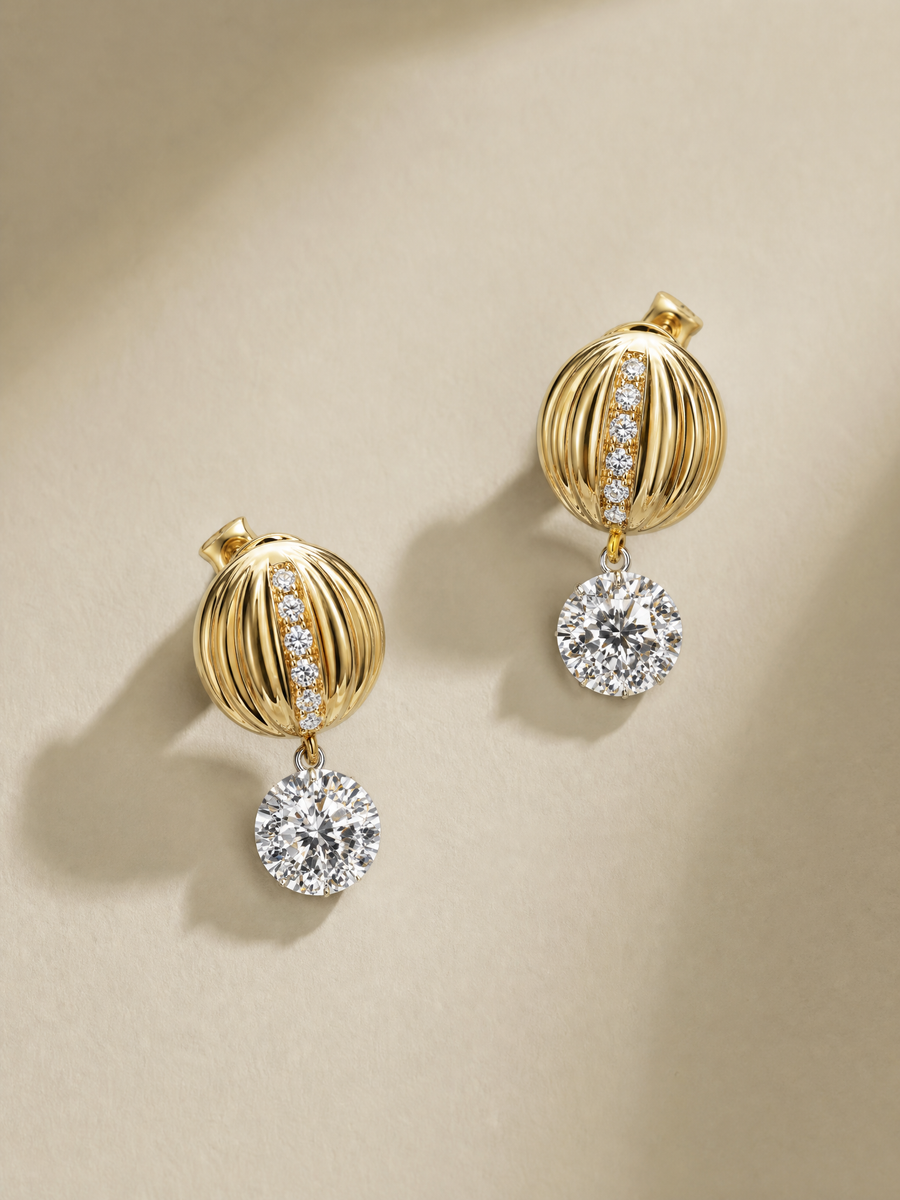
14K Two-Tone Gold Round Lab-Grown Diamond Stud Earrings - 1.654 ct Total
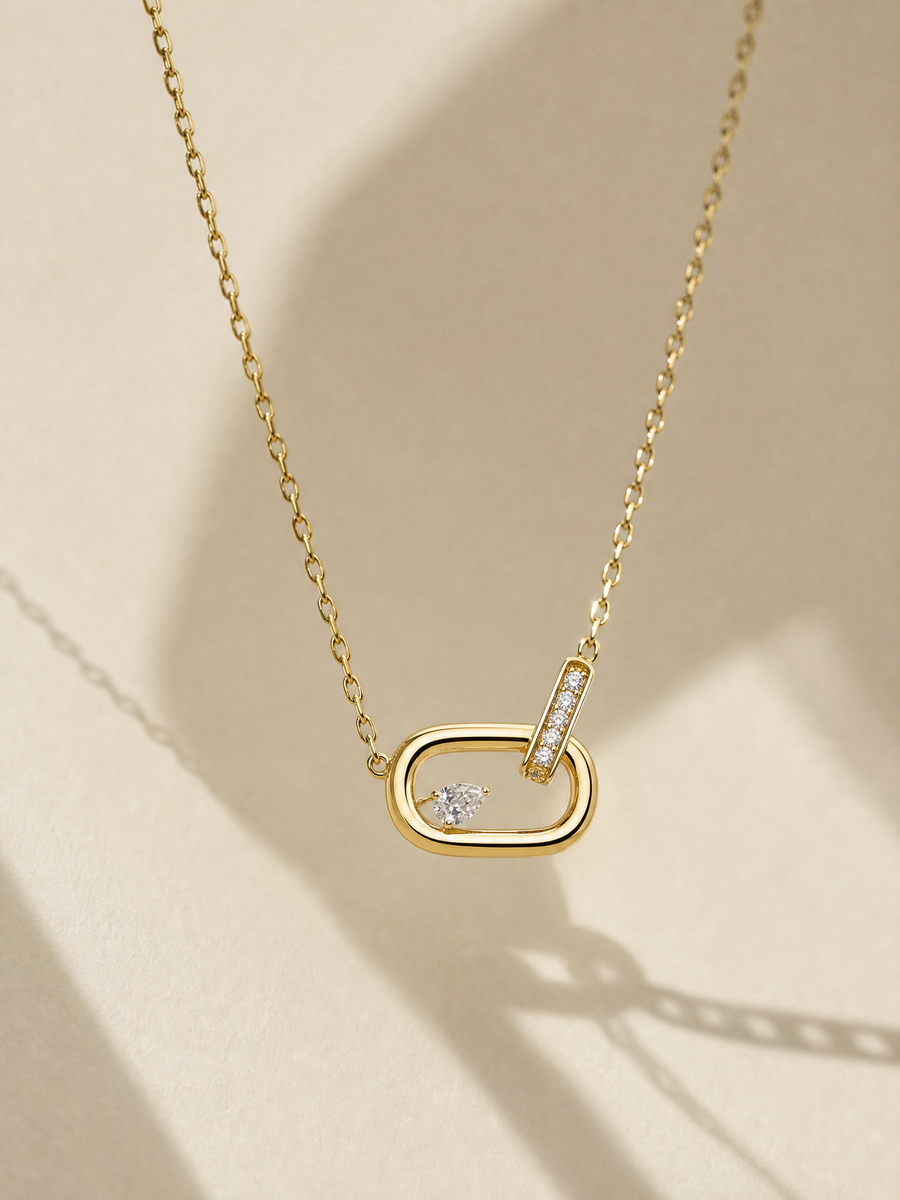
14K Yellow Gold Pear Lab-Grown Diamond Necklace - 0.245 ct Total
One note at a time.
New writing, new stones. Nothing else. Unsubscribe whenever you like.