August 27, 2026
Platinum vs White Gold: Which Should You Choose?
White gold is a gold alloy plated with rhodium to look white, and that plating wears off. Platinum is white throughout but develops a patina. One upkeep or another.
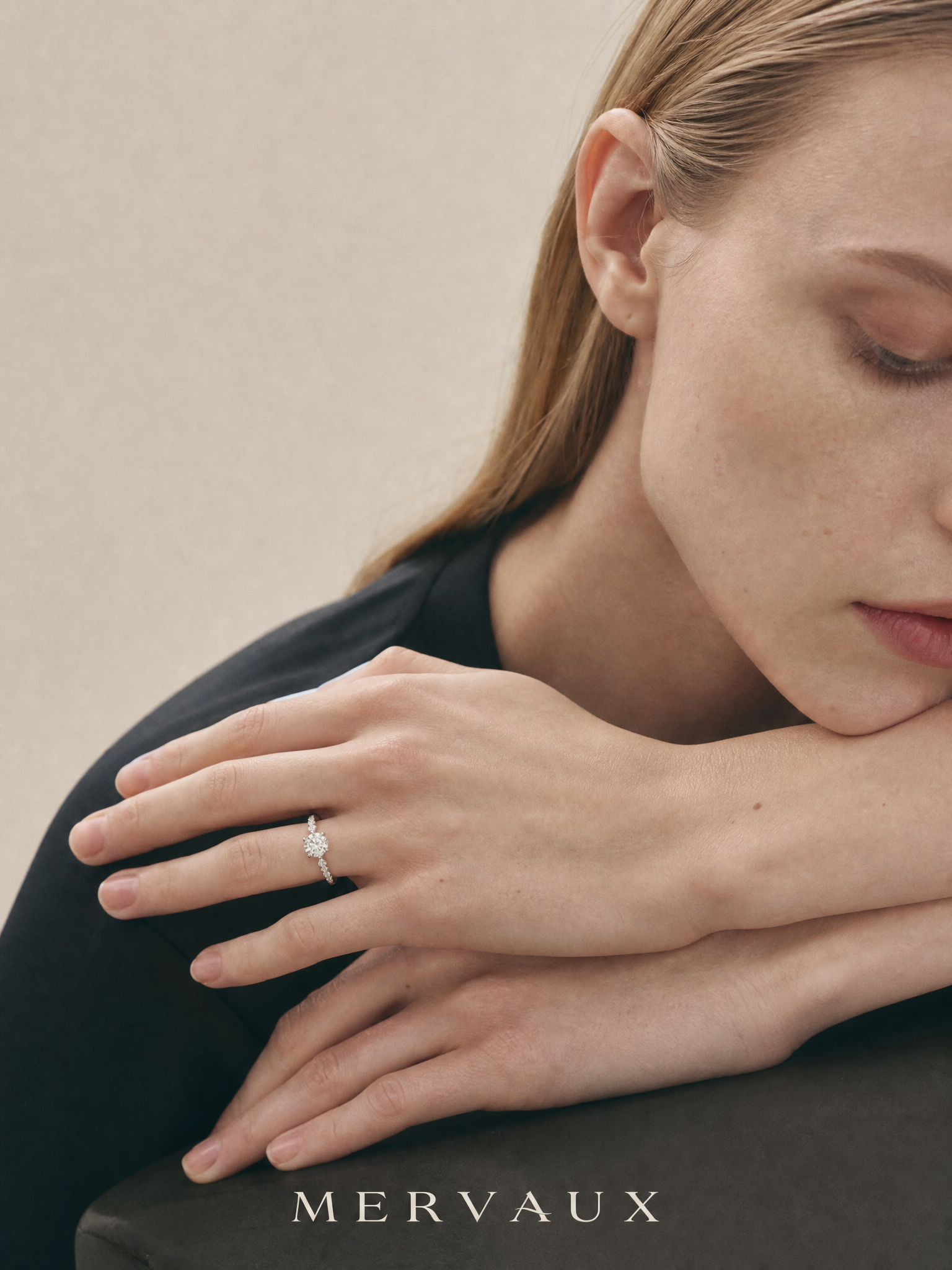
White gold is a gold alloy plated with rhodium to make it look white. On an engagement ring worn every day, that plating wears off and needs redoing every year or two. Platinum is white all the way through and never needs plating, but it develops a soft matte patina instead. The choice is between one kind of upkeep and another.
What is white gold actually made of?
White gold is yellow gold mixed with white metals and then plated. There is no naturally white gold.
The alloy under the plating
A 14K alloy is 14 parts gold in 24, or 58.3 percent gold. An 18K alloy is 75 percent. The rest does the whitening, usually nickel or palladium. Nickel whitens aggressively and hardens the alloy; palladium whitens more gently and costs more. Neither gets the metal fully white. Unplated, most white gold reads as pale champagne or faint gray-yellow, an attractive color and not the one anyone was shown in the store. If the karat side matters to you, 14K and 18K behave differently under daily wear for reasons unrelated to plating.
What rhodium is, and how thin the layer is
Rhodium is a platinum group metal, brilliantly white and harder than gold. It is electroplated on in a layer jewelers commonly put at roughly 0.75 to 1.0 micron, thinner than a human hair by more than an order of magnitude. It is a finish, not a structure. Every bright white gold ring you have handled was wearing one.
What it looks like when the plating goes
Warm patches at the back of the shank first. The underside takes the most contact with keys, steering wheels, gym equipment and the fingers either side of it, so the rhodium thins there first and the warm alloy starts to show. Then the edges of the shoulders. Last, usually, the prongs and the top of the head, which catch less. Most people notice it as a faint two-tone quality in daylight, or in a photograph, months before they name it. Nobody mentions rhodium at the point of sale because at the point of sale it is invisible.
How do the two metals age over ten and twenty years?
Platinum displaces metal. Gold sheds it. That one difference drives almost everything else here, and it is the most useful thing to know if you are choosing a ring you intend to keep.
Platinum moves, gold leaves
When platinum is scratched the metal is not lost, it is pushed aside. The Platinum Guild describes it as moving aside like running your finger across a stick of butter. The same mass is still on the ring, rearranged into thousands of tiny displacements that scatter light. That is a patina. Gold under the same abrasion loses microscopic material with each scratch. It does not rearrange. It goes, and it does not come back.
What ten years looks like
A platinum ring at ten years has a satin surface and close to its original weight and section thickness. A white gold ring at ten years has been replated several times, polished at least as often, and is measurably thinner than it started, because every polish removes metal on top of what wear already took. Polishing is not restoration. It is controlled removal.
What twenty years looks like
At twenty years the gap is structural, not cosmetic. Platinum shanks from the Edwardian era survive with their original metal largely intact. Gold shanks worn continuously that long often need a section replaced at the back, where abrasion plus repeated polishing has thinned the band toward a break. Both outcomes are ordinary. Only one is a repair.
| What changes over ten years | Solid white gold, year one | Solid white gold, year ten | Platinum, year one | Platinum, year ten |
|---|---|---|---|---|
| Surface color | Bright cool white, from rhodium | Warm at the shank unless replated | Bright cool white, no coating | Same white, now satin |
| Finish | Mirror polish | Mirror, restored each service | Mirror polish | Soft matte patina |
| Metal on the ring | Full section | Thinner: wear plus polishing | Full section | Full section, redistributed |
| Scratches | Polished out | Polished out | Displaced, not removed | Blended into the patina |
| Scheduled upkeep | Plating and polish | Plating and polish, ongoing | None | None |
| Likely repair | None yet | Shank thinning, retipping | None yet | Prong inspection |
Which one holds a diamond more securely?
Platinum prongs bend before they break, which is why many jewelers set a platinum head on a gold ring.
Why a platinum head on a gold ring is normal
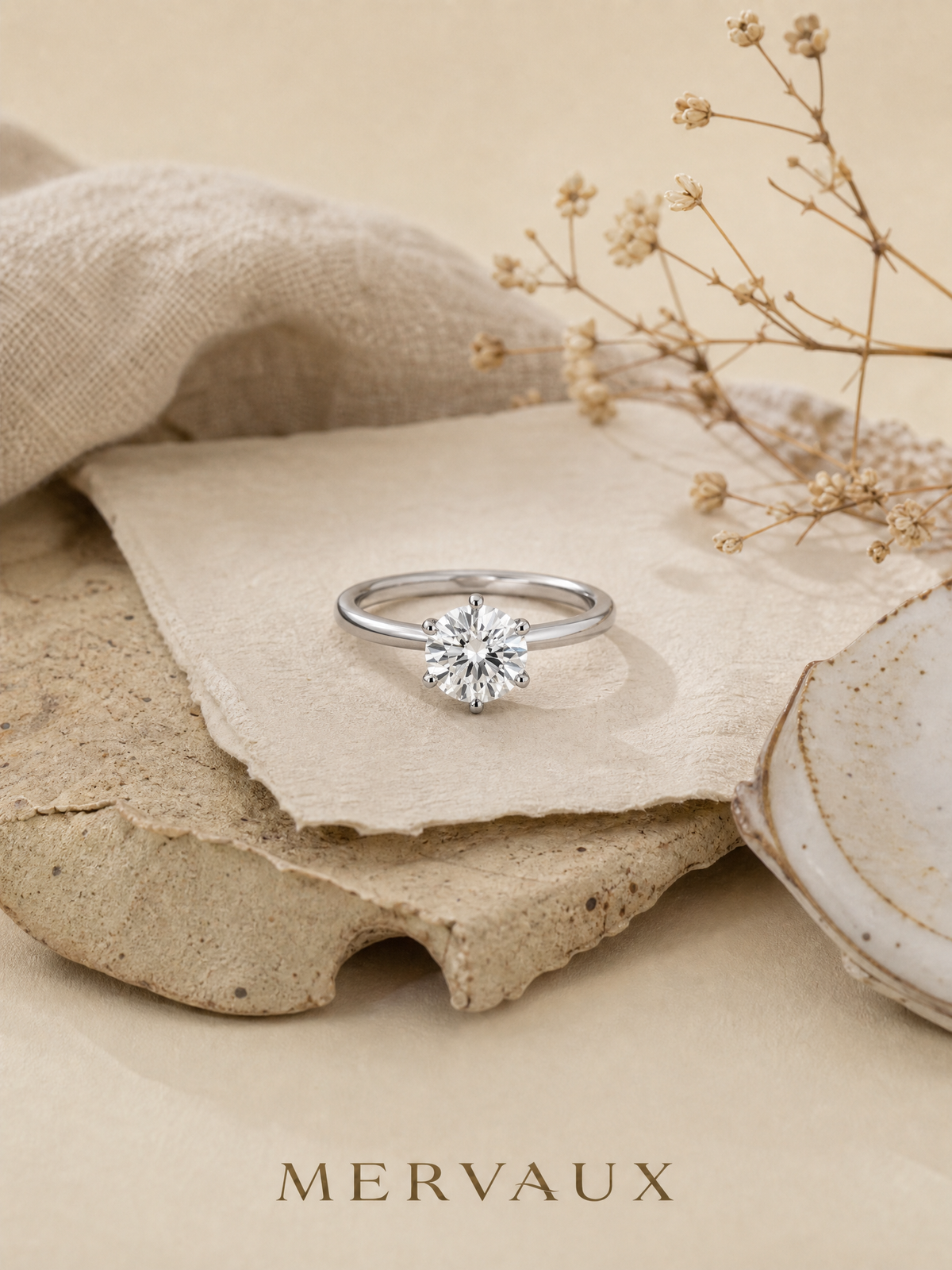
A prong is a small piece of metal doing a large job under constant knocks. Platinum's ductility means a knocked prong deforms and keeps holding. A gold prong under the same impact is likelier to fracture at the tip, and a fractured tip is how stones leave rings. Our 1.08 ct D VS1 round brilliant solitaire in solid Platinum 950 is built that way throughout, head and shank in one metal, with no color join to manage.
The failure mode nobody mentions
Platinum's displacement behavior has an ugly side at the prong. Displaced metal accumulates as a lip around the base of the stone, and that buildup can sit over a prong that has thinned underneath. The prong looks substantial and is not. Gold prongs give the opposite signal: they visibly shorten, so the problem announces itself.
What to do about it
Have prongs checked under a loupe once a year in either metal, and if the ring is platinum, ask about thinning under the buildup. Do not rely on the ring looking fine. A stone that has begun to move usually clicks faintly against a fingernail first.
What does each metal cost to own, not to buy?
White gold costs a modest amount on a regular schedule. Platinum costs less often and more per event.
White gold's costs recur
Replating a ring worn daily comes due every year or two, and the charge is a service fee rather than a repair bill. It is normally bundled with a clean and polish, which is why it feels like maintenance rather than expense. Over twenty years the recurrence is the cost, not the charge. Add prong retipping, cheap and routine in gold, and shank work later on.
Platinum's costs are irregular
No plating, ever, so the recurring line disappears. What replaces it is fewer, larger events. Platinum resizing and welding need higher temperatures and a bench set up for it, so the labor rate is higher and not every local jeweler takes the job. Polishing platinum back to mirror takes longer too. If you want the patina, that cost is zero, because doing nothing is the correct action.
Settle resizing before you buy
Both metals resize. Gold resizes more easily and cheaply, and more benches will do it. If you expect a ring to be resized more than once, that is a genuine point for gold. If you expect it sized once and left alone, the point evaporates. Decide that before you choose a setting from the rings, or from the Platinum 950 pieces specifically, not after.
Does platinum feel too heavy to wear?
Platinum is noticeably denser, and a minority of people dislike it. That is a preference, not a flaw in either metal.
The density difference is real
An 18K white gold alloy sits around 15.8 grams per cubic centimeter. A 950 platinum alloy sits around 21.3. The identical ring in platinum is roughly a third heavier than the same ring in 18K, and the gap against 14K is wider still, because 14K is lighter. On a slim band you will barely register it. On a wide band you will feel it the first day and usually stop noticing within a week.
Who actually minds
People who wear rings on both hands, people who type all day, and people coming from a light 14K piece. If you are unsure, hold both at once rather than one after the other. A 1.472 ct D VVS2 solitaire in solid Platinum 950 against a 1.09 ct round in solid 14K white gold is close enough in stone size that weight is the only variable left.
Which is better if you react to nickel?
Platinum 950 is alloyed with metals other than nickel. Nickel white gold is not. That is the whole of the metallurgical answer, and the rest belongs to a dermatologist.
What each metal contains
Under United States marking rules a piece may carry the unqualified word platinum only if it is at least 950 parts per thousand pure platinum, and the balance in jewelry alloys is typically ruthenium, iridium or cobalt. White gold is whitened with nickel or palladium depending on the alloy, and the two are not interchangeable here. Nickel is the most common identifiable cause of metal-related contact dermatitis in the clinical literature.
The point most pages miss
Rhodium plating sits between skin and alloy, which is part of why nickel white gold is wearable for many people who would otherwise react. But that layer is under a micron thick and it wears through at the back of the shank, the part in longest contact with skin. A barrier with a service interval is not the same as an alloy that never contained the metal.
How to handle it properly
If you have reacted to jewelry before, get patch tested rather than guessing, and treat the result as the input to this decision. This is not medical advice and no jewelry page should pretend otherwise. Practically: ask what a specific piece is alloyed with before you buy, which is a fair question to put to anyone selling you a ring, including us.
Where this answer works against us
We hold six pieces in solid Platinum 950 against a catalog of around 150 that is overwhelmingly solid 14K and 18K gold. Recommending platinum is commercially a bad move for us. We are making it anyway, in one case.
If the ring is a solitaire meant to outlast you, worn every day and effectively never taken off, platinum is the right answer and gold is a compromise. The reasoning is the displacement fact and nothing else. Over the decades that kind of ring has to survive, the metal that redistributes keeps its prongs and its shank, and the metal that sheds ends up with a replaced section and retipped prongs.
Everywhere else our bias is not doing much work. For a ring you will restyle, resize, or wear alongside others in a jewelry wardrobe that keeps changing, gold's easier bench work and lighter feel are real advantages and the plating schedule is a minor tax. For earrings and necklaces the question nearly disappears: they see a fraction of a ring's abrasion.
Questions people ask before they commit
Does platinum turn yellow?
No. Platinum has no coating to wear off and no gold underneath. It goes matte, not warm. A white gold ring that has turned warm at the back is one whose rhodium has worn, and it is not faulty.
Can you tell platinum and white gold apart by looking?
Freshly finished, barely. Rhodium is slightly brighter and cooler than platinum, so a new white gold ring can actually look whiter than platinum beside it. After a few years they look nothing alike: one has a patina, the other has warm patches.
Is platinum harder than white gold?
Usually not, which surprises people. Cast 950 platinum alloys measure roughly 80 to 135 Vickers depending on the alloying metal, and 18K white golds commonly land in a similar band, with work-hardened nickel white gold going higher. Platinum's advantage is ductility, not hardness.
Can I just stop replating my white gold ring?
Yes. Plenty of people do, and the ring settles into a soft warm-white that many prefer to the plated look. Nothing is damaged by leaving it. It just will not match a newly plated band worn beside it.
Does the metal change how the diamond looks?
At the scale of a colorless stone, very little. The stone matters far more, worth settling first at find your stone and among the round diamonds we hold, and so does shape: oval and round read differently on a hand whatever the setting. Every stone we sell carries an IGI Laboratory Grown Diamond Report, and what those grades mean does more to the look than the metal around them.
The rule that actually decides it
Both metals need attention. Neither is maintenance free, and any page telling you otherwise is selling one of them. So decide on temperament rather than metallurgy.
If you would rather do a small, scheduled, forgettable task every year or two and have the ring look exactly as it did the day you got it, choose white gold and put the replating in your calendar. If a standing appointment irritates you more than a surface that changes on its own, choose platinum and let it go matte.
The best metal is the one whose upkeep you will actually do.
In the collection
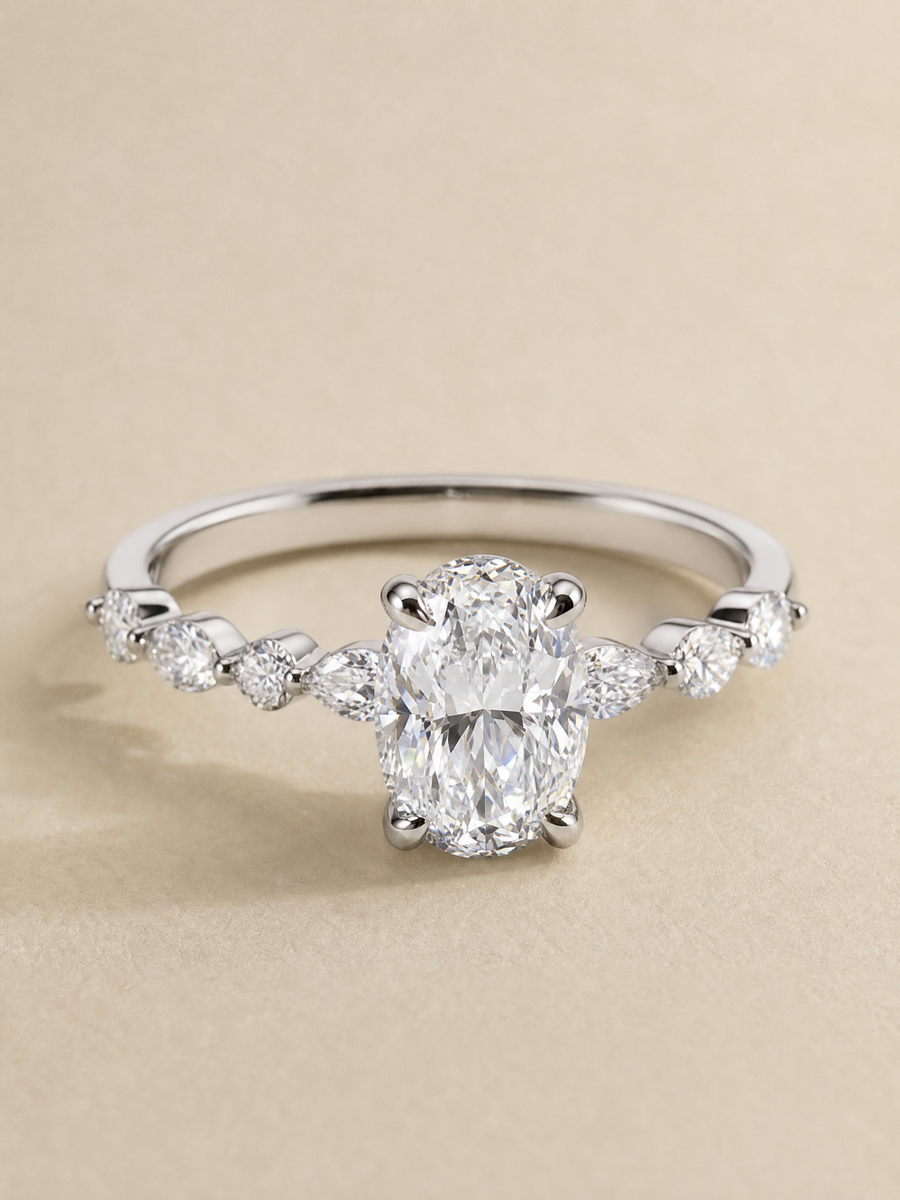
Platinum 950 Oval Brilliant Lab-Grown Diamond Ring - 1.22 ct Total
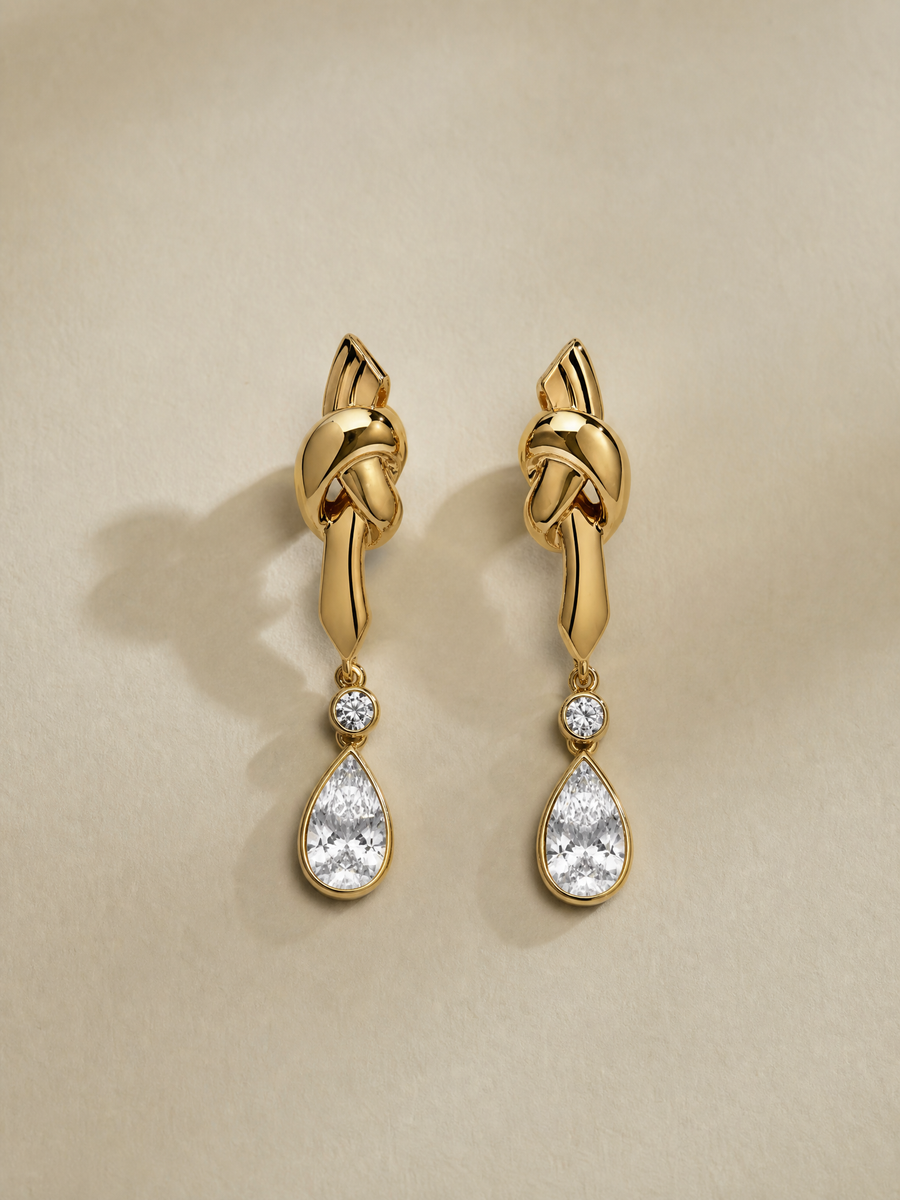
14K Yellow Gold Pear Lab-Grown Diamond Stud Earrings - 2.407 ct Total
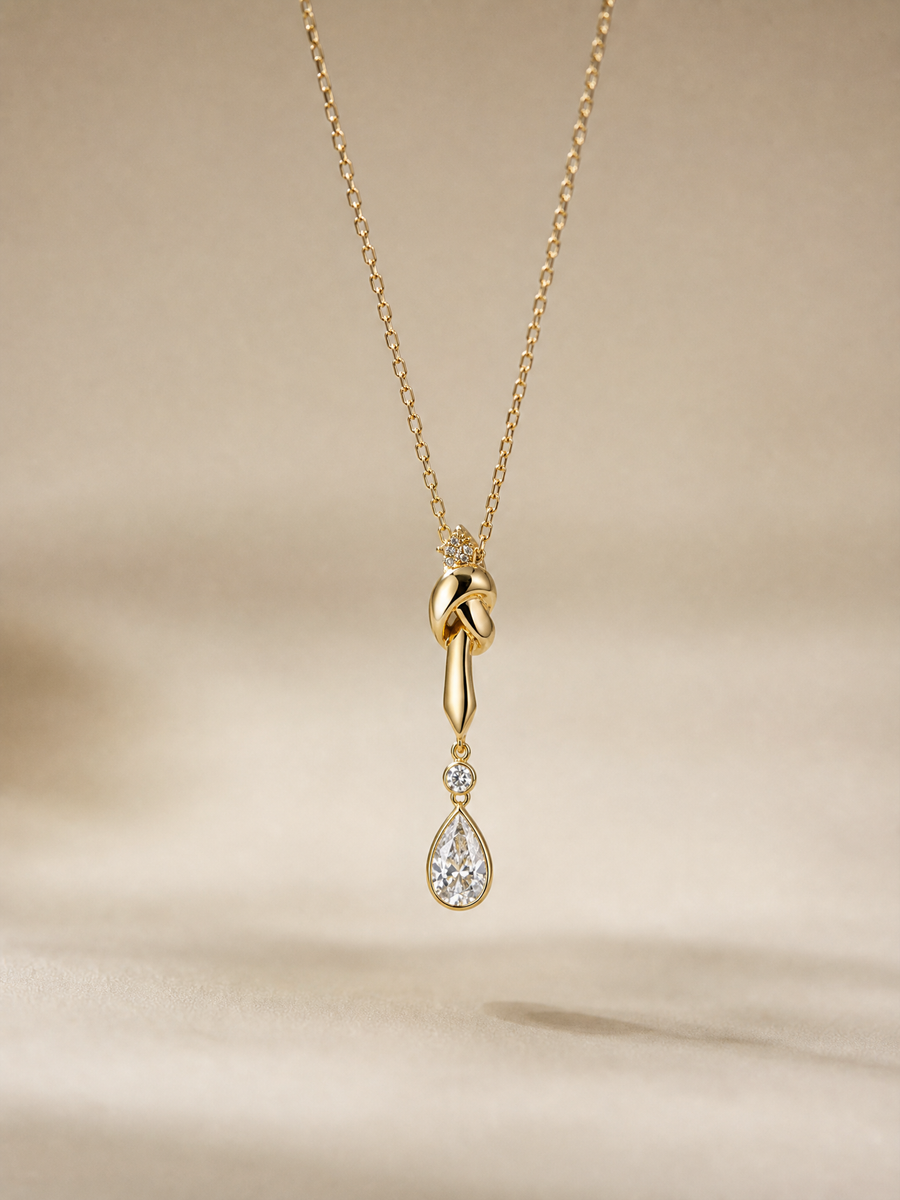
14K Yellow Gold Round Lab-Grown Diamond Necklace - 2.209 ct Total
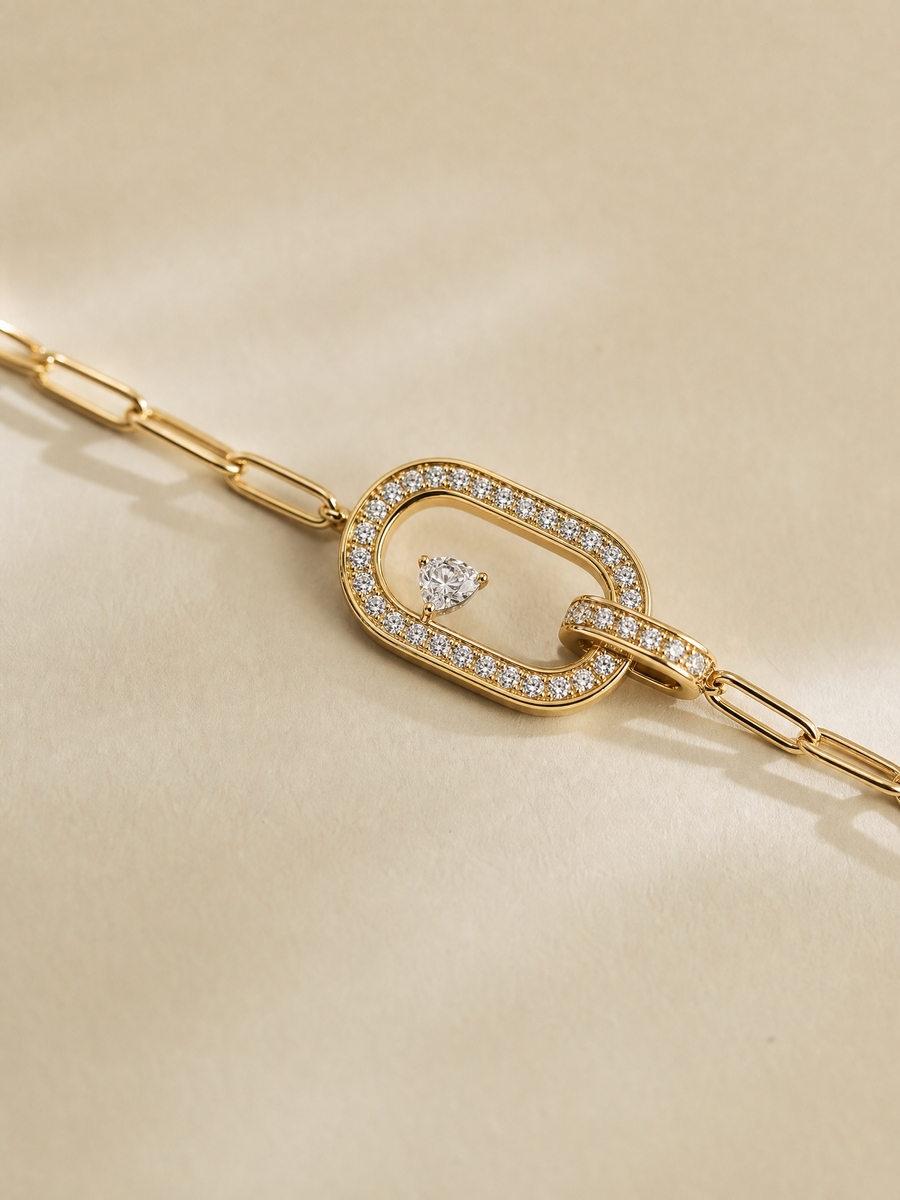
14K Yellow Gold Round Lab-Grown Diamond Bracelet - 0.633 ct Total
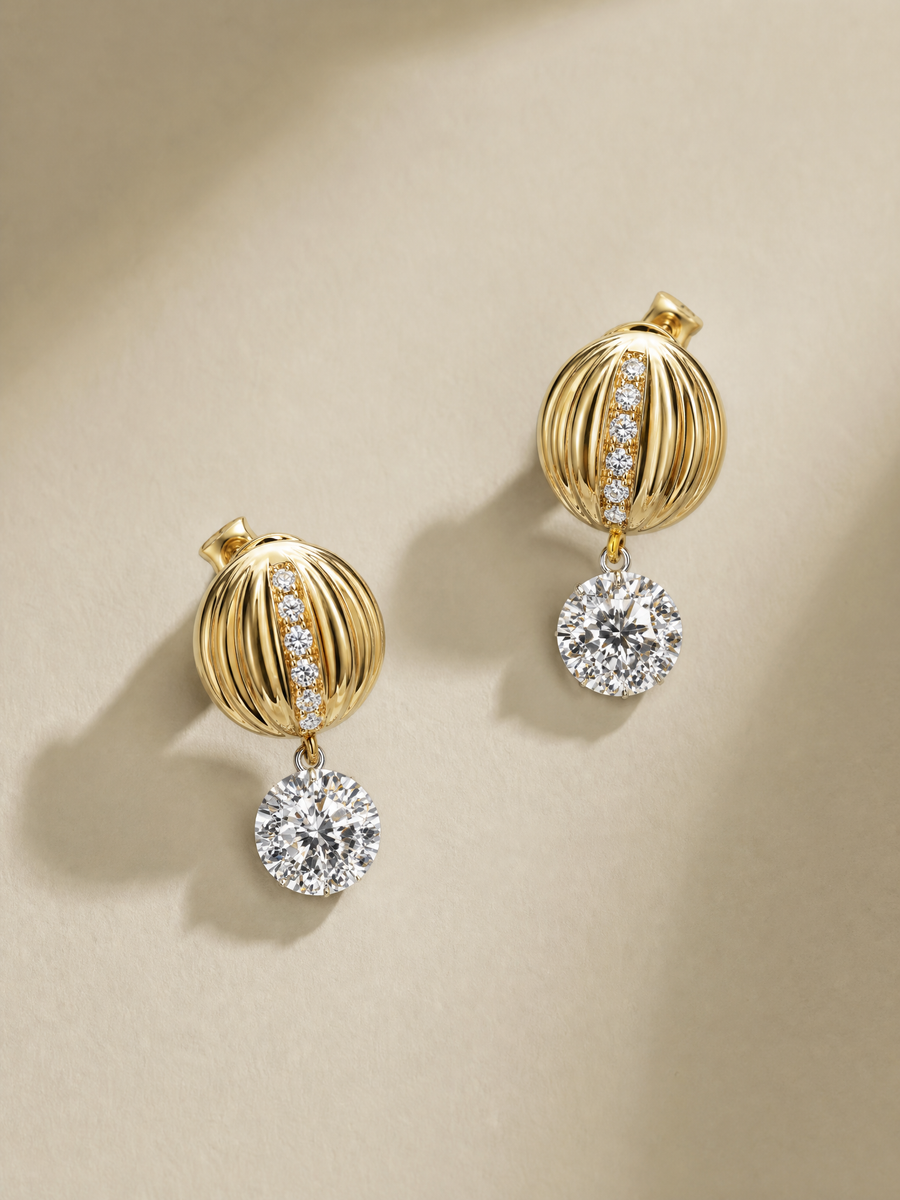
14K Two-Tone Gold Round Lab-Grown Diamond Stud Earrings - 1.654 ct Total
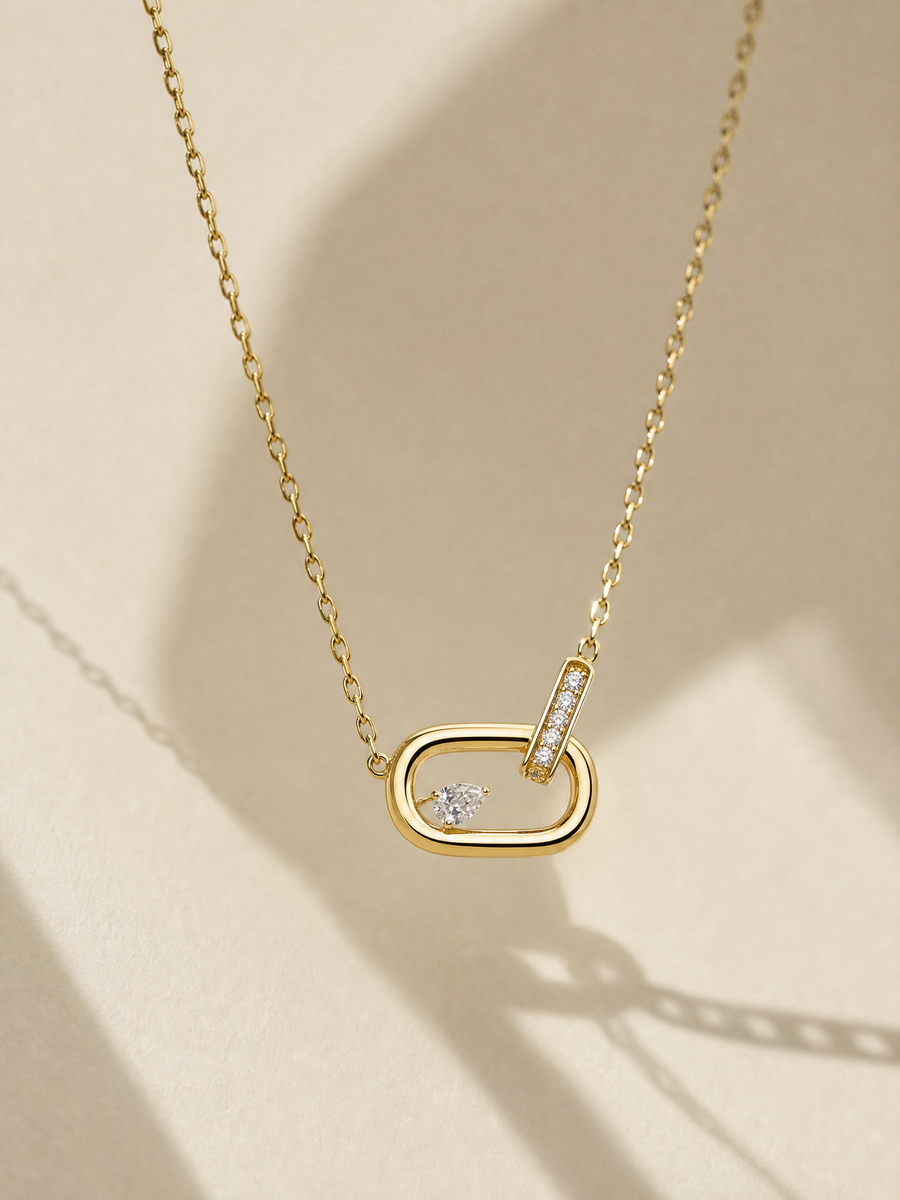
14K Yellow Gold Pear Lab-Grown Diamond Necklace - 0.245 ct Total
One note at a time.
New writing, new stones. Nothing else. Unsubscribe whenever you like.