August 27, 2026
A Fine Jewelry Capsule, in the Order You Should Buy It
Most jewelry arrives rather than gets bought. Lay a decade of it on a tray and the seams show: what is missing is not taste, it is order.
Most jewelry arrives rather than gets bought. A graduation. A birthday somebody took seriously. An afternoon abroad when the shop was open and the light was good.
Lay a decade of it out on a tray and the seams show. Four things that all want to be the loudest object in the room. Two that go with nothing else there. One that goes with everything, which is why it has been worn nearly flat while the rest sat in tissue.
What is missing is not taste. It is order.

Years of accumulated fine jewelry laid out flat and unstyled: a chain, a pendant, a pair of studs, nothing chosen to match anything else.
The word capsule came over from clothing, where it solved a real problem: a small number of garments that combine, so getting dressed stops being a negotiation. Jewelry borrowed the word and kept the arithmetic. Six pieces. Seven essentials. It dropped the part that made the idea work, which was that each garment had to earn its place against the ones already hanging there.
The analogy only half fits, because clothes wear out. A cotton shirt has a lifespan measured in washes, so a clothing capsule is partly a replacement schedule. Solid gold does not behave that way. A 14K band worn every day for thirty years is thinner across the back and otherwise the same object. Nothing ages out, so nothing forces a decision.
The discipline is therefore not about replacement but about reach. What you put on at seven in the morning, without deciding anything, is the only real measure of whether a piece belongs. That is the sense in which we use the phrase jewelry wardrobe: an analogy about how a few pieces get used over time, not a claim about how many there are, and not a box that arrives on a schedule.
Five pieces, in an order. Each should change what the one before it can do.
Metal is decided before any piece is
The first decision is not an object but a color of metal, and making it early is what separates a set from a drawer.
The reason is compounding. Every piece after the first is judged against what is already there, at the wrist and the throat, where two metals sit inches apart in the same light. A drawer becomes a drawer when white and yellow accumulate side by side without anyone having chosen.
The difference is visible, not theoretical. A white metal gives a colorless stone a neutral surround, so nothing warm reflects back into it. Yellow gold does the opposite, and a stone at the top of the colorless range picks up a faint warmth where the metal touches it. You only get to hang one of them in the middle of your hand.
Inside gold there is a second fork, between 14K and 18K. 18K carries more gold, so the color is deeper and the metal softer; 14K is harder under daily contact. The long version is in 14K vs 18K gold. Platinum is the third answer, denser and grayer than white gold, and for a piece that never comes off it is often the honest recommendation even though we hold only a handful of it. Across everything we make, those three are the field.
Mixing is allowed. It works when it reads as a decision and fails when it reads as an accident. The test is whether you could say, in one sentence, why the second metal is there.
The first three pieces
Studs, because they are the only thing you can sleep in
A pair of small round studs is the only category of fine jewelry with no styling cost. They sit close enough to the lobe that there is nothing to catch on a pillow or the neck of a sweater. They are the only piece here you never have to take off. That is the property you want first: it constrains nothing, and every later decision gets made without consulting it.
Scale is the only real choice. Something around a third of a carat per ear, like this pair in solid 14K white, reads as light across a table and disappears in a photograph, which is the point. Move toward a full carat each and they are noticed as an object rather than as a quality of the face. Both are defensible. Buying the larger pair first is not, because you cannot make them smaller on a Tuesday. The earrings worth starting with are the ones you forget you have on.
One chain, because everything later hangs from it
Second, because a chain is where the metal decision becomes public: eye level, against skin, for hours.
Length does most of the work. Roughly sixteen inches sits at the base of the throat and behaves like a fixed part of what you are wearing; eighteen drops to the collarbone and moves against the sternum when you do. The first disappears under a crew neck. The second does not.
A single small stone on a fine chain, on the order of this half-carat piece in solid 14K, does more than its carat weight suggests, because at the throat it catches light from above rather than lying flat. The rest of the necklaces can wait. You need one.
A ring you did not buy for an occasion
Third, and the definition is the point. Not the ring from the event. A ring chosen with no date attached to it.
Occasion rings are shaped by their occasion. Sized to be photographed, usually larger than the hand needs, carrying a meaning that makes them awkward on a morning that means nothing.
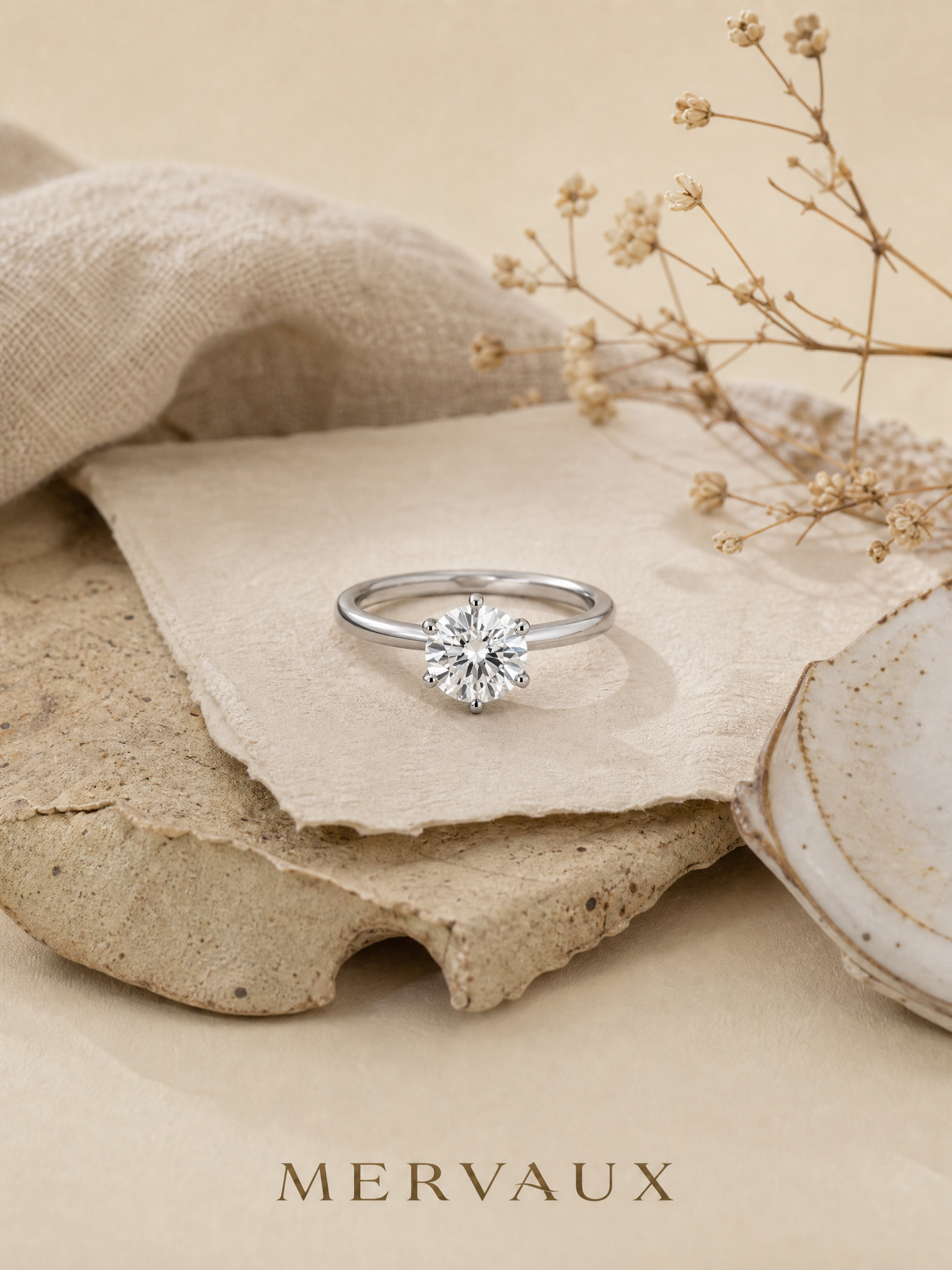
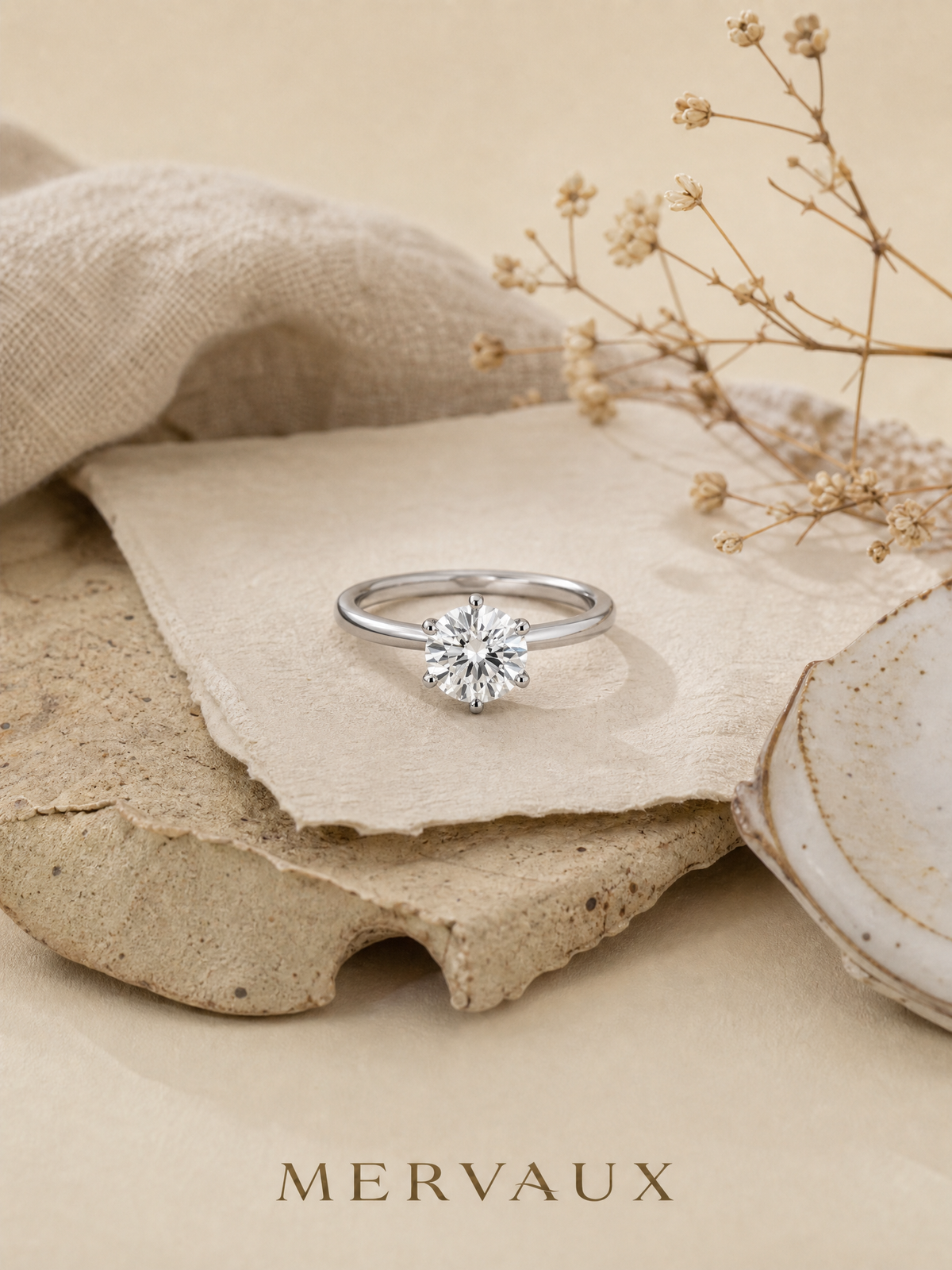
A ring bought with nothing attached gets another standard: how it feels typing, whether it turns, whether the stone sits high enough to catch a sleeve. Something like this 1.09 carat round in solid 14K white gold is large enough to be the center of the hand and small enough to be ignored, a combination harder to find among the rings built for a specific afternoon.

A hand at rest wearing a solitaire and a plain band, photographed at an angle so the height of the stone above the finger is visible.
The last two are chosen against what you already own
A second ring, chosen against the first
Here the sequence does something a list cannot. The fourth piece is chosen against the third rather than on its own merits.
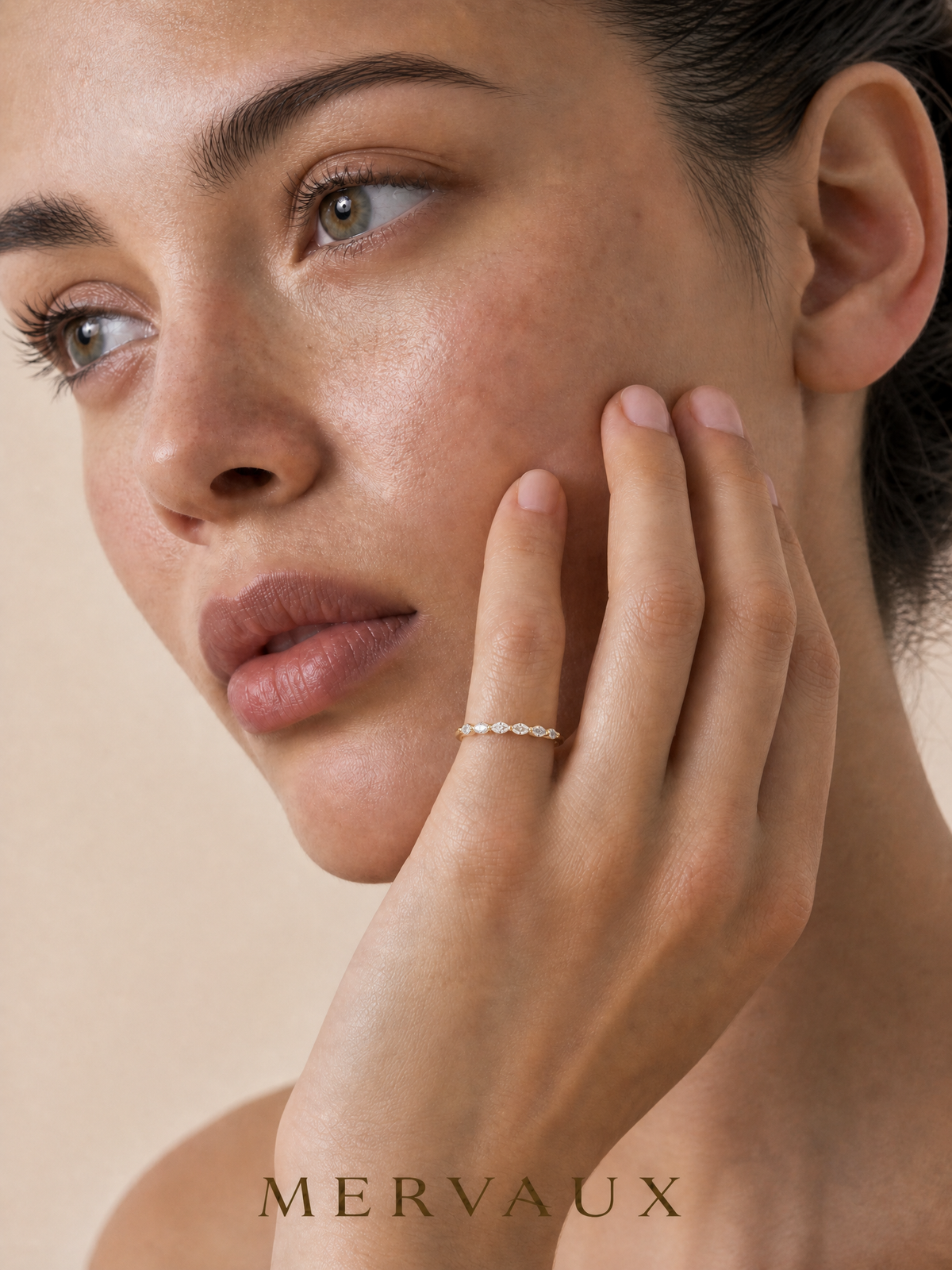
Width is the fastest lever. A band around 1.8 mm and one around 2.6 mm on adjacent fingers read as two objects; two bands within half a millimeter of each other read as a mistake. Height is the second: one stone sitting proud of the finger and one sitting close gives a hand two elevations instead of a row. A second ring at the same width, height and shape as the first is the commonest way to spend real money on nothing.
Metal is the third lever, and this is where the metal rule earns its exception. If you break it, break it here, once, on purpose. A 1.474 carat in solid 18K rose beside a 14K white solitaire reads as decided for exactly one reason: it is the only place in five pieces where it happens. Twice and it is a drawer again.
A bracelet last, because you notice it most
The wrist is the only place you see your own jewelry all day. Everything else is worn outward. A bracelet sits in your own sightline every time you reach for anything, which is exactly why it goes last: it is the piece you tire of soonest, and the fifth purchase is the cheapest place to be wrong.
It takes the most contact, and the two forms fail differently. A flexible line, on the order of this 0.70 carat piece in 14K rose, moves with the wrist and vanishes under a cuff, and its weak point is the clasp. A rigid bangle in solid 14K yellow does not move, so it knocks against every table you sit at, audibly. Some find that companionable and some unbearable, and there is no knowing which in advance. Which is the argument for reaching the bracelets after four other decisions rather than before any.
Spend unevenly, and not on the statement piece
Split a budget five equal ways and each of the five is slightly wrong.
The pieces are not doing the same job. A solitaire ring rewards the stone: one stone, in the open, nothing else to look at, so size and grade are visible and no amount of craft compensates for a dull center. That piece takes the largest share, by a distance.
A chain and a bracelet reward the making instead. Little or no stone is carrying them, so what you are buying is the clasp, the solder joins, whether the links are even along their length, whether it lies flat when you set it down. A poorly made chain in solid gold is still solid gold, and it will still kink.
The statement piece is not step one
The piece nobody should buy first is the largest one.
A statement piece is defined by contrast. It works by being louder than the things around it, which requires that there be things around it. Bought first it has nothing to be louder than, so it stops being a statement and becomes a uniform: the only thing you own, worn on every occasion including the ones it is wrong for. It is also the piece most tightly bound to your taste at one moment, and four ordinary purchases tell you more about what you reach for than any amount of deliberation. Buy it sixth. It will be a better large thing.
Where this stops working
Bought in this order, at a quality that makes the order worth having, five pieces take years. And we should be clear about where we are writing from: we are a jewelry house telling you to buy five things.
So here is the part that costs us something. Most people should stop after three. Studs, one chain and one ring you did not buy for an occasion cover nearly every ordinary morning. The fourth and fifth are additions to a working set, not the completion of one. If the first three get worn until you stop noticing you put them on, the outcome has already happened, and a second ring does not improve it.
The order also assumes you are starting from nothing, and almost nobody is. If you already own three things, this is not a shopping plan but a diagnostic: read down it, find the step you skipped, buy that one next. Very often it is the chain, the least likely thing to arrive as a gift.

A finished capsule reads as a small number of pieces that work with what is already in the wardrobe, rather than a set bought at once.
Lay the five out on the same tray and it looks emptier than the drawer did. That is not restraint and it is not a smaller life. It is that nothing on the tray is there to be the loudest thing, so nothing on it has to be put away.
In the collection
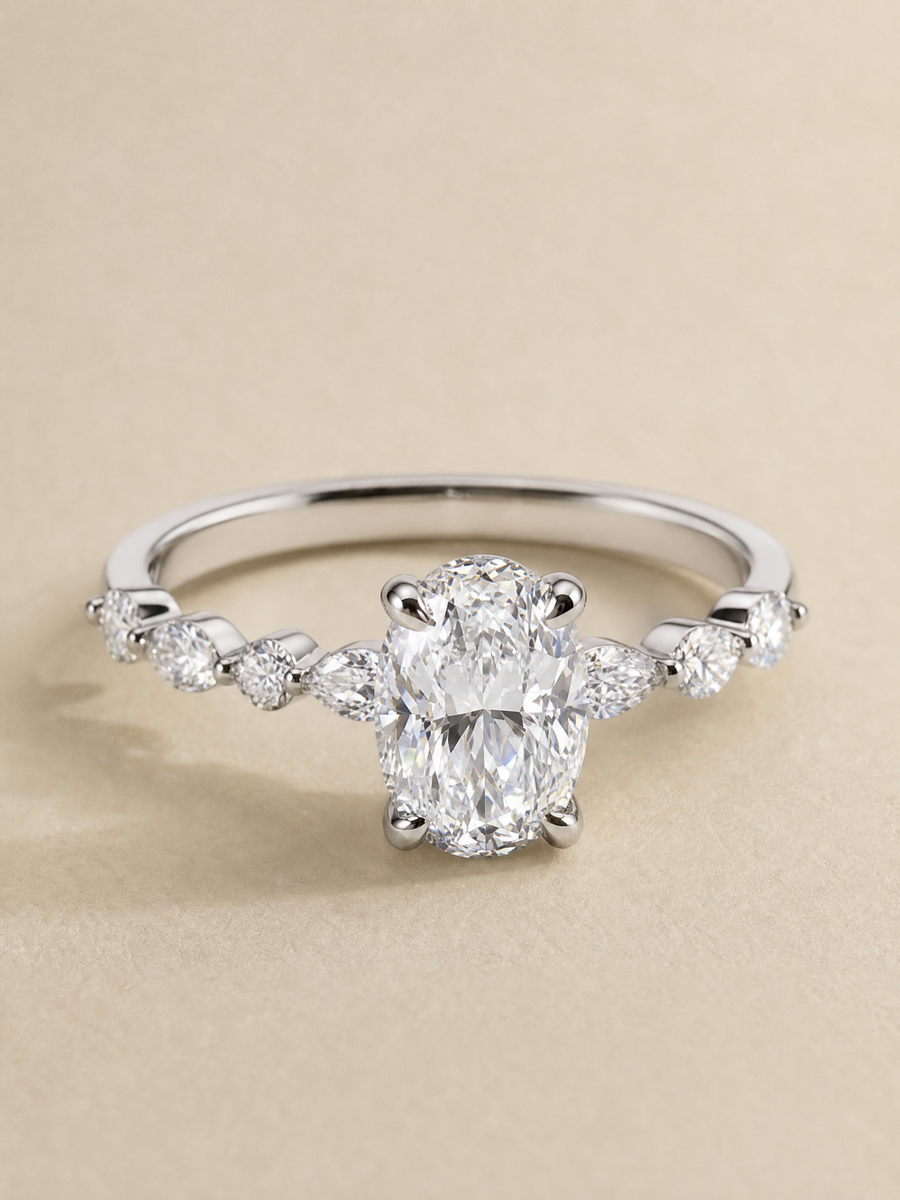
Platinum 950 Oval Brilliant Lab-Grown Diamond Ring - 1.22 ct Total
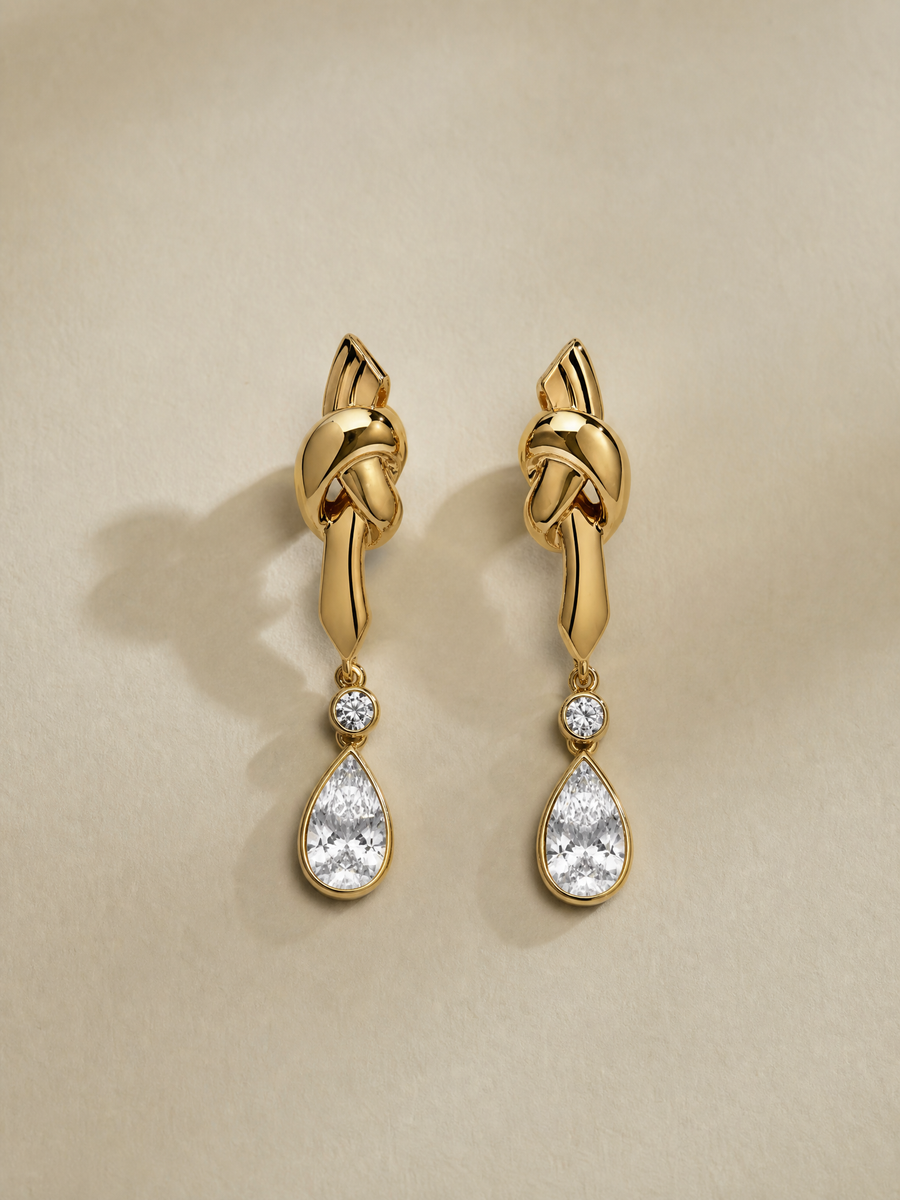
14K Yellow Gold Pear Lab-Grown Diamond Stud Earrings - 2.407 ct Total
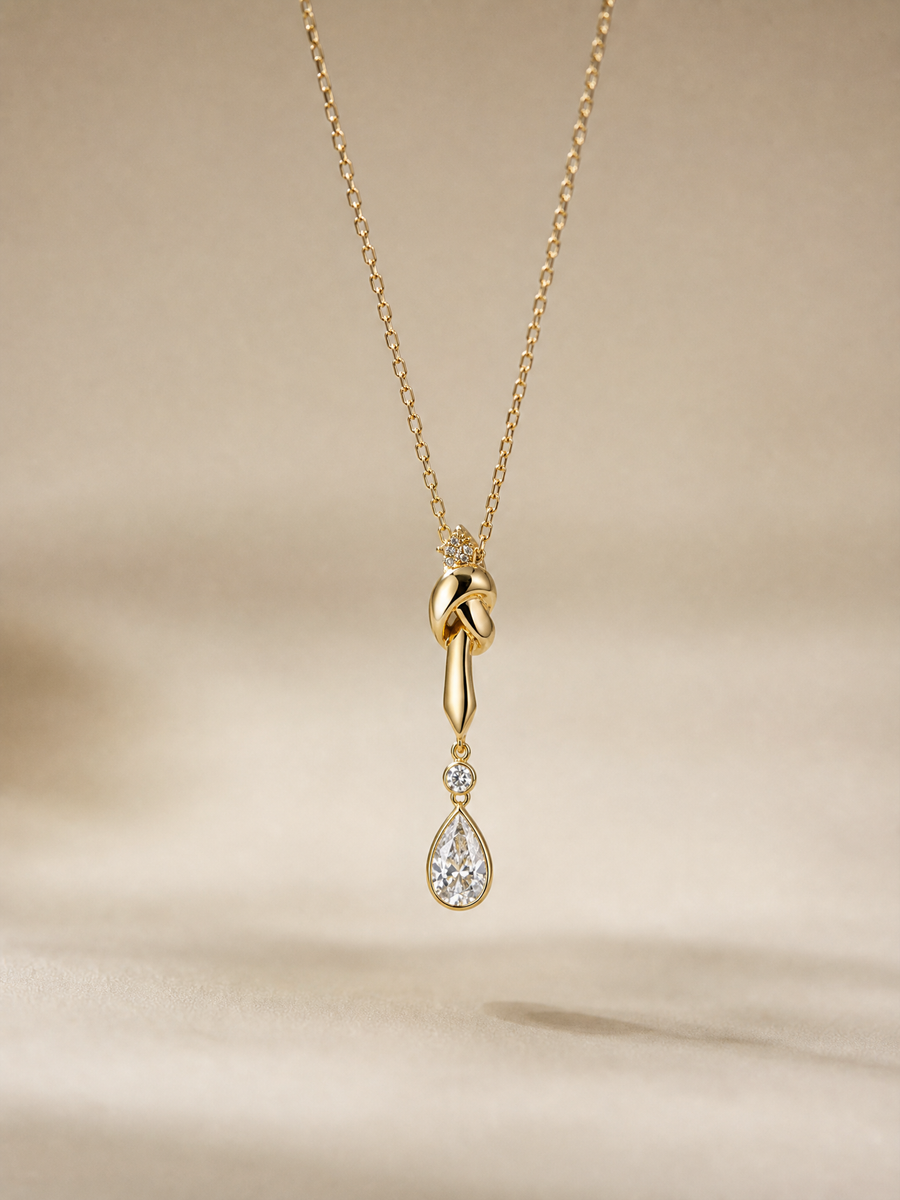
14K Yellow Gold Round Lab-Grown Diamond Necklace - 2.209 ct Total
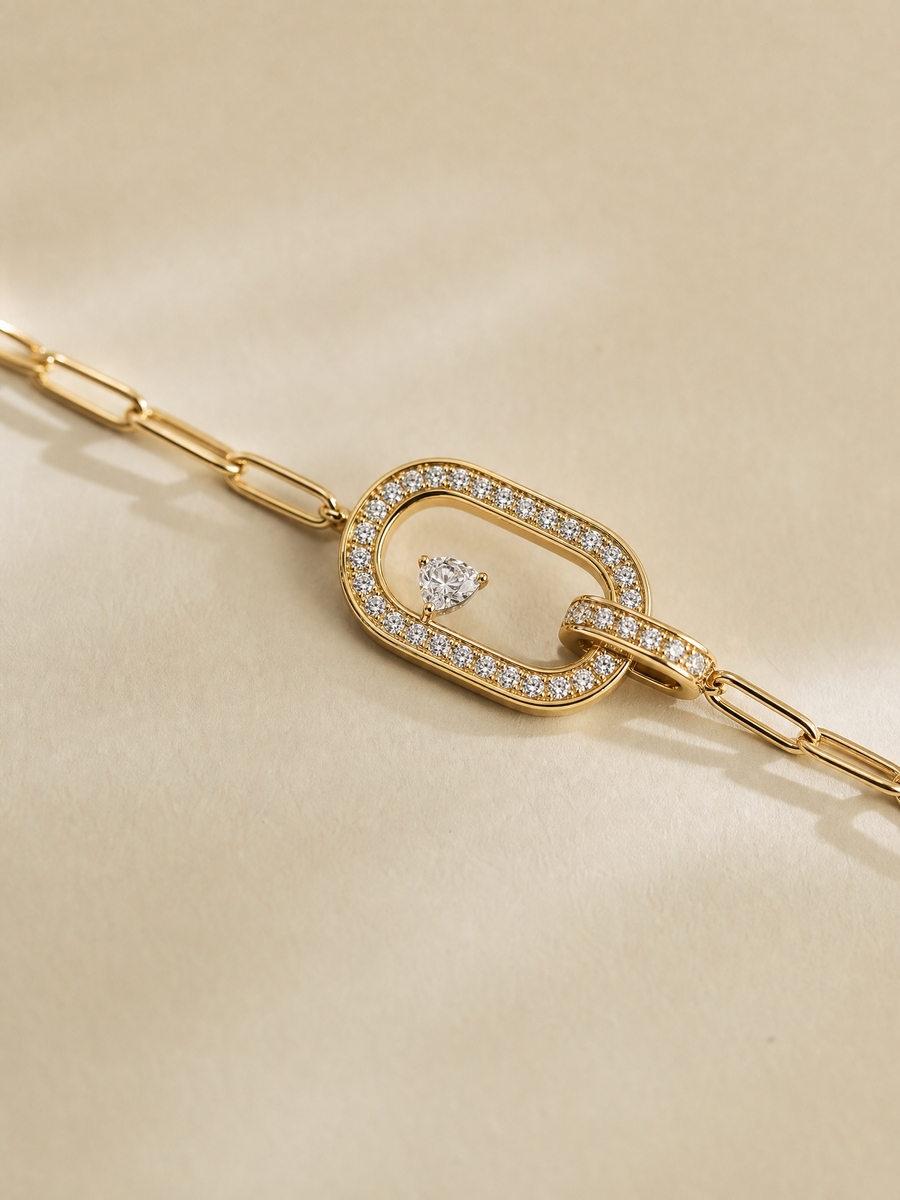
14K Yellow Gold Round Lab-Grown Diamond Bracelet - 0.633 ct Total
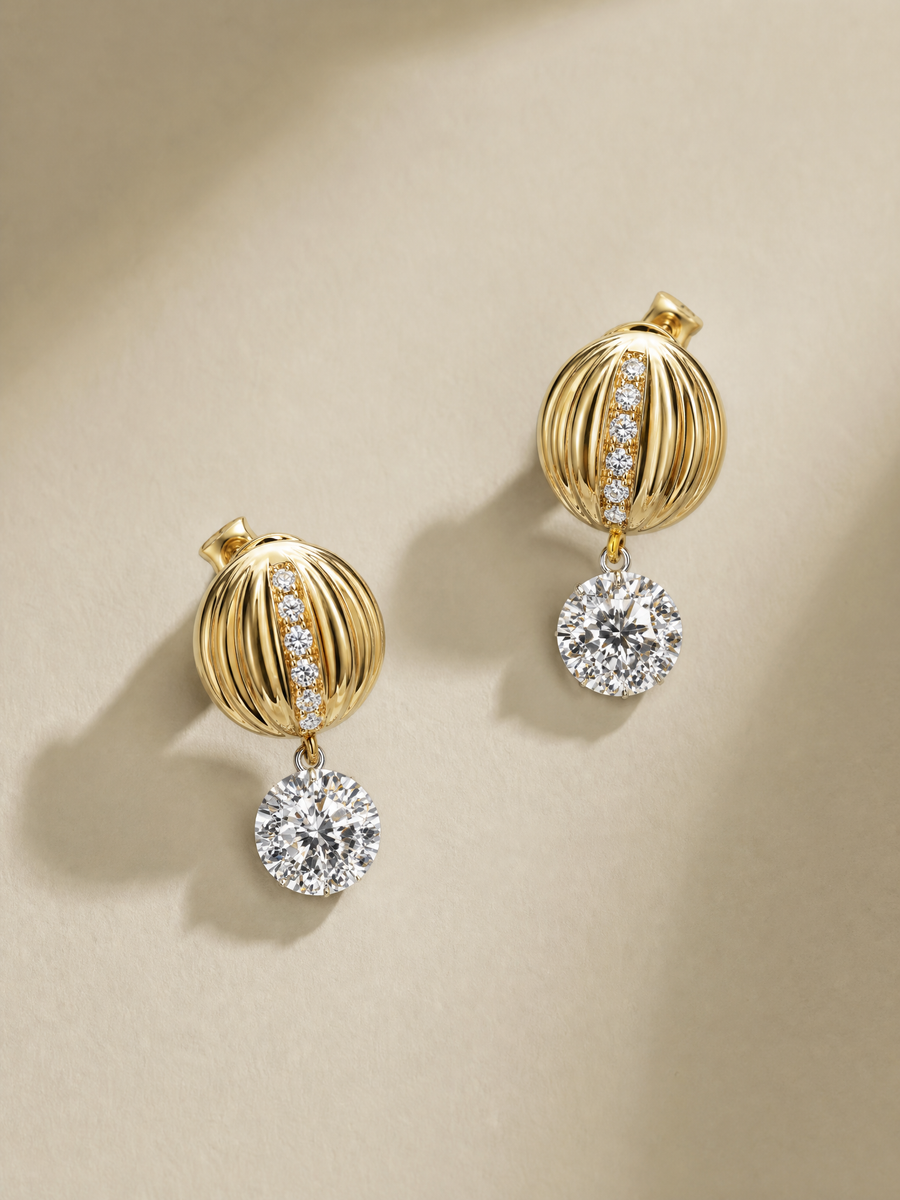
14K Two-Tone Gold Round Lab-Grown Diamond Stud Earrings - 1.654 ct Total
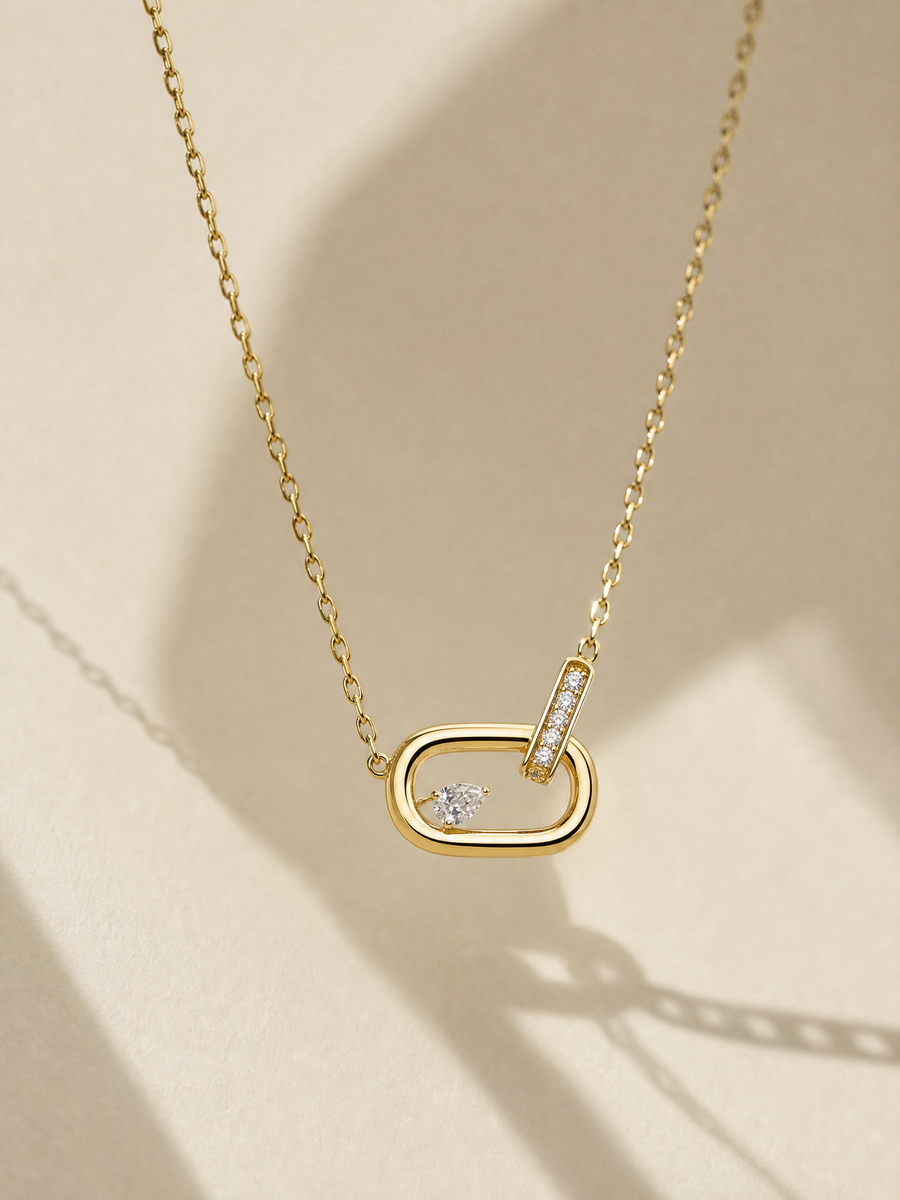
14K Yellow Gold Pear Lab-Grown Diamond Necklace - 0.245 ct Total
One note at a time.
New writing, new stones. Nothing else. Unsubscribe whenever you like.