August 27, 2026
How Much Should a 2 Carat Lab Grown Diamond Cost?
As of August 2026 a loose 2 carat lab grown diamond runs roughly $530 to $3,000. Cut, color, clarity, and whether it is loose or set explain almost all of that spread.
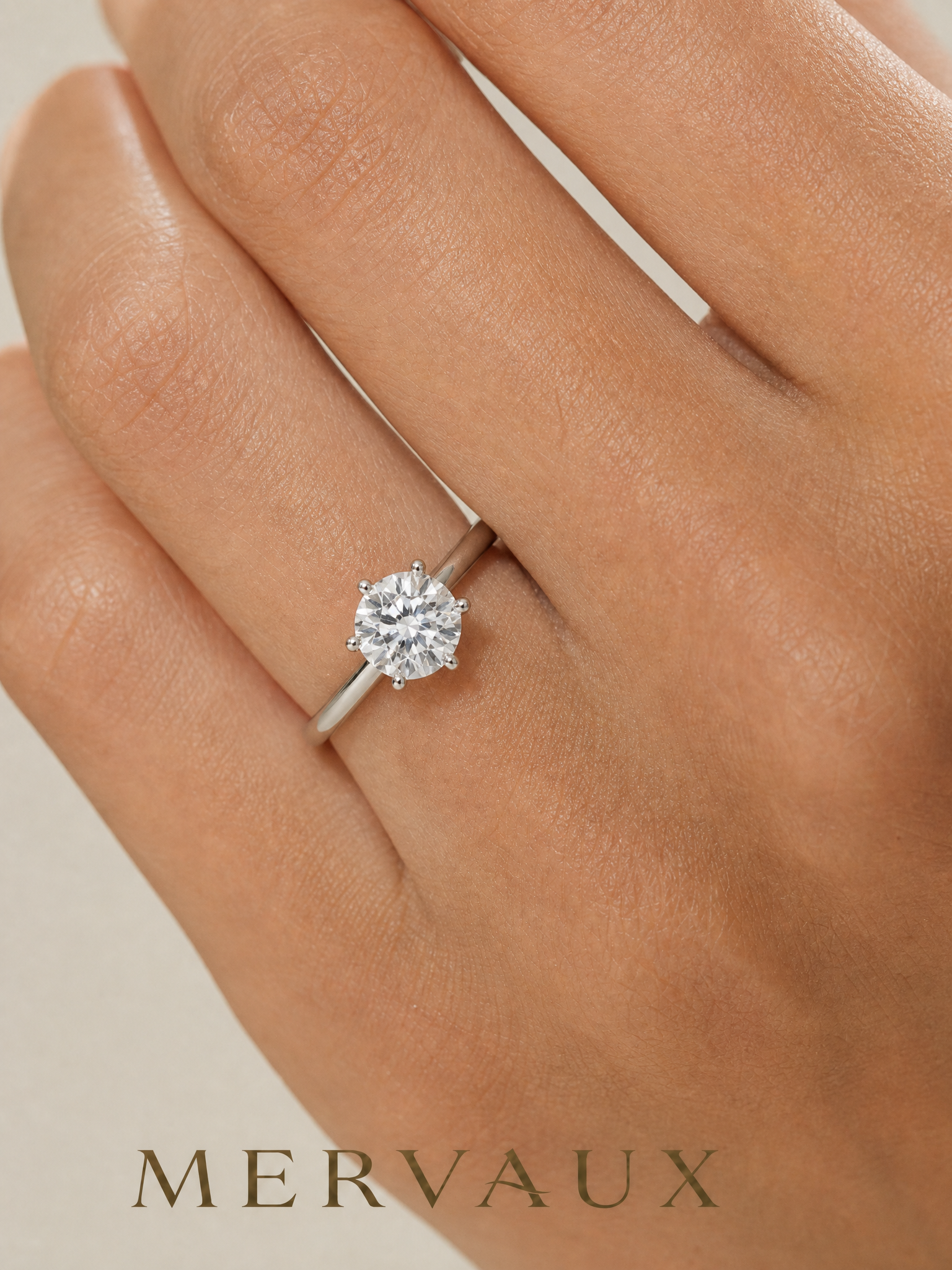
As of August 2026, a 2 carat lab grown diamond sold loose in the US runs roughly $530 to $3,000, averaging near $1,140. The spread is that wide because cut grade, color and clarity each move the number on their own, a set stone adds metal and labor, and a report from a lab the trade recognizes is priced in.
Those figures are live US listing data checked on 27 August 2026 (StoneAlgo, several hundred thousand listed stones): a snapshot of asking prices, not a promise, and wrong by next spring. Which is why this guide is mostly about what moves a price rather than about the price.
Why do two 2 carat diamonds cost such different amounts?
Because carat weight is one line on a report and four or five others set the price. Ranked by how much they move the number: cut, color, clarity, then everything else.
Cut grade moves the price most, and it is the one you can see
Cut is the only grade describing workmanship rather than material. It governs how much light the stone returns, which is the whole difference between a 2 carat stone that reads bright across a room and one that reads gray in the center. Two stones with identical D VS1 grades can differ widely on cut alone, and it is the one gap you can confirm with your own eyes. Insist on the top cut grade: it is the one place here where paying more is reliably repaid in what you see, and the IGI Laboratory Grown Diamond Report carries it.
Color is second, and the steps that matter are not evenly spaced
D, E and F are all colorless, and set in white metal most people cannot separate them without a master set and a light box. G through J is where warmth shows, faster at 2 carats than at 1 because there is more depth for light to cross. Paying up from G to D is a specification decision. Paying up from J to G is usually a visual one. Our colorless loose round stones sit at D and E for that reason, not because the middle of the scale is a mistake.
Clarity is third, and stops mattering sooner than people expect
At 2 carats a VS2 stone is eye-clean in nearly every case and a VS1 essentially always is. VS1 to VVS2 to IF buys a better line on paper and, in most stones, nothing visible at arm's length. It still moves the price, so take it knowingly (VVS vs VS clarity). Compare a 2.01 ct D VVS2 round with a 2.05 ct D VS1 round: one clarity step apart, and no difference a hand can show you.
Fluorescence and the rest are small
Fluorescence is a line on the report and, in colorless lab grown stones, is most often graded None or Faint. Where present it is not a meaningful price lever. Neither is growth method, once the stone is cut and graded. How to read an IGI report walks the page.
| Variable | How much it moves the price | Can you see it? |
|---|---|---|
| Cut grade | Most of any grade on the report | Yes, and more visibly than anything else |
| Color (D to J) | Large across the range, small across D to F | Only below about G, mostly against white metal |
| Clarity (IF to VS2) | Moderate, front-loaded at the top | Almost never at 2 carats |
| Fluorescence | Small | Almost never under normal light |
| Loose vs set | Large, often larger than any grade step | Yes, but you see the ring, not the stone |
| Report lab | Moderate, and it changed in 2025 | No, it changes what you can verify |
Why does a loose stone cost less than the same stone in a ring?
Because the ring is a second product. Buying set means paying for the stone, plus metal by weight, plus the labor to cast, set and finish it, plus margin on all three. None of it is hidden cost. It is cost most price guides fold into one number and never itemize.
Metal weight is a real commodity, and it is expensive right now
A solitaire in solid 14K gold uses a few grams; a wide band or a cathedral shank several times that. Gold spot closed at $4,587 an ounce on 21 August 2026, up around 37% year over year (Fortune). Metal is not a rounding error in a 2026 quote, and the gap between solid 14K and solid 18K gold is measurable rather than decorative (14K vs 18K gold), with solid Platinum 950 above both.
Labor is the part that is genuinely skilled
Setting a 2 carat center is not fast. Prongs are cut and fitted to that stone, the seat trued, the finishing done by hand. An independent US breakdown of setting cost alone, updated June 2024, put a bare mounting at roughly $1,000 to $1,700 in solid 14K gold, $1,300 to $2,400 in solid 18K and $1,400 to $2,400 in solid platinum, before any stone. That is two years old and metal has risen since, so treat it as an order of magnitude, not a quote.
The margin is on the ring, not usually on the stone
In a falling market the stone is the transparent line: anyone can compare a 2 carat D VS1 across a dozen sellers in ten minutes. A setting cannot be compared that way, so that is where retail margin sits. Buying stone and setting separately does not remove the margin; it makes both halves visible. Our loose oval stones and finished rings are listed separately for that reason.
What is a carat actually measuring, and how big is 2 carats?
A carat is weight, not size. One metric carat is 200 milligrams, subdivided into 100 points, per GIA. Doubling the weight does not double what the hand sees, because weight grows with volume while the face-up view is an area.
The millimeter numbers, which do not move
A well-proportioned 1 carat round brilliant measures about 6.4 to 6.5 mm across. A 2 carat round measures about 8.1 mm: roughly a 26% increase in diameter for a 100% increase in weight. The step from 1 to 2 carats is clearly visible on a hand, but it is not the doubling the number suggests.
Shape changes the spread more than most people expect
A 2 carat oval runs about 10.5 by 7 mm, covering noticeably more finger than a 2 carat round at 8.1 mm, because an elongated outline spreads the same weight over a longer face-up area. If presence on the hand matters more than the number on the report, shape is a more efficient lever than carat. A 2.02 ct D VS1 oval reads larger than a round of the same weight at a similar loose price (oval vs round).
Is 1.90 carats a better buy than 2.01 carats?
Usually yes, if you are buying for the hand rather than the certificate. The trade calls 1.00, 1.50 and 2.00 carats "magic sizes", and GIA names them so. Prices step at those thresholds because demand does, not because anything physical changes.
The step is in the price, not in the stone
A 1.90 carat round measures roughly 7.9 mm across; a 2.01 carat round about 8.1 mm. Two tenths of a millimeter, thinner than the line this sentence is printed in. Nobody identifies it on a hand. The price step at the threshold is real, and stepping under it is one of the more reliable ways to keep money in your pocket.
The other reason under-weight stones can be better cut
Cutters lose weight to reach good proportions, so rough that would finish at 1.94 carats beautifully cut is sometimes pushed to 2.01 with a deeper, worse cut. Not always. But an under-magic-weight stone with a top cut grade is worth looking for rather than settling for.
When to insist on 2.00 and over
When the number itself is the point. If the report will be read or quoted as "two carats", 1.94 reads as 1.94 forever. That is a legitimate reason to pay the step, but it is not a visual one, and it should be deliberate.
Prices keep falling. Should I wait?
No, and yes: they are not the same question. Buy when you want the object. Do not buy expecting the number to hold.
The direction is not ambiguous
Wholesale lab grown prices fell about 13% year over year in Q2 2026, and 2 carat stones about 20%, per analyst Edahn Golan, published 7 July 2026. The same tracking puts the wholesale index down roughly 96% since it began in July 2018. Larger stones fell hardest, because they carried the largest margins.
What that means if you are buying now
It means a 2 carat stone at a specification out of reach three years ago is within reach today. That is good for a buyer, and there is no need to dress it up.
What it means for the same stone later
It means the resale offer will land far below what you paid, further below than a natural stone of the same size, and the gap has been widening. Both are true at once. Waiting six months may save you money on the purchase; it will not change the resale picture, because that picture follows the same curve. What sellers are actually offered is in do lab grown diamonds hold value.
What does a fair total look like once it is set?
Add the stone, the mounting, the sizing and the metal, and check each is separately explicable. If a quote cannot be broken into those four, that is the finding.
Where the money actually goes
For scale: The Knot's Real Weddings Study, released February 2026 and covering 2025 weddings, put average US spend on a lab grown engagement ring at $4,300, with an average center stone of about 2 carats. Against loose 2 carat stones averaging near $1,140 in August 2026, the difference is the ring, the labor, the margin and a year of decline. Two samples, not a like-for-like subtraction, but the size of the gap is the point and it is larger than most buyers assume.
A working checklist
Ask for the report number and check it on the lab's own site. Ask what the mounting costs without the stone. Ask what metal, what karat, how many grams. Ask whether sizing and a first resize are included. A seller who cannot answer all four has told you something useful.
Where this answer works against us
You are reading this on a jewelry brand's site, so here is the part that costs us the sale.
The lowest-priced 2 carat lab grown diamond online will be genuinely less expensive than ours, and it will not be a trick. MERVAUX buys at the specification end: colorless D and E, VVS and VS, top cut grades, every stone carrying an IGI Laboratory Grown Diamond Report, set in solid 14K and 18K gold and solid Platinum 950. That is a deliberate narrowing, and narrowing costs money.
What you get for the difference is a stone whose grades you can verify line by line, a mounting in solid metal at a stated karat, and a piece made once. What you do not get is a stone that outperforms a well-cut G VS2 from a high-volume seller in any way an ordinary person could detect on a hand. We cannot evidence that, so we will not claim it. If the largest well-cut stone for the money is the priority, buy the G VS2 without apology.
One more thing, plainly. GIA moved lab grown stones off the D-to-Z and IF-to-I3 scales on 1 October 2025, replacing them with a two-tier "Premium" or "Standard" Quality Assessment. So a 2 carat lab grown stone quoted to you as "D VVS2" is graded by IGI or another lab, not GIA. Not a defect, but a fact most 2026 price guides have not updated for. The difference is in IGI vs GIA.
Questions people ask next
Is a 2 carat lab grown diamond twice the price of a 1 carat? More than twice, still. On August 2026 US listing data, 1 carat stones averaged near $523 and 2 carat near $1,140. The ratio is narrowing as larger stones fall faster.
Do lab grown diamonds have to be disclosed as lab grown? Yes. Under the FTC's Jewelry Guides, a lab grown stone must be described in a way that makes its origin clear and cannot be presented as mined.
The rule to take with you
Decide the stone's job before you decide its weight. If the job is presence on a hand, buy shape and cut and let the number land where it lands. If the job is the specification, buy the specification and pay the magic-weight step knowingly. What is never worth doing is paying for a clarity grade nobody will see to reach a carat number nobody will measure. To work out which you are doing, start at find your stone.
In the collection
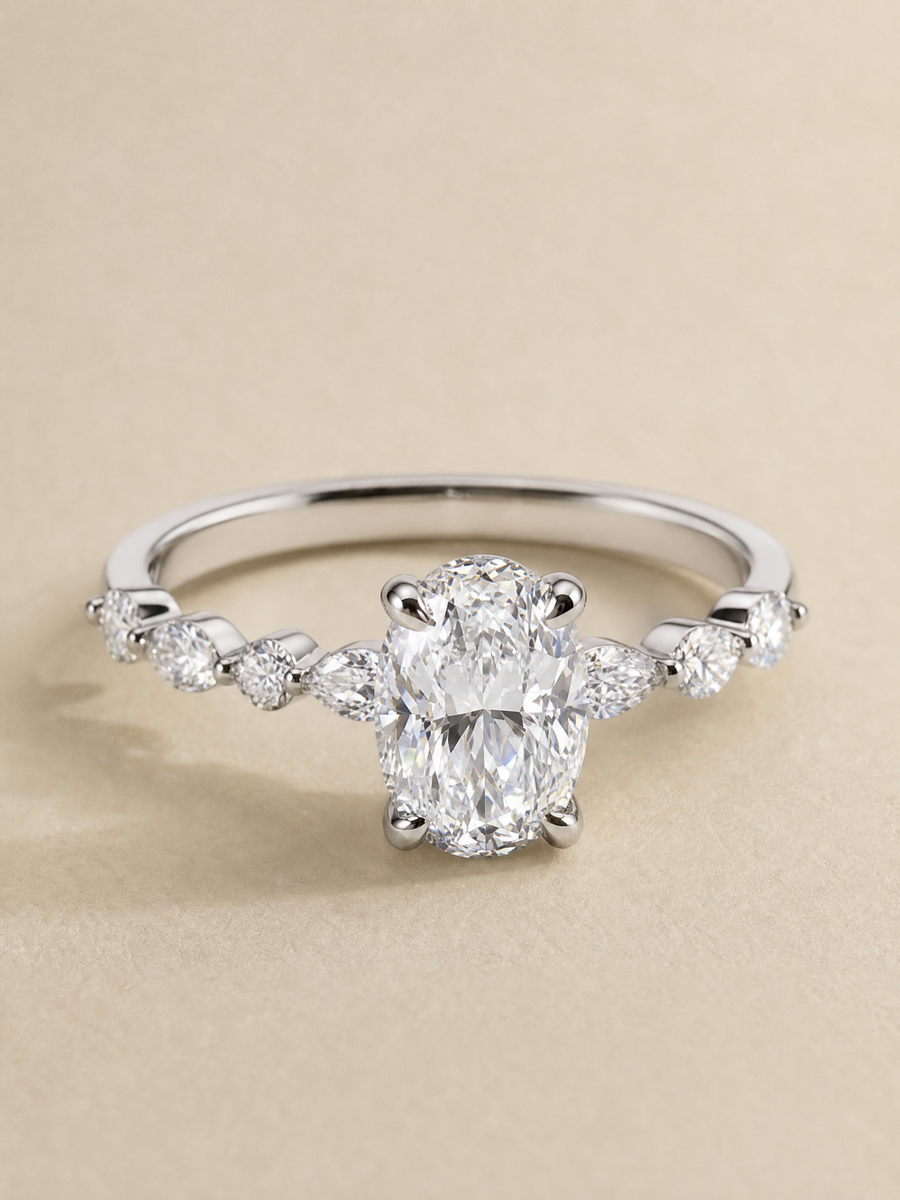
Platinum 950 Oval Brilliant Lab-Grown Diamond Ring - 1.22 ct Total
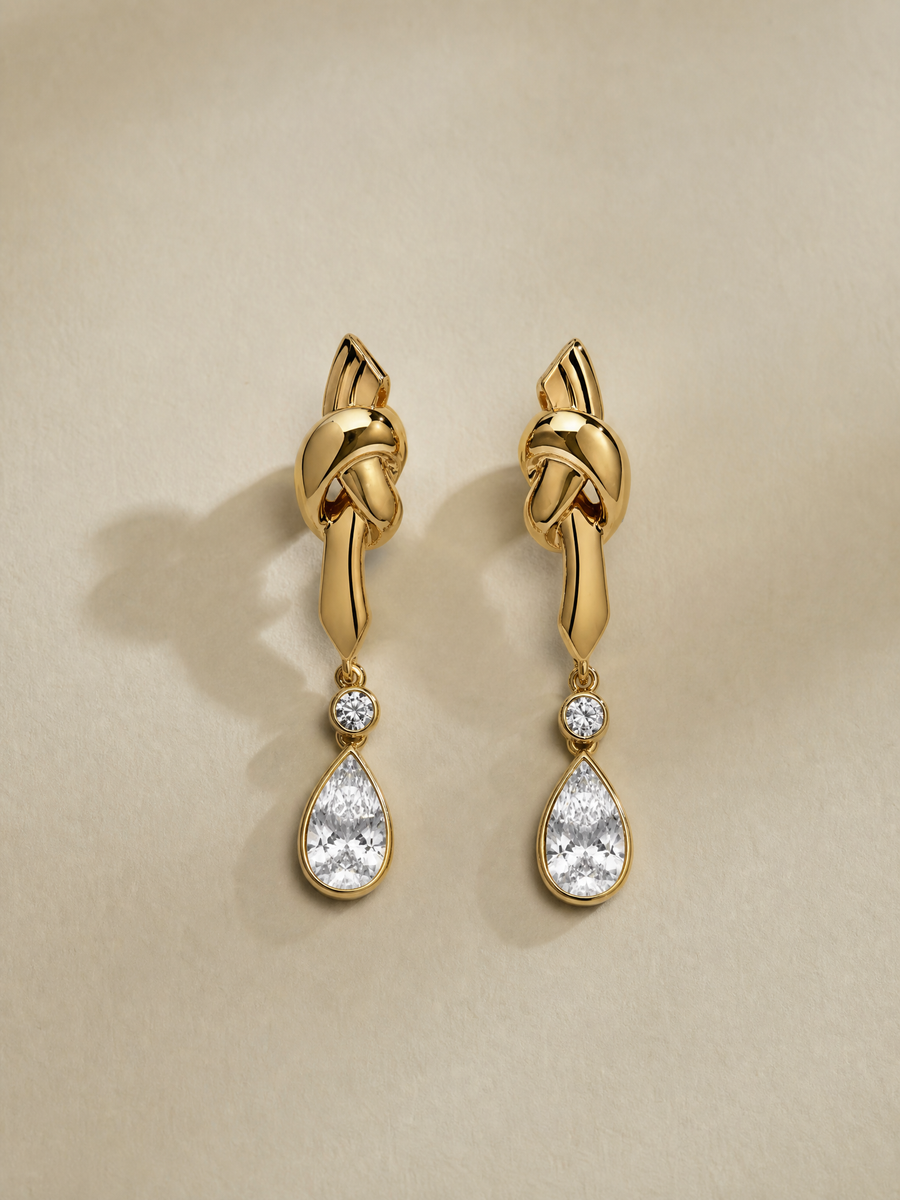
14K Yellow Gold Pear Lab-Grown Diamond Stud Earrings - 2.407 ct Total
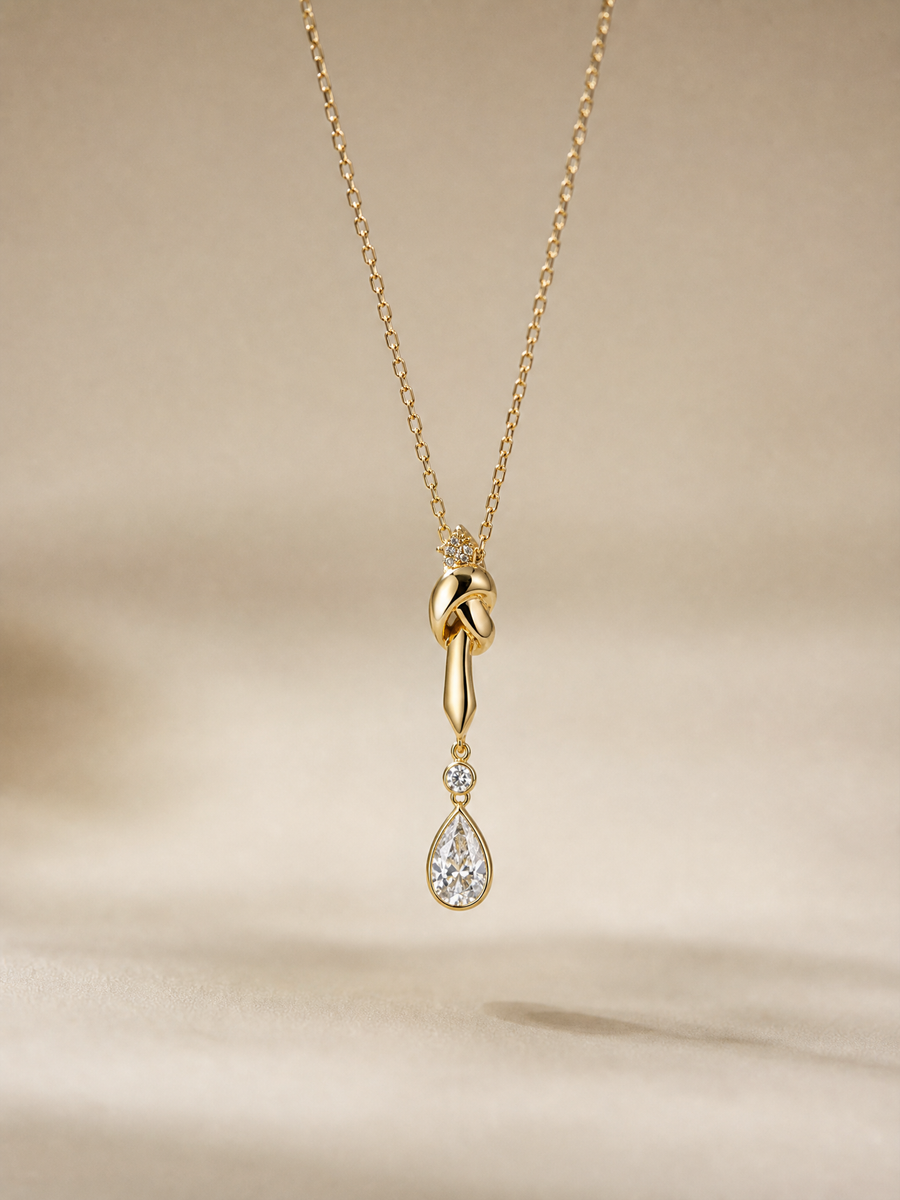
14K Yellow Gold Round Lab-Grown Diamond Necklace - 2.209 ct Total
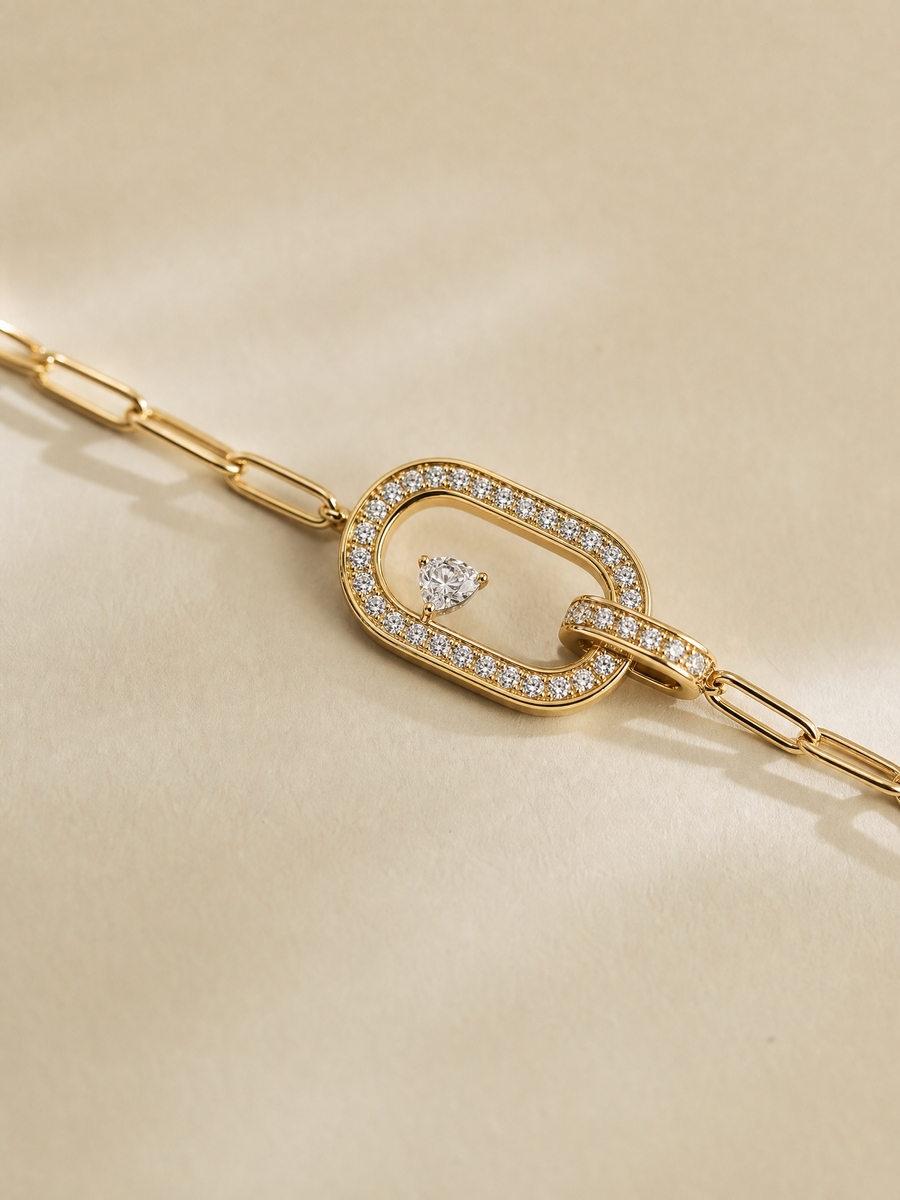
14K Yellow Gold Round Lab-Grown Diamond Bracelet - 0.633 ct Total
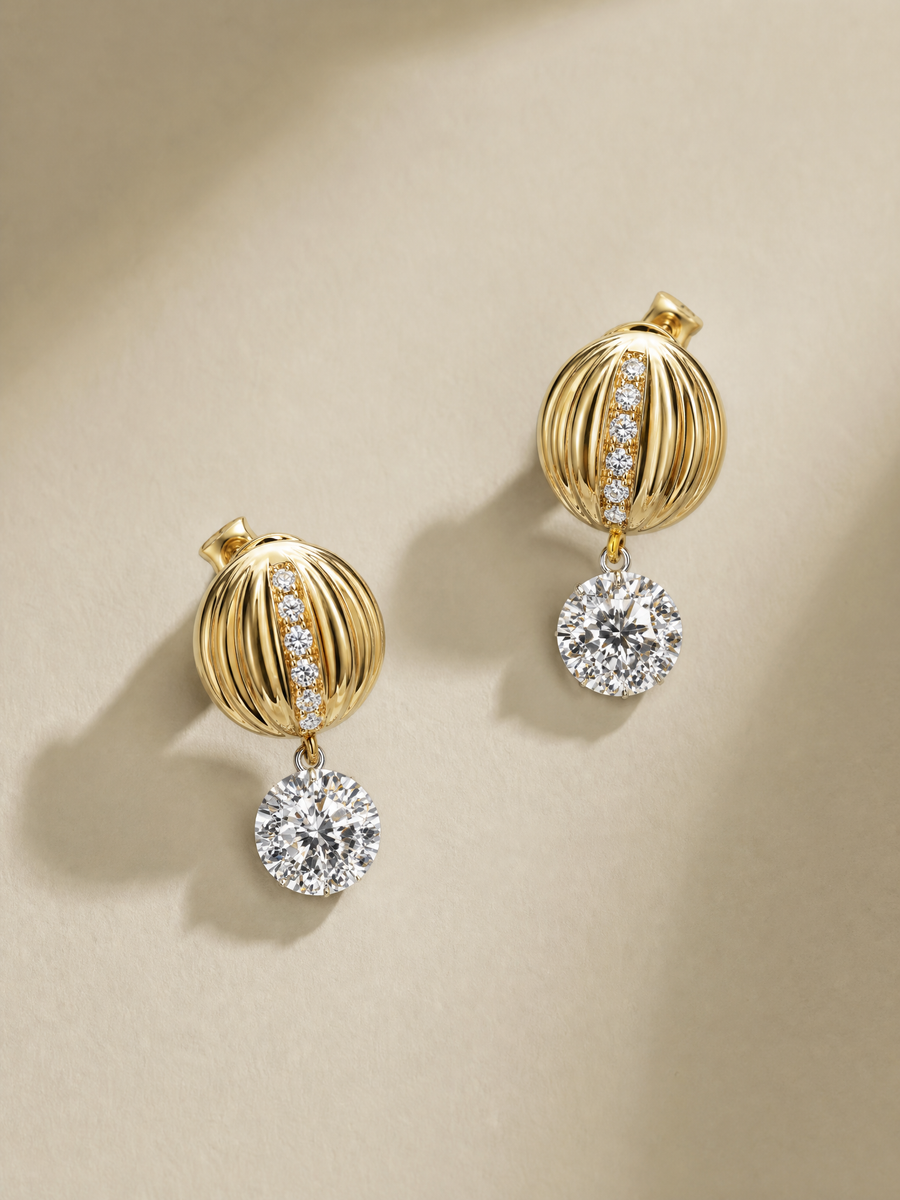
14K Two-Tone Gold Round Lab-Grown Diamond Stud Earrings - 1.654 ct Total
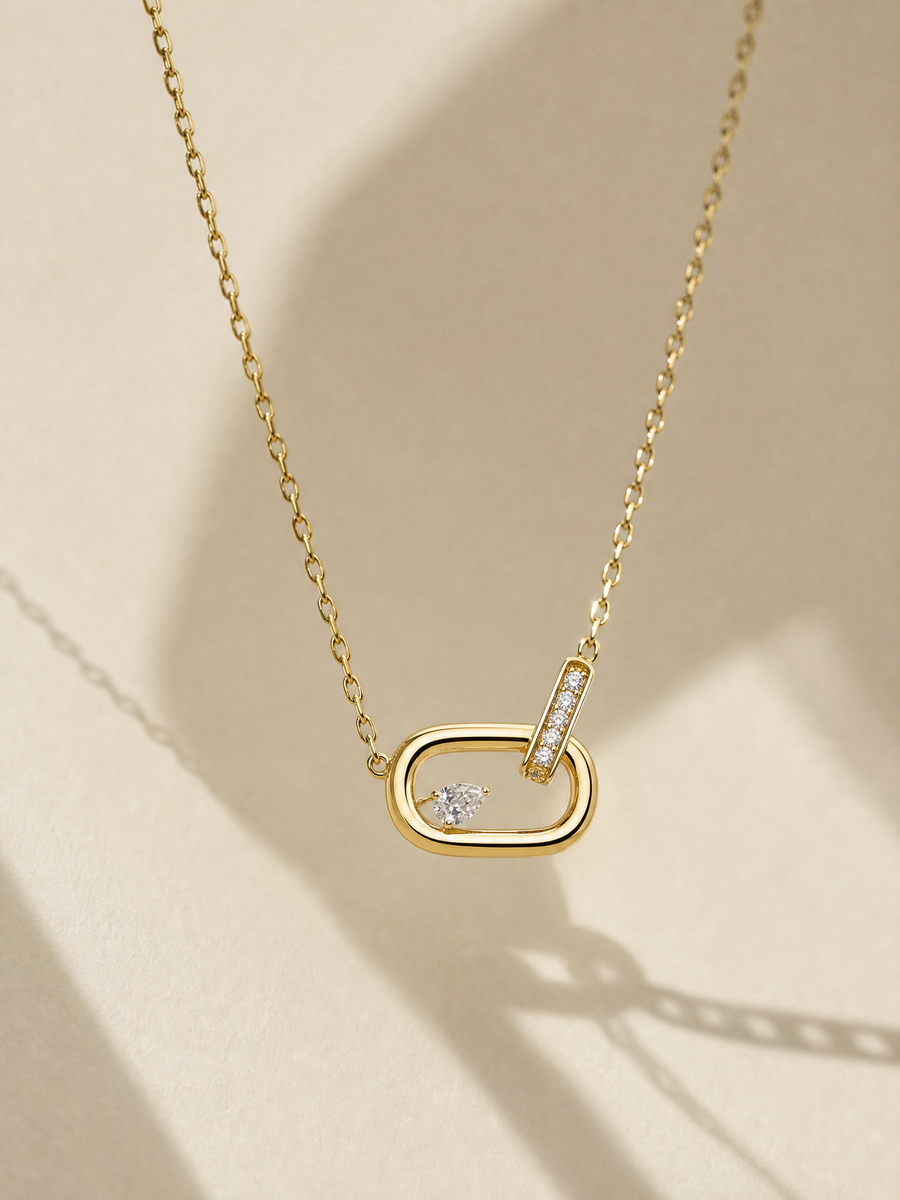
14K Yellow Gold Pear Lab-Grown Diamond Necklace - 0.245 ct Total
One note at a time.
New writing, new stones. Nothing else. Unsubscribe whenever you like.