August 27, 2026
Wearing It on a Tuesday
There is a particular kind of small box, hinged and lined in something soft, and the piece inside is lying in exactly the position it was left in.
There is a particular kind of small box. Hinged, lined in something soft, kept on a shelf or at the back of a drawer with the receipts. Open it and the piece inside is lying in exactly the position it was left in, because nothing has moved it since.
Most fine jewelry lives like this. It is bought for a wedding, an anniversary, a birthday with a round number attached. It comes out for the day. It is photographed once, on a hand holding a glass. Then it goes back.
We have been thinking about the arithmetic of that, because the arithmetic is more persuasive than anything we could say about it.

An open jewelry box photographed from above, empty apart from the pressed indent in its pad where a ring has rested unworn.
The arithmetic of forty wears
A piece worn twice a year, for twenty years, has been worn forty times. Forty mornings. Set end to end, the entire life of that object fits inside six weeks.
The same piece worn daily across the same twenty years has been worn more than seven thousand times. The ratio is roughly a hundred and eighty to one. It is not a small difference in degree. It is a difference in what the thing is.
One of those is an object with a life. The other is an object in storage, and storage is a real state with real properties: it does not scratch, it does not loosen, and it does not accompany anyone anywhere.
This is what Everyday New Luxury means when we use it, and it means one specific thing rather than a mood: worn without waiting for an occasion. Not casual. Not less considered. The piece is the same piece; only the frequency changes, and the frequency is the whole argument. Everything in the jewelry is made to hold up to being used, which is a different brief from being made to hold up to being looked at.
What daily wear actually costs
Gold worn every day stops looking new. What accumulates is a dense field of very fine scratches, each one invisible on its own, which together read as a soft low glow rather than a mirror. The trade calls this patina and does not treat it as damage. It arrives faster on 18K than on 14K, because the higher the gold content the softer the alloy, which is the practical half of the difference between 14K and 18K and the reason a piece meant for constant contact is often better in the lower karat. White metals age differently again, and the upkeep is where the real distinction sits rather than the color, which is the argument in platinum against white gold.
Prongs move. Four or six thin columns of metal hold a stone by tension and nothing else, and thousands of small knocks will eventually persuade one of them to sit differently. GIA's advice is to have jewelry checked every six months, and it takes a jeweler about ninety seconds. A prong caught early is a repair. A prong caught late is a lost stone.
Clasps wear out. A clasp is the only moving part on a chain, and moving parts have a service life. A necklace worn daily will eventually need a new one, which is a routine bench job rather than an event.
A bangle in solid 14K yellow gold takes more of this than anything else, because a wrist spends its day meeting desk edges, door frames, the underside of a steering wheel and a laptop's front lip. It will show the week it has had. That is not the same as being worn out.

A gold diamond bangle on a wrist resting against a laptop at a desk, photographed among everyday objects in natural light.
What a diamond will survive, and what it will not
This is the part people get wrong in both directions.
Diamond sits at 10 on the Mohs scale, and GIA's phrasing is that only a diamond can scratch a diamond. A lab grown stone is the same crystal with the same structure, so this holds for every stone we set, each carried by an IGI Laboratory Grown Diamond Report. In ordinary circumstances a diamond is very hard to hurt.
Hardness is not toughness. Hardness is resistance to scratching. Toughness is resistance to breaking, and GIA describes diamond as extremely hard but only somewhat tough. The crystal has four perfect cleavage directions, planes along which the carbon atoms are less tightly bound, and a hard knock delivered at the wrong angle can chip it. GIA notes that chips occur at the girdle or at a point, the common culprits being countertops and other diamonds worn on an adjacent finger.
So: not indestructible, and very hard to damage during a normal week. The exposure is geometric rather than general. A stone held in a bezel, with its girdle covered by a wall of metal, is meaningfully better protected than one held by claws, which is why bezels and V-shaped tips exist. A round brilliant has no points at all, which is part of why a 1.09 ct round in solid 14K white gold is unremarkable to wear every day, and why round studs are the piece most people never take off. Ears meet nothing.
When to take it off
The honest list is short, and short lists get followed.
- The gym. A loaded bar against a shank will bend it, and a bent shank puts a prong out of true.
- Anything heavy and abrasive. Moving boxes, hauling luggage, carrying stone or lumber.
- Gardening. Grit works into a setting and stays there, and a trowel handle is exactly the wrong hardness.
- Chlorinated pools and hot tubs, bleach, and household cleaners. GIA is direct: chlorine bleach can pit or damage gold alloys. It does not attack the gold, it attacks the other metals in the alloy, and the failure is a shank that snaps rather than a stone that dulls. Be strict about this one.
For everything else, warm water, a drop of mild dish soap and a soft brush is what GIA recommends, and abrasive powders and at-home steam are what it does not. More on the stones themselves is on the diamonds page.
Some pieces are not built for a Tuesday
We sell those too, and the argument above does not cover them.
A large stone set high is the clearest case. A 4.06 ct round in solid 18K sits well above the finger, and height is leverage: every knock arrives with more force behind it, in a softer alloy. It is not fragile. It is asking for more attention than a Tuesday will give.
Wide fancy color stones behave the same way. The 3.803 ct blue oval in 18K spans most of a finger, and a spread that size meets doorframes nobody looked at. Pointed shapes carry their own version, since marquise and pear cuts concentrate the stone into two thin tips, the geometry GIA singles out.
Then there are fine chains carrying more weight than the gauge was designed for. The stone is never the limit there. The link is.
None of this is a defect. A piece whose wearing is itself the event is doing what it was made to do. The only error is treating one kind as the other.

Two solid gold bands photographed side by side under raking light, one newly polished and one carrying the fine soft patina of years of daily wear.
A piece bought for no reason belongs to the person
A piece bought for an event carries the event. It becomes an artifact of a date, and dates take their objects with them into the past tense. It is put on and something is commemorated, whether or not anyone wanted that.
A piece bought on no particular Tuesday, for no reason anyone could write on a card, has nothing attached to it at the start. So it attaches to the wearer instead, slowly, by accumulation. It becomes the thing that was on a wrist through a difficult month and a good one, neither of them a memory it was assigned. This is what a jewelry wardrobe means, and why what is new this season is not organized around an occasion calendar.
That is the whole difference, and it is not a difference in the object. It is a difference in who the object ends up belonging to.
Forty wears is a small number for something meant to last. The box on the shelf still holds the shallow dent where a ring sat for eleven months of the year. On our side of the argument the dent never forms, because by nine in the morning there is nothing in the box to leave one.
In the collection
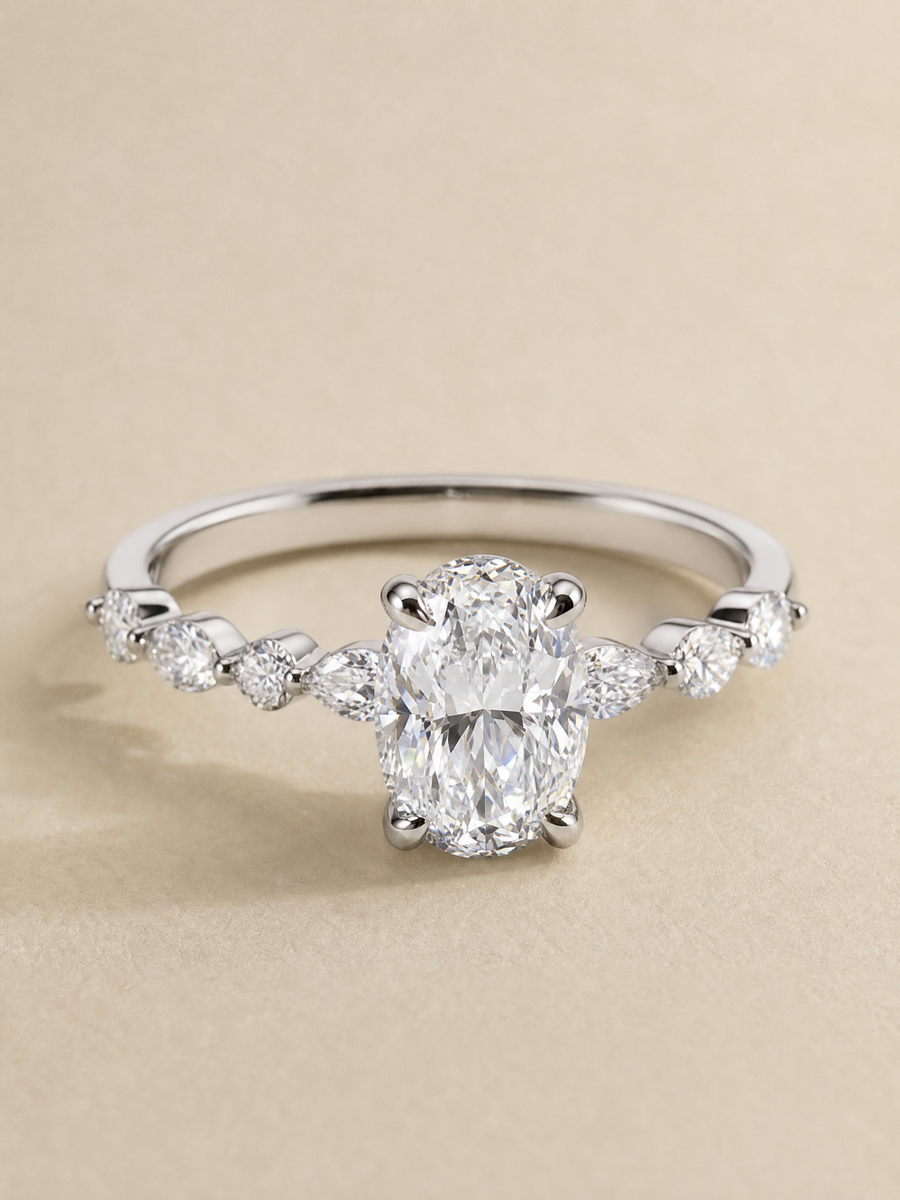
Platinum 950 Oval Brilliant Lab-Grown Diamond Ring - 1.22 ct Total
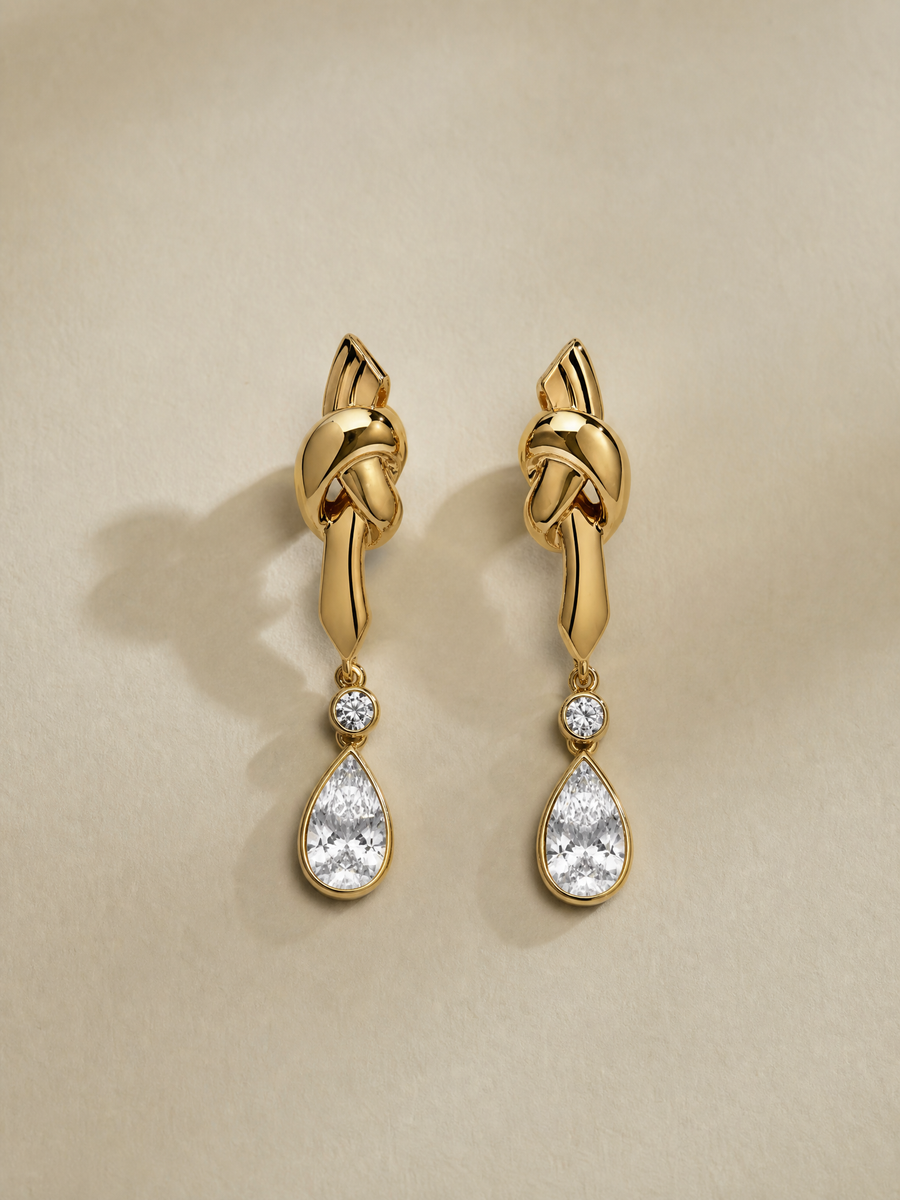
14K Yellow Gold Pear Lab-Grown Diamond Stud Earrings - 2.407 ct Total
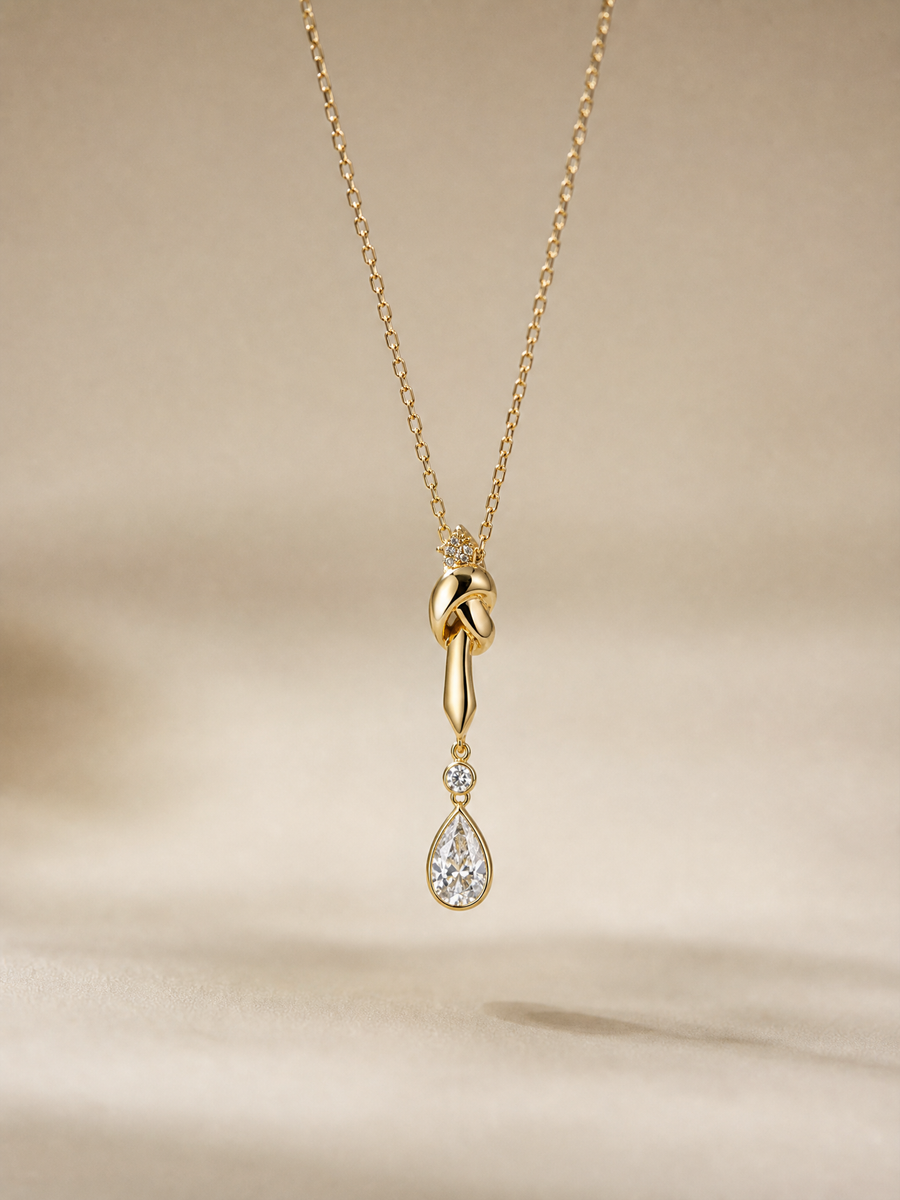
14K Yellow Gold Round Lab-Grown Diamond Necklace - 2.209 ct Total
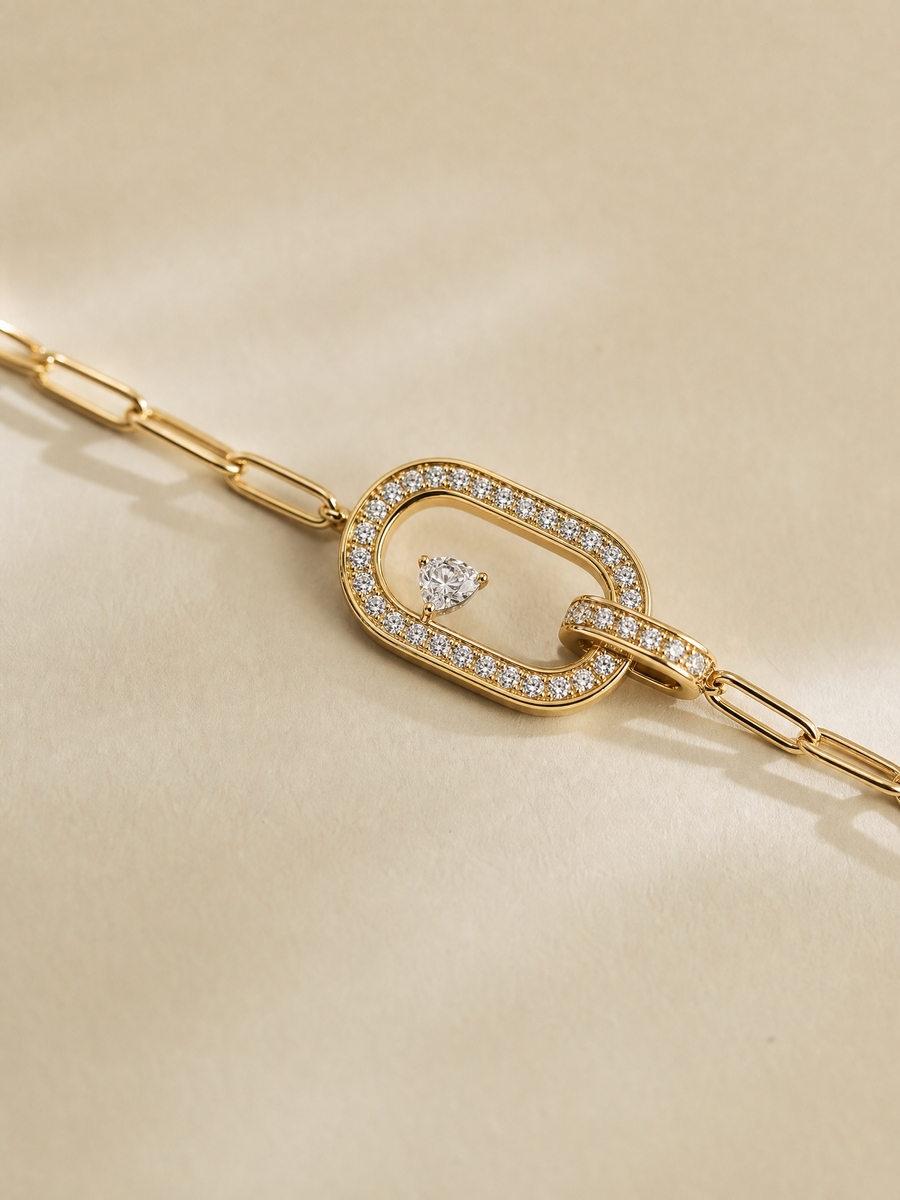
14K Yellow Gold Round Lab-Grown Diamond Bracelet - 0.633 ct Total
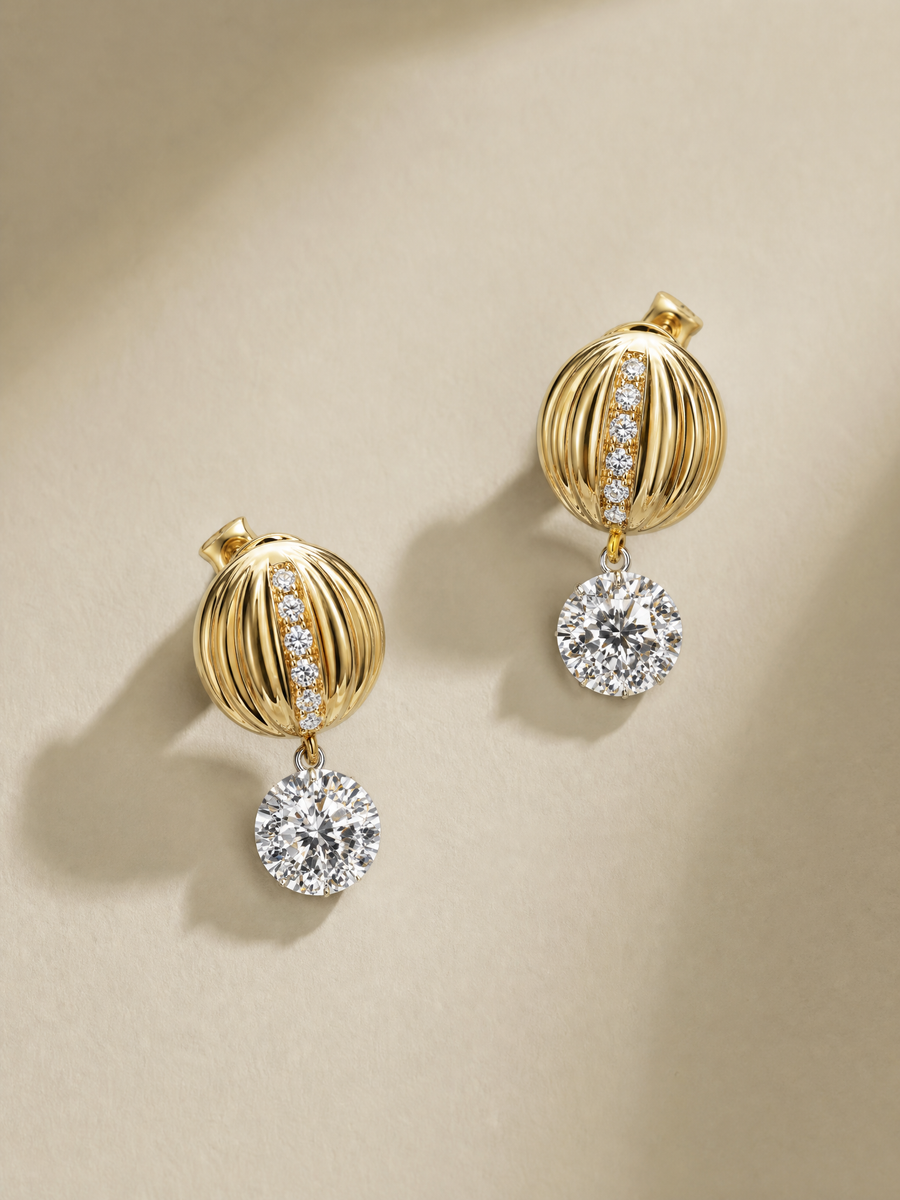
14K Two-Tone Gold Round Lab-Grown Diamond Stud Earrings - 1.654 ct Total
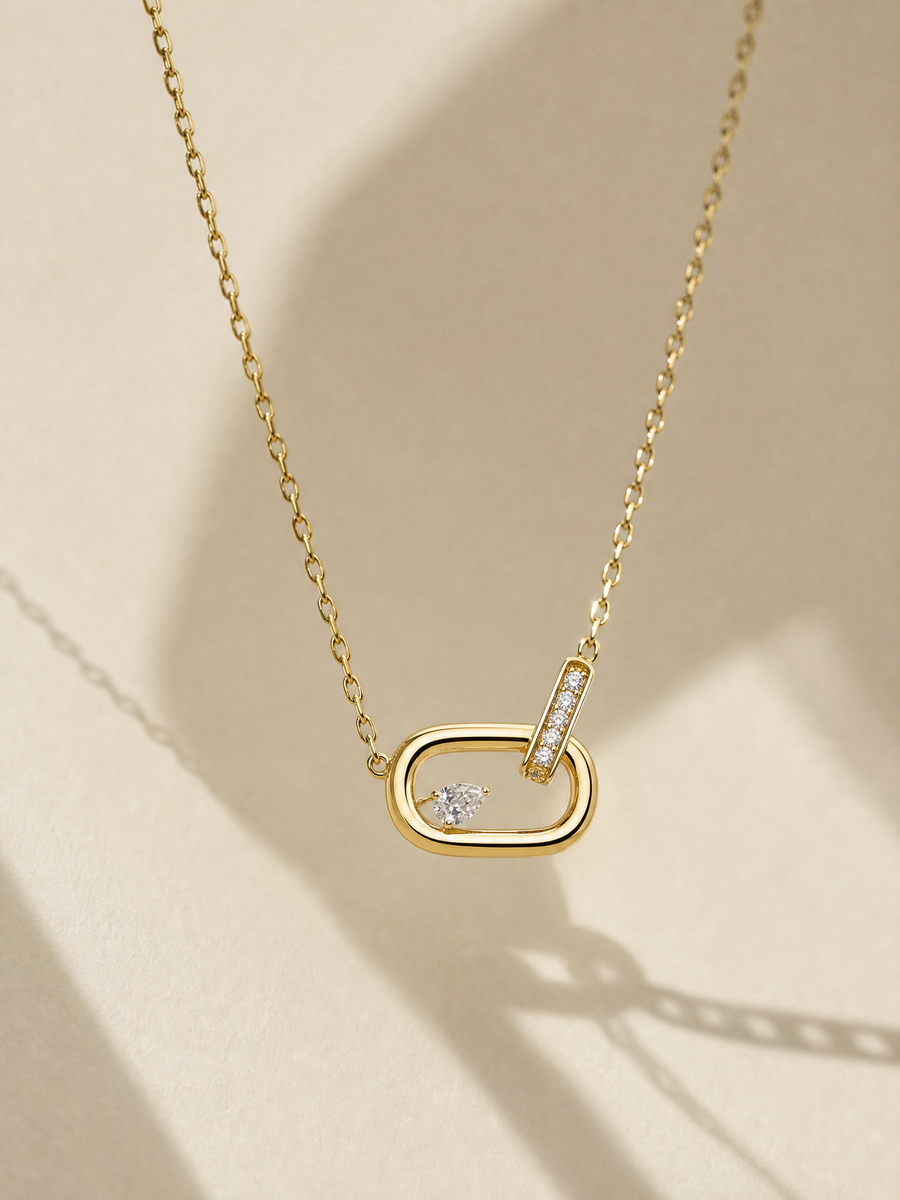
14K Yellow Gold Pear Lab-Grown Diamond Necklace - 0.245 ct Total
One note at a time.
New writing, new stones. Nothing else. Unsubscribe whenever you like.