
August 27, 2026
Layering, When Every Chain Is Solid Gold
There is a two-minute job at the end of some days. Two chains come off together, wound around each other, and have to be worked apart under a lamp.


Fine solid gold chains laid out together with two bands, where the weight and link of each chain decides how it will sit against the others.
There is a two-minute job at the end of some days. Two chains come off over the head together, as one object rather than two, and have to be worked apart before they can be put down. Under the lamp, at the tray, with a thumbnail.
It is not a complaint. It is the only moment in the day when both chains are held up and looked at.
Almost everything written about layering skips this. It is written for chains bought three at a time, where a twist is an annoyance and the answer is a fourth. That is advice about quantity, and this is not a quantity problem.
Solid gold changes the question. Nothing here is being assembled. Two or three permanent objects are being asked to live next to each other, on the same few centimeters of skin, for years.
Length is the only real rule, and it is not a number
The neckline decides before anything else. A closed crew neck ends around 38 to 40 cm on most people, and a chain at that length lies on fabric rather than skin, which flattens it. An open collar gives back 45 to 55 cm of bare ground.
The working gap is about 5 cm, or two inches. Below roughly 4 cm two chains stop reading as two: they touch, they overlap, and at conversational distance resolve into one thickened line, which is the opposite of the point.
The eye reads that gap in two places only: the hollow at the base of the throat, and the flat of the sternum. Both hold a chain against the body and cast a thin shadow under it. Where the chest curves away the chain lifts, the shadow goes, and a gap that looked generous on a table vanishes on a person.
Pendants change the measurement. Measure to the bottom of the stone, not the chain. A 1.52 ct oval on 45 cm of 14K white gold occupies more space than 45 cm suggests, because the stone hangs below the chain and is what the eye finds.
The lengths across the necklaces run 38, 40, 43, 45 and 55 cm, and the arithmetic is unforgiving. A 38 cm chain with a 2 cm extender over a 45 gives 7 cm and reads cleanly. A 43 over a 45 gives 2 cm and does not.

Two solid gold chains worn at different lengths, the gap between them visible against the collarbone and again on the flat of the sternum.
Fine chains find heavy ones
Two chains of different lengths swing on different arcs. Turning the head, lying down, pulling a sweater over the arrangement, and the shorter crosses in front of the longer and comes back on the other side. A few hundred times, and there is a twist.
The finer chain always wins the wrap: it has the smaller bend radius. A chain at 1.97 g will wind around one at 31.1 g. The reverse never happens.
Over months the twist is not neutral. Every untwisting works the same few links, and gold is soft enough that it shows: the walls thin where they rub, at one point rather than evenly. Here the difference between 14K and 18K stops being about color and becomes hardness, because 18K has less room for the metals that resist abrasion.
Three answers, usable together. The first is construction. Two cable chains of similar gauge are the worst pairing: each has open link mouths for the other to catch in. A flat, closed construction gives a fine chain nothing to grip, at the cost that flat chains kink permanently once folded.
The second is a greater gap in length. The third is the least obvious and most useful: wear the finer chain shorter. A short chain travels through a smaller arc, and stays above the heavy chain's path.
The failure point is the jump ring
A chain does not part in the middle. It parts at the small ring joining a pendant's bail to the chain, or at the ring beside the clasp.
In the trade generally, that ring is often the only wire in the assembly not soldered closed, and the place where the pendant's mass turns a corner. The pendant rocks with every step, the ring saws against the link it sits in, and a load that the chain elsewhere spreads across a hundred links is carried, all day, by one.
Which is why stone and chain are specified together. A 0.892 ct stone on 2.2 g of 18K white gold is a matched pair, and so is a 2.209 ct line carried on 2.21 g of 14K yellow, where the weight runs along the chain rather than hanging off one point. What goes wrong is moving a pendant onto a chain because the length was right.
Two things are worth checking: whether the ring is soldered closed, and whether the chain has gone brighter at that one link than anywhere else, which means it is already wearing.
Two is usually finished, three is a decision
Two chains make one relationship. Three make three, and all three have to hold.
Three works when the pieces do different jobs: something plain and close at the throat, something carrying a stone below it, something long and quiet under both. Three chains of similar weight at three lengths is a graduated version of one chain, and reads as indecision.
There is also the part nobody says out loud: in solid gold each addition is fixed. A third chain in 14K is not an accessory added to a look, it is a third object that will still be in the drawer in ten years. Not an argument against three, but an argument for three being chosen rather than accumulated, the distinction that governs stacking rings as well.
Warmth is the thing you actually see
Put yellow, white and rose at the throat together, in daylight, and the metals separate more sharply than they do on a hand.
North light is the honest light. White gold, under its rhodium, reads blue-gray and slightly hard, and takes on the color of whatever is near it. Yellow reads green-warm and stays where it is. Rose is the one that moves. It reads brown-pink, and alone among the three it shifts with the skin under it: against warm skin it recedes almost to nothing, against cool skin it is the loudest thing at the neck. 1.188 ct through 31.1 g of 14K rose is a great deal of that color arriving at once.
The step between 14K and 18K yellow shows here more than anywhere else on the body, because the throat is close to the face.
Then the light drops and it reverses. Warm indoor light collapses yellow and rose into each other; across a table at dinner they are the same metal. White gold does the opposite. It becomes the only cold surface in the frame, so it stops being the quiet choice and becomes the brightest thing at the throat. Rhodium is doing that work, and rhodium wears; underneath, white gold is faintly warm, which the platinum comparison covers properly.
The stones do not move through any of this. A colorless diamond is the same object at noon and at eight. Everything that changes is metal, which is why 0.696 ct set on 14K two-tone, white and yellow alternating along one chain, is less of a compromise than it sounds. It never has to decide.

A single fine chain and pendant at the throat, the length that everything else in a layered group is measured against.
None of this is cheap or quick. Two chains is two chains' worth of gold, and there is no version where the second arrives casually. The move that makes layering easy elsewhere, buying three at once and sorting it out later, is what solid gold cannot do.
So the honest answer, often, is one chain. A single 0.468 ct piece at 4.91 g worn every day for ten years does what a set assembled in an afternoon cannot. It goes slightly dull in the way daily gold does. It stops being noticed and starts being missed when it is off. If there is one chain and no strong feeling about a second, waiting is not a failure of nerve, and we would rather say so than sell the difference.
And when there is a second, there is the tray, the lamp, and the two minutes. The twist comes out the same way every time, and it is still the one moment in the day when both objects are held up and looked at.
In the collection
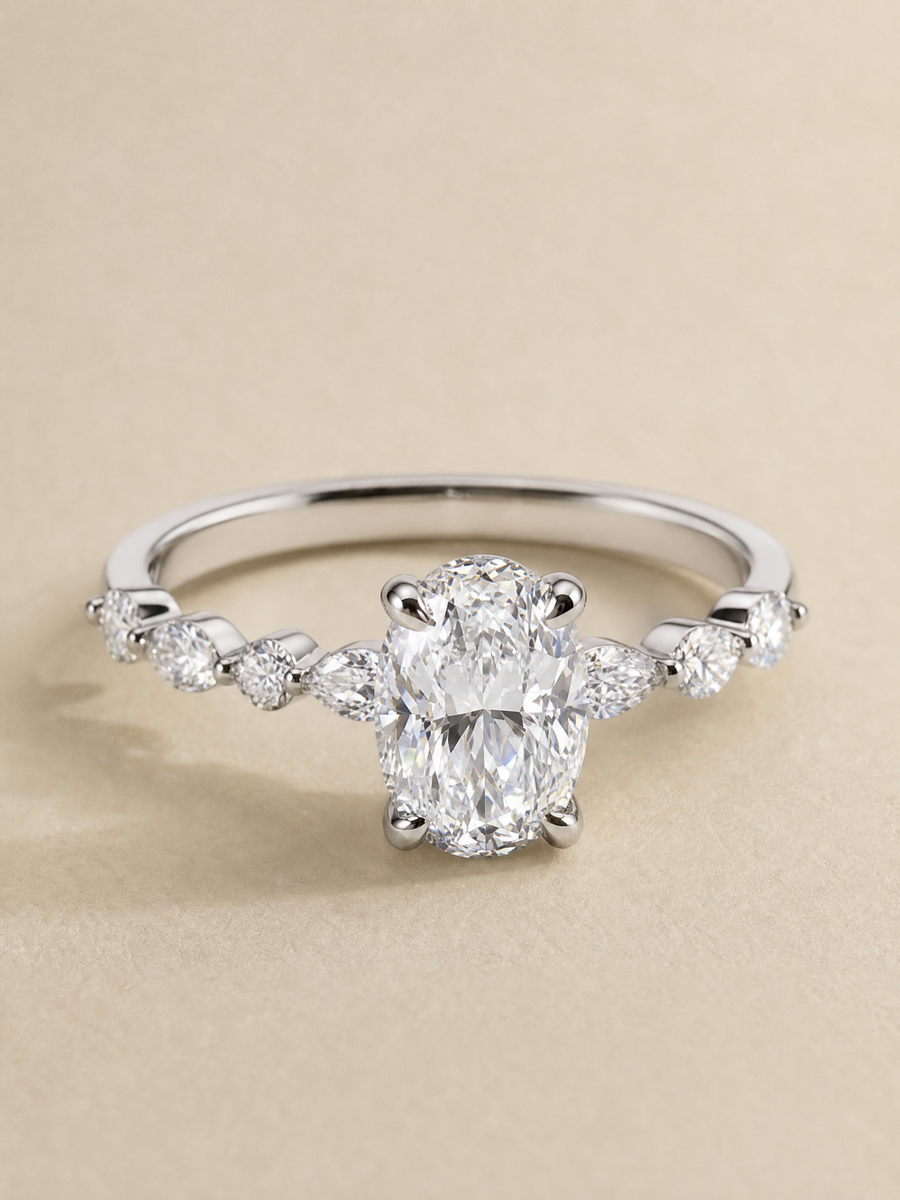
Platinum 950 Oval Brilliant Lab-Grown Diamond Ring - 1.22 ct Total
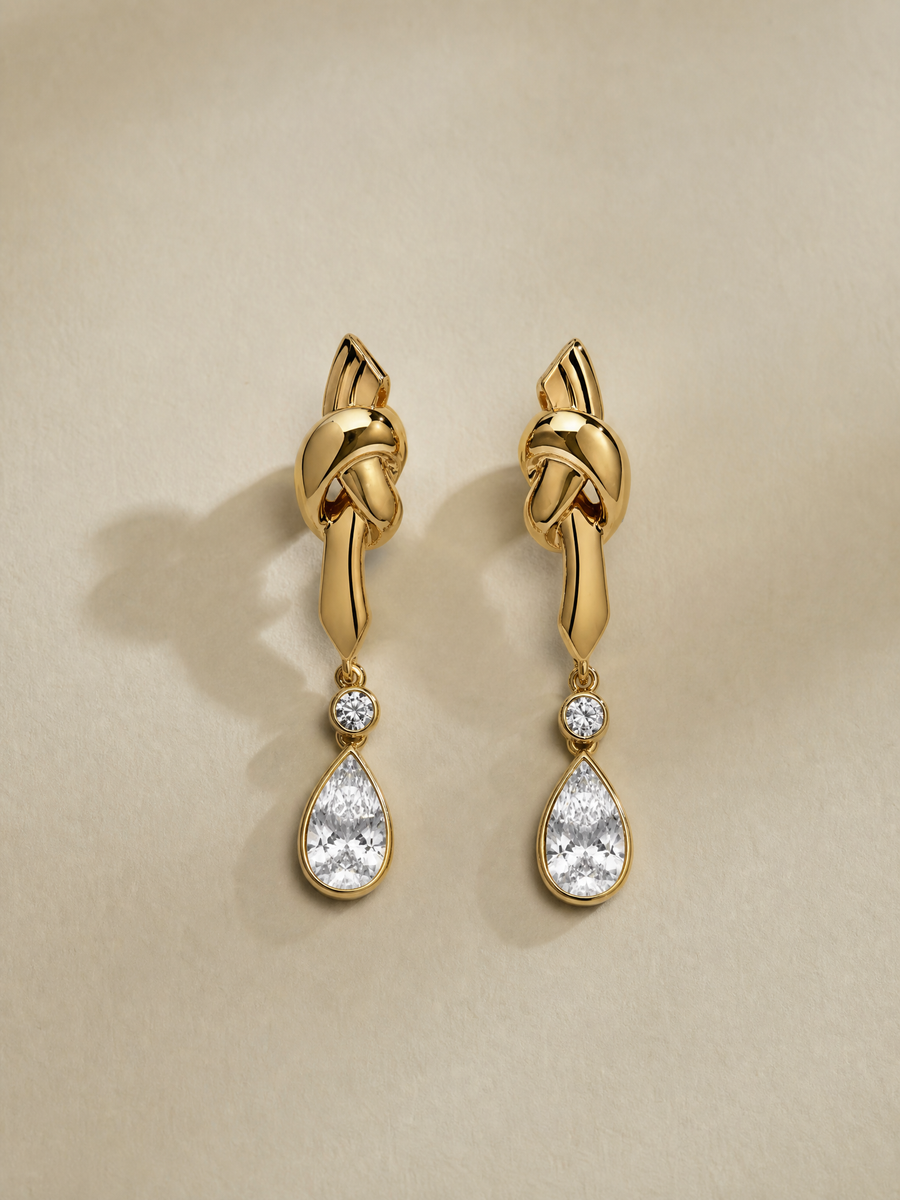
14K Yellow Gold Pear Lab-Grown Diamond Stud Earrings - 2.407 ct Total
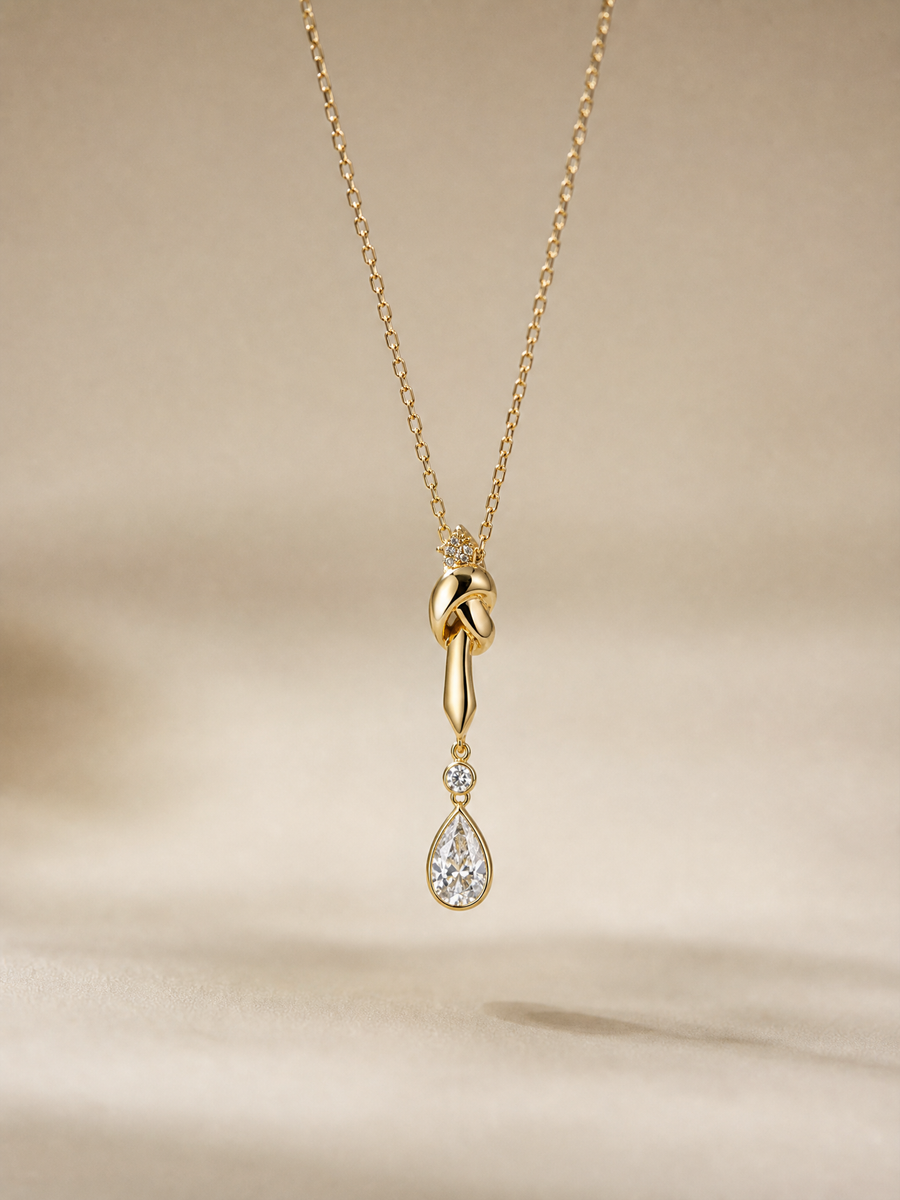
14K Yellow Gold Round Lab-Grown Diamond Necklace - 2.209 ct Total
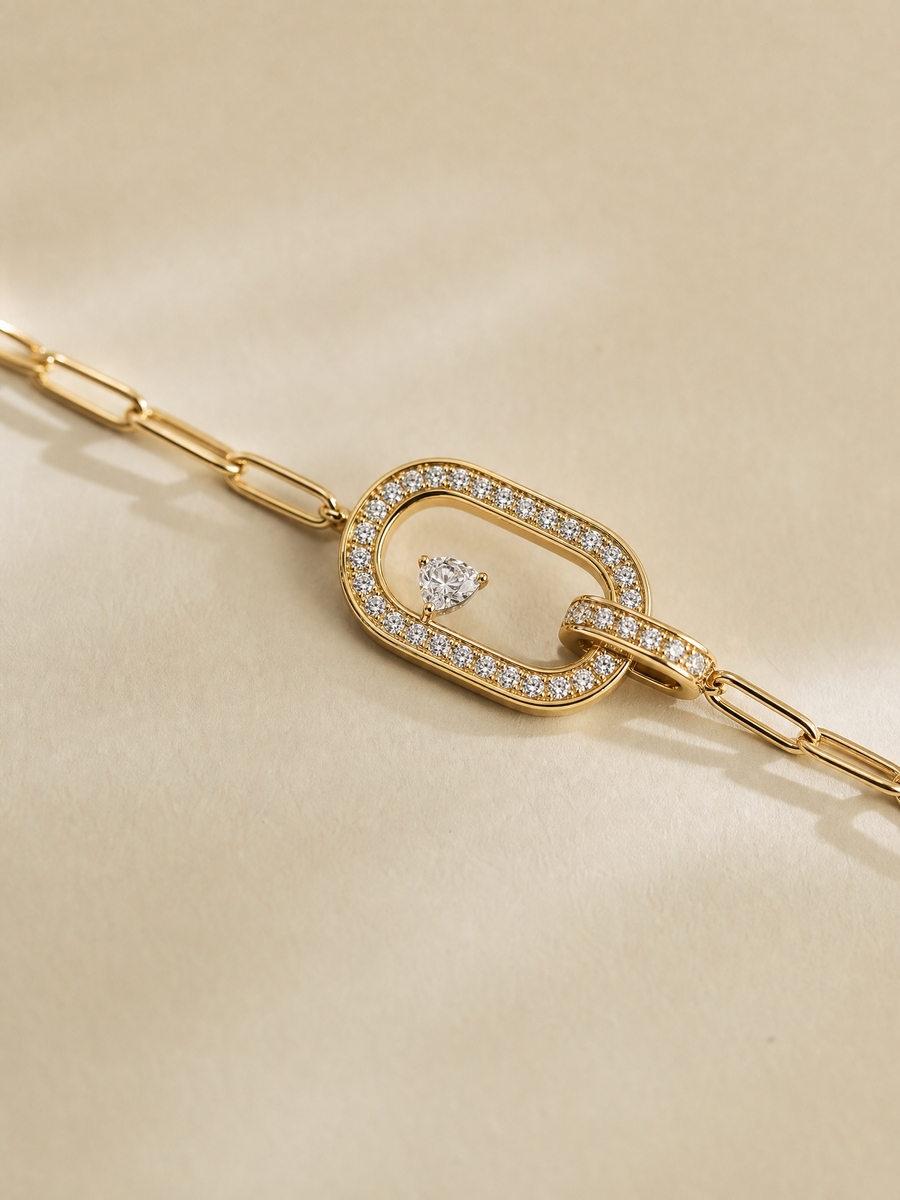
14K Yellow Gold Round Lab-Grown Diamond Bracelet - 0.633 ct Total
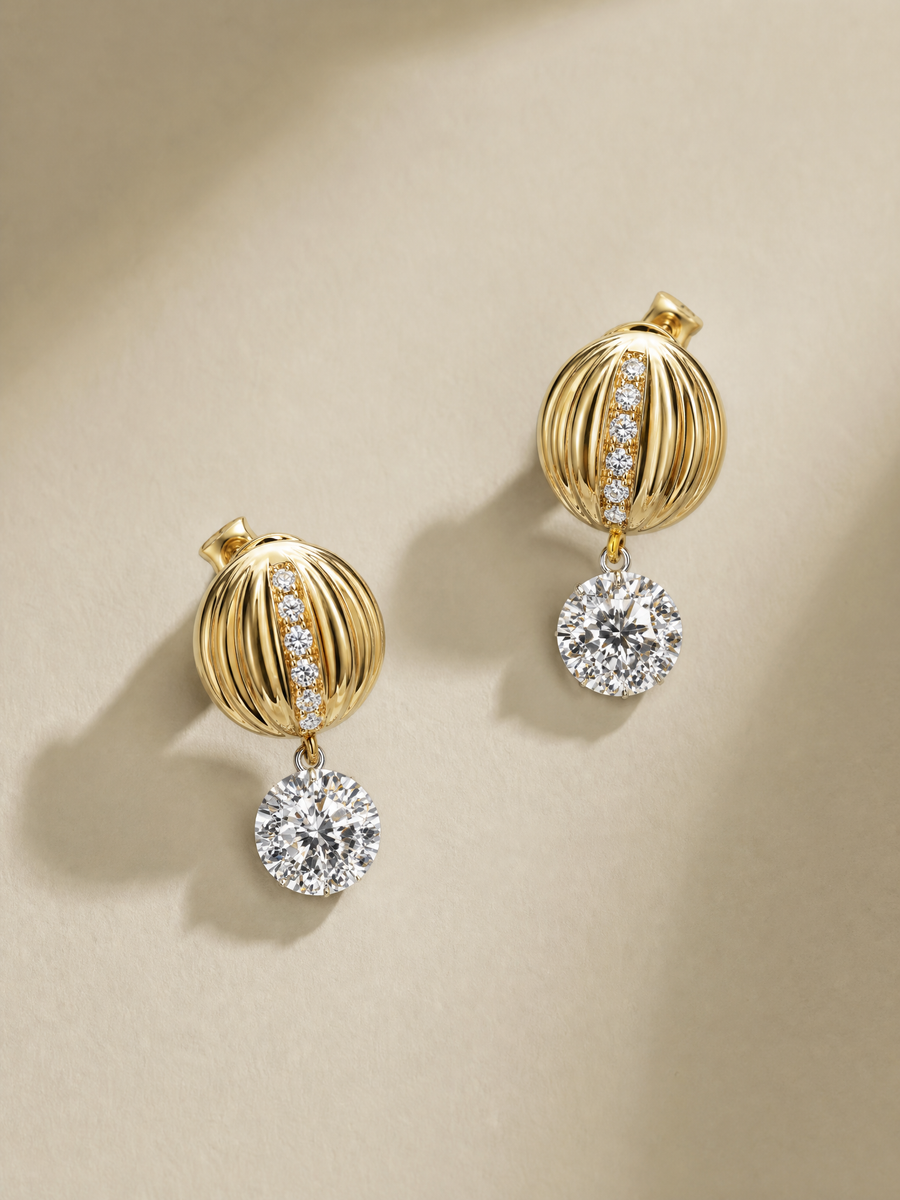
14K Two-Tone Gold Round Lab-Grown Diamond Stud Earrings - 1.654 ct Total
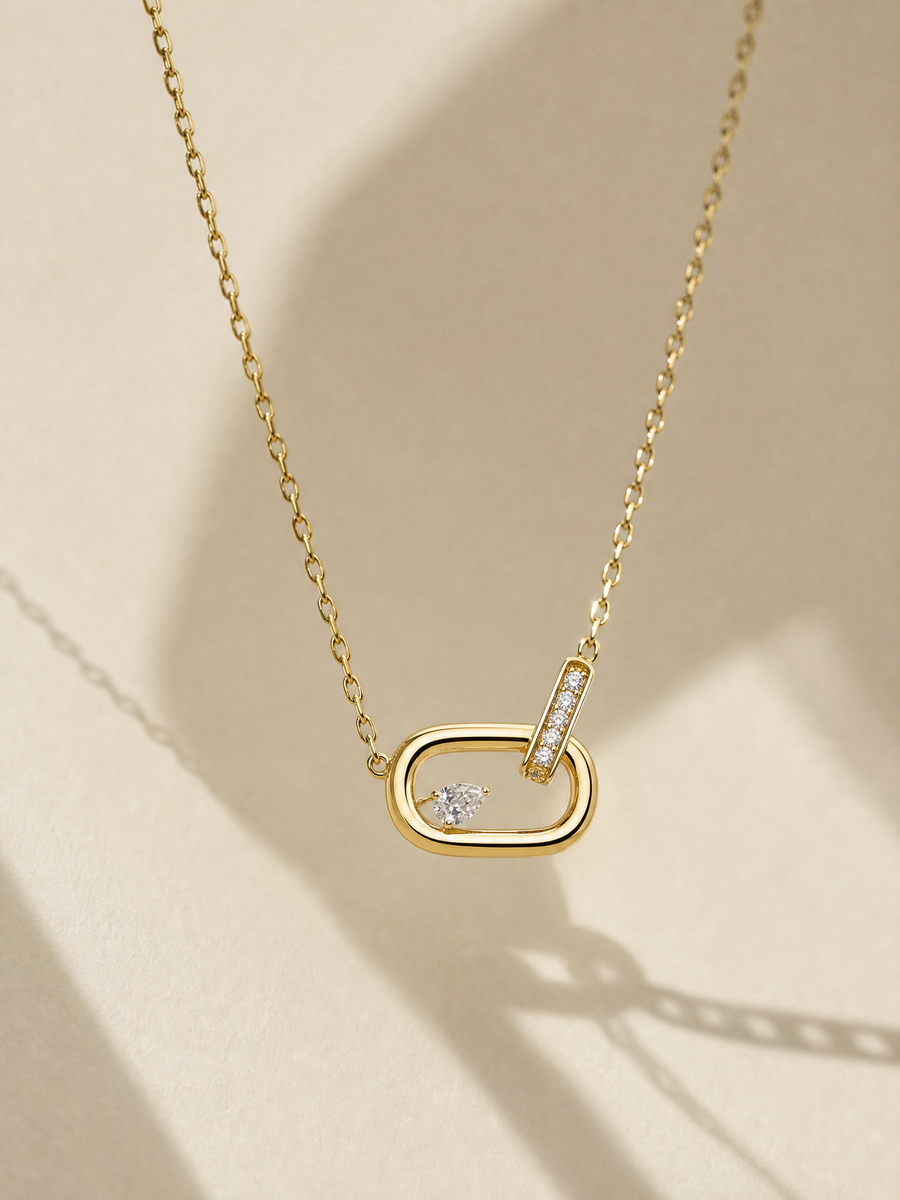
14K Yellow Gold Pear Lab-Grown Diamond Necklace - 0.245 ct Total
One note at a time.
New writing, new stones. Nothing else. Unsubscribe whenever you like.