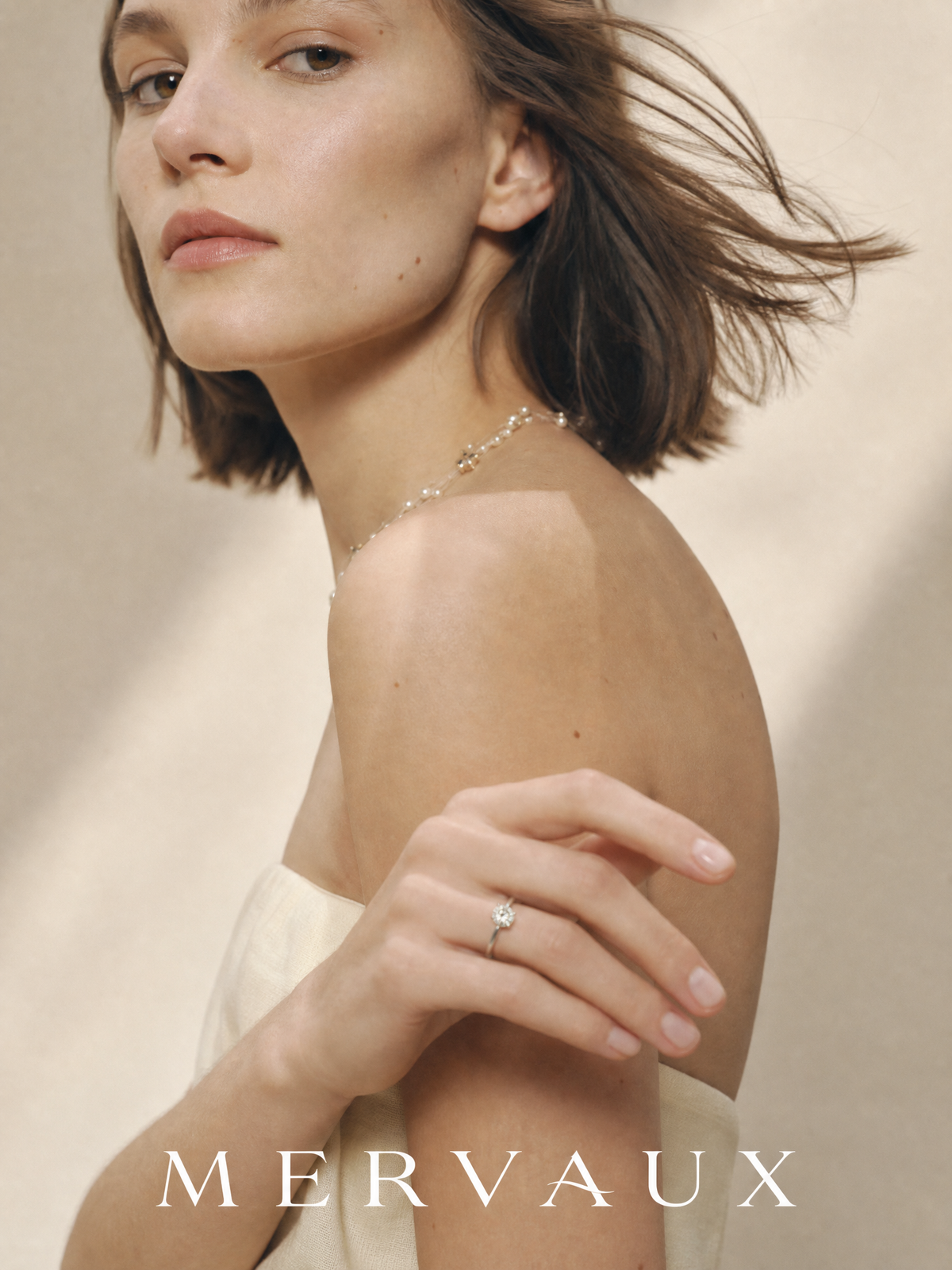
August 27, 2026
How to Stack Rings in Solid Gold
Two solid gold bands worn together for a year. Turn them to the light and where they met, each has quietly taken a little of the other.
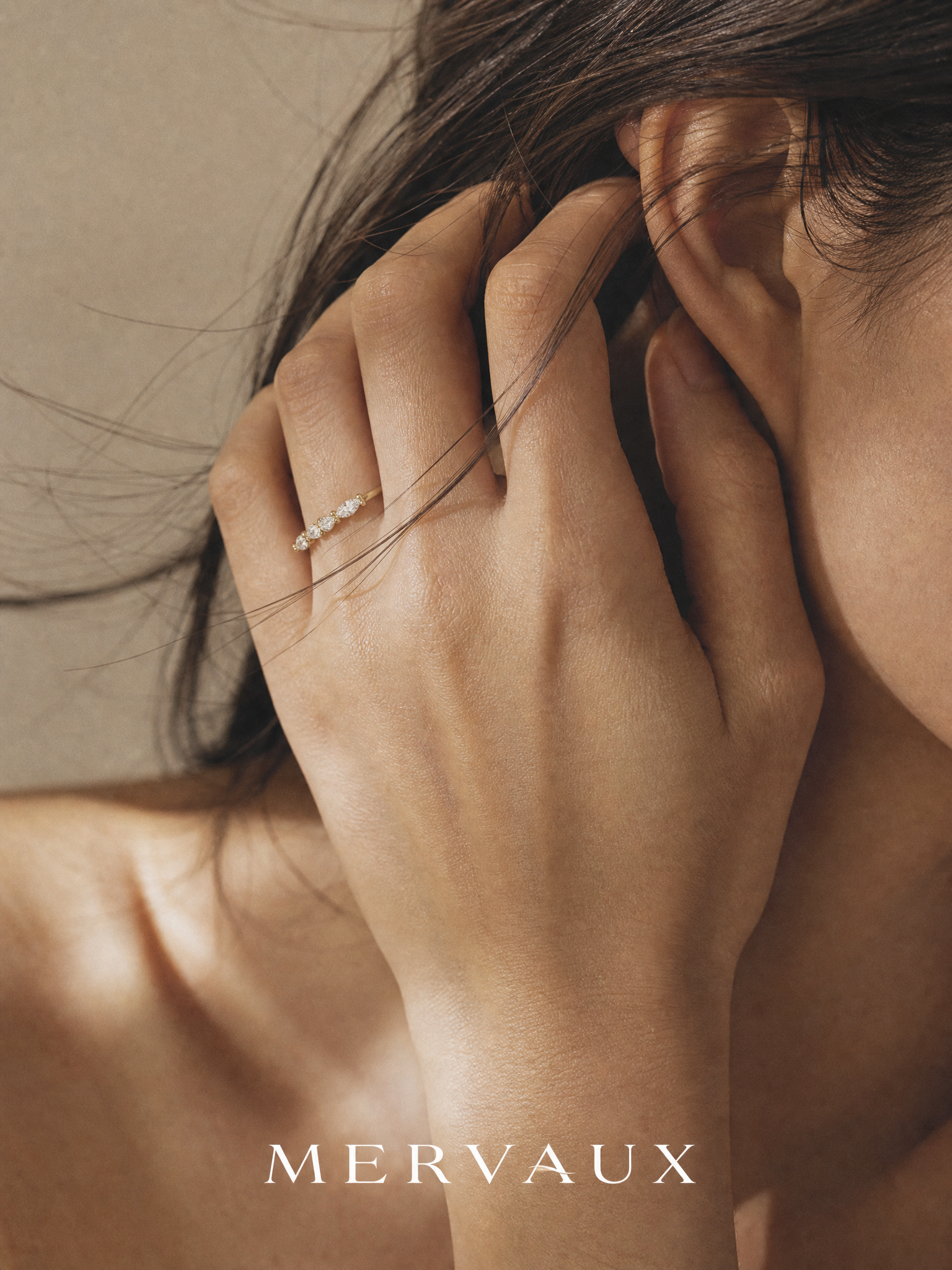
Take two solid gold bands off a finger after a year of wearing them together and turn them so the light runs along the faces that touched. The polish is gone from those faces and nowhere else. Not scratched exactly. Softened, the way the edge of a stone step is softened.
You will not see this online. A stack is photographed the day it arrives and the hand never comes back. Every stacking picture is a first-day picture.
It only becomes a question in solid gold. A plated stack is replaced long before a year of contact means anything, which is why advice written for plated stacks never mentions it. We work in solid 14K and 18K gold and Platinum 950, so what follows assumes metal that is still there in ten years.

Two solid gold bands laid side by side, worn rather than new, so the difference the contact between them makes to each surface is visible.
Two solid gold bands wear each other
A stack is the only jewelry that abrades itself. Rings on separate fingers touch at their edges occasionally; rings on one finger are pressed together by the taper of the finger and move against each other every time you close your fist.
What a year of it looks like
The touching faces lose their polish first, within a few months, and go to a soft satin. By about a year the crisp edge where that face meets the top of the band has taken a slight radius, so a flat band reads a little less flat. Past that it becomes thickness.
How fast depends more on the hand than the metal. Published trade figures for annual loss on a daily band vary by more than a factor of two between sources, none of which measures a stack. The sequence is reliable, the timeline approximate.
Karat sets a ceiling on hardness, not the hardness itself
18K is 75 percent gold and 14K is 58.5 percent, so 14K has more of its mass free for the metals that do the hardening. In like-for-like alloys the 14K band is harder and the 18K one gives way sooner, though the ranges overlap enough that a work-hardened 18K beats a soft 14K. The longer argument is in 14K against 18K for everyday wear. Set solid 14K beside solid 18K and the difference is real and small.
What shows first on a stack is not scratching, it is deformation, and that is the quieter reason 18K stacks age faster. An 18K band goes out of round sooner, and once it is slightly oval it stops sitting flush, bearing on two points instead of a whole face. Two points wear faster than a face. The ovalling is cosmetic. What it does to the ring beside it is not.
Yellow, white and rose are three hardnesses, not three colors
Mixing metals usually means gold against silver. We sell no silver, so the honest version is mixing colors inside solid gold, where the colors are not equivalent metals.
At one karat they hold identical gold; the alloy underneath differs. Rose runs copper high, and copper hardens as it colors, so a rose alloy can measure harder than the yellow at the same karat. This 1.474 ct total in solid 18K rose is not making the trade its karat number implies, which makes rose a sensible thing to set beside something you want to protect.
White needs more thought, because what meets the neighboring band is not gold. It is rhodium, under a micron thick, and on a stack it goes at the contact faces first, months ahead of anywhere else, leaving a warm line down one side of the ring. That is what platinum and white gold each do over ten years arriving early. Platinum 950 is white throughout and never shows the line, though paired with gold it is the gold that gives up material: platinum displaces metal where gold sheds it.
Three answers, and one of them is to leave it alone
Match the hardness and the two bands share the loss evenly. Mix them and the softer takes most of it, which is fine as long as you have chosen which ring gives. Or put a plain band between two set rings: the spacer takes the contact and is the cheapest thing to refinish. Or accept it: a polish restores the shine by removing metal, so polishing a stack every year costs more thickness than the wearing did.
Width is the number to work with, profile is why it works
The millimeters are a convention, not a standard
No standard defines a stacking band. The widths below are the ones retailers publish; they vary from shop to shop and are a common language rather than a measurement.
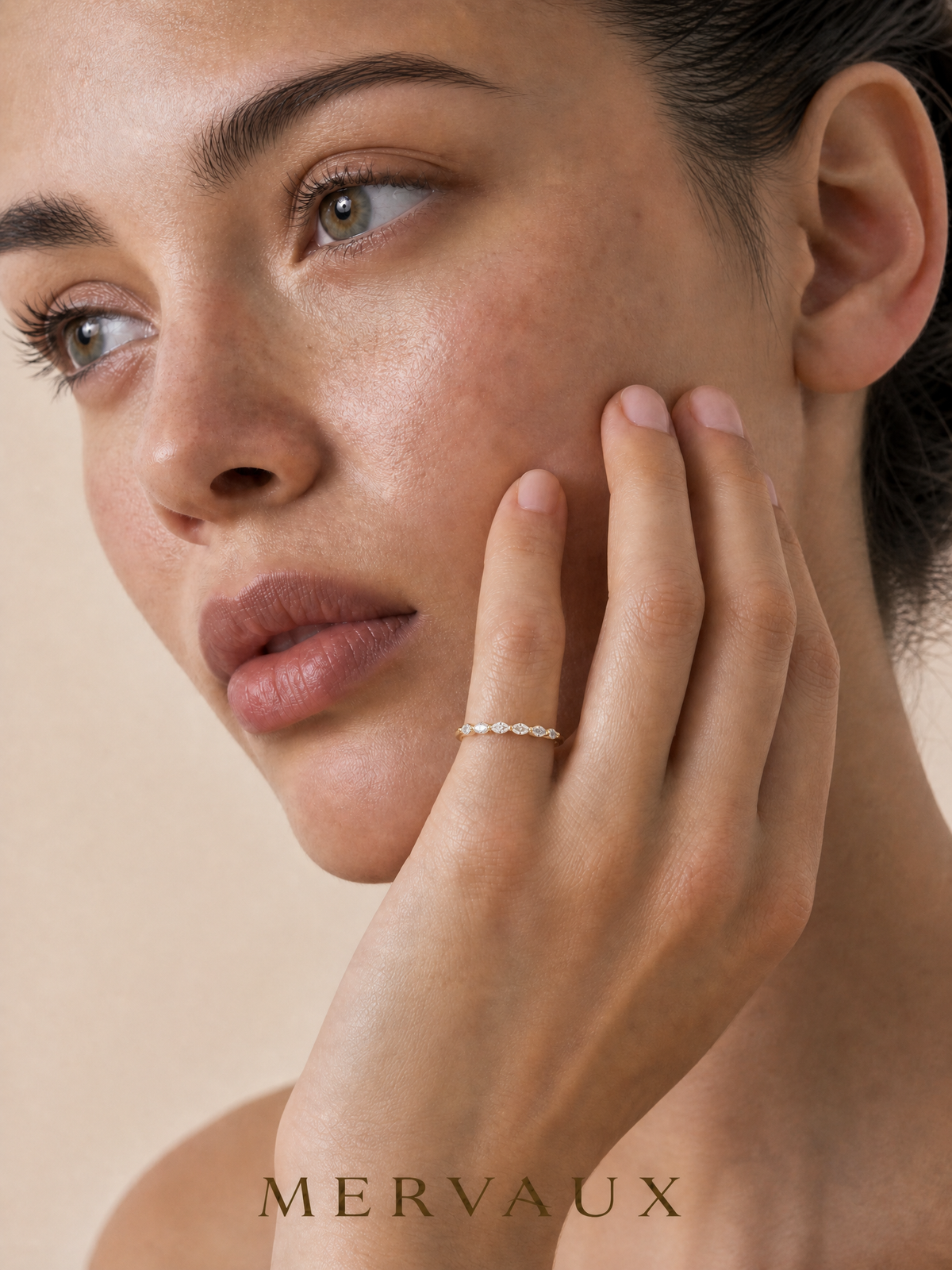
Around 1.5 to 2 mm reads as a fine line of metal and is what most stacks are built from. Around 2.5 to 3 mm is the most commonly chosen width, and the narrowest that carries a row of small stones comfortably, like this 1.13 ct seven-stone band in solid 14K yellow. From 4 mm a band has presence on its own; past 6 mm it is a statement, not a component.
The heuristic that helps is total width, not ring count. Most fingers take around 6 to 8 mm of band before the stack sits against the knuckle and the top ring levers off when you bend. Three bands at 2 mm and two at 3 mm both land at 6 mm. Count is the wrong unit.
One more convention: a wide band fits tighter than a narrow one at the same nominal size, because more surface bears on the finger, and jewelers commonly allow a quarter to a half size for it. A slim half band in solid 18K yellow does not ask what a 5 mm band asks.
Flat stays put and domed rocks
Two flat bands of the same width present parallel faces. They can slide and nothing else, which is why a flat stack still looks arranged at the end of the day.
A domed band presents a curve. Against another domed band the two curves meet along a line, and each can rock over the other a few degrees every time the hand closes. Same width, entirely different behavior: 2.6 mm flat against 2.6 mm flat sits where you put it, while 2.6 mm domed against 2.6 mm domed will have rotated out of alignment by evening.
A domed band beside a low-set ring also makes a visible step. Not a fault, but a decision. Comfort fit is a separate matter: that curve is on the inside, changing how a band crosses a knuckle, not how it faces its neighbor.

Stacked bands worn on one hand in ordinary light, where the profile of each ring decides how the group sits together.
A set stone moves the rubbing from the shank to the setting
A stone lifts the ring, and the band beside it stops meeting a shank face. It meets the underside of a setting, a prong, or the girdle of a diamond.
Diamond sits at 10 on the Mohs scale and gold alloys sit around 2.5 to 4, so where a set stone meets a band, the band loses. A stone-set band worn tight against a plain one cuts a track into it along the line of the stones. Prongs are the expensive version: a neighbor bearing sideways on prong tips thins them where nobody inspects, and thinned prongs are how stones are lost. Stone against stone is not safe either.
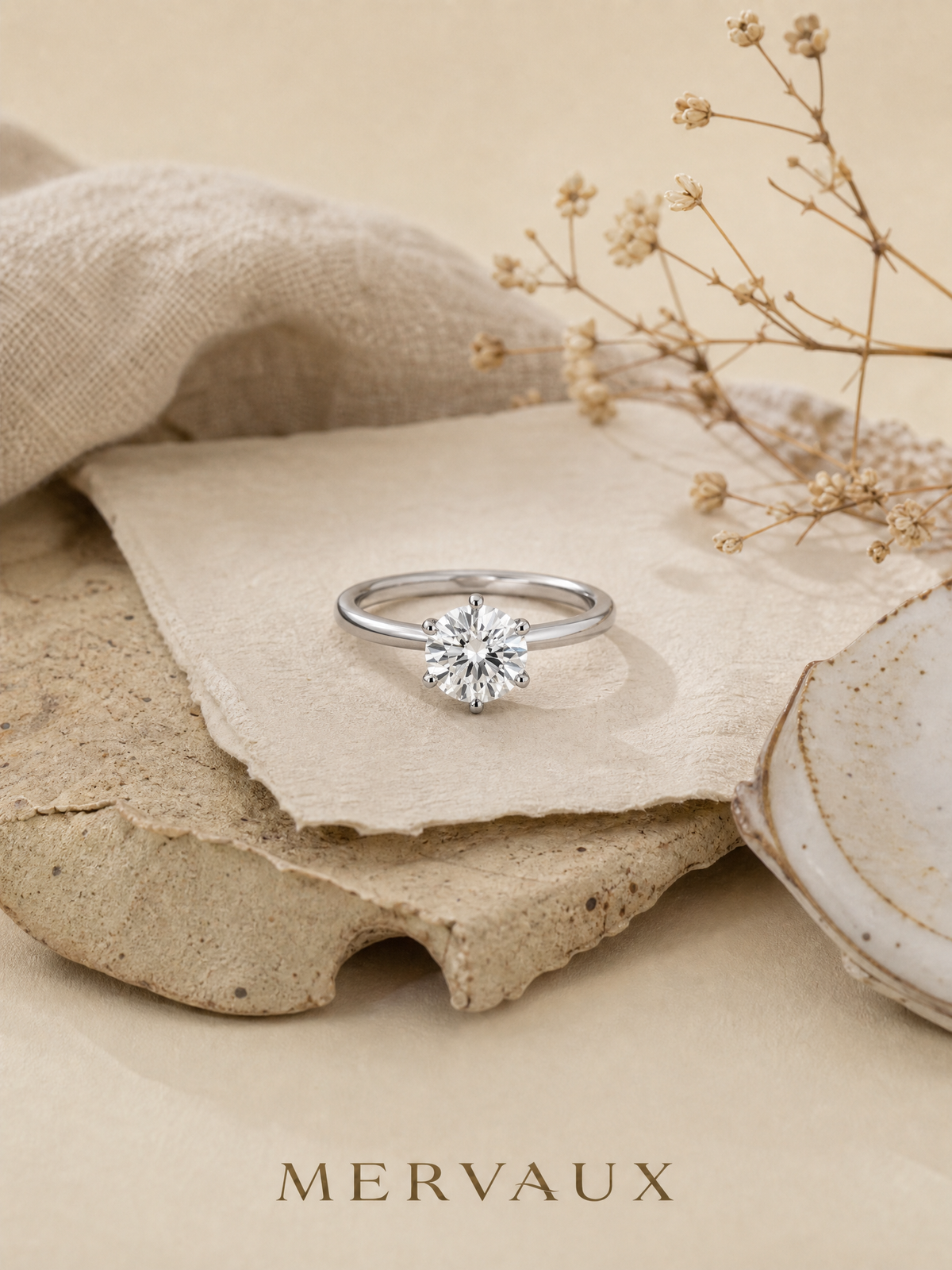
So a stack is planned in heights as much as widths. One raised ring with low bands beside it works; two raised rings pressed together does not, and a spacer between them is the fix. This 1.09 ct round brilliant in solid 14K white can anchor a stack. The 4.06 ct round in solid 18K cannot: at that scale the stone stands high enough that anything beside it rests on the setting for good. Across the rings we make, profile height tells you fastest which will live together.
A stack is sized once, as a stack
Several bands in contact compress a finger the way one wide band does, so a set that fits ring by ring on the bench can feel a size tight on the hand. Get measured wearing everything you mean to wear together, at the end of the day, not the start.
Then the part worth knowing before rather than after. Once bands are sized to sit together, resizing one changes the relationship. Stretching a band up pulls it slightly out of round, and a band out of round no longer sits flush. Cutting and adding metal is cleaner, but leaves a join at the bottom, exactly where a stack puts its pressure.
Some bands barely resize at all. Stones set through the band restrict where a jeweler can cut, and a band set all the way around usually cannot be sized without being remade. So the ring least able to change size decides the size of the stack. Fix that one, then size the others to it. If you are unsure which of yours that is, ask us before it goes to a bench.

A plain band worn against a stone-set ring, the two touching at the underside of the setting rather than band to band.
Where this stops being good advice
A stack is the most expensive way to wear rings and the most likely to be taken apart within a year. Three solid gold bands is three lots of metal, three settings, three sizings. This is the one place where the demi-fine stacks filling the search results have an argument: at that cost you can be wrong cheaply.
The reason stacks come apart is seldom taste. The top ring turns, or catches on a sleeve, or comes off to type and stays off. None of that is visible in a photograph.
Some people should buy one ring instead. If your hands are in things all day, one ring. If you have never worn more than one on a finger, one ring. If the ring you love has a high center you would be crowding, one ring. And if you are buying three at once from pictures rather than adding to something on your hand, one ring: a stack assembled all at once is a guess about a hand nobody has tested.
The sequence that survives is slower. Buy one band. Wear it a year. Then add the second, sized to the first. A stack that arrives one ring at a time is the one still worn in five years. That is the slowest possible way for us to sell you anything, which is how you can tell we mean it.
Turn the two bands back to the light. The satin across those faces is not damage or neglect. It is the only part of the object that records these two rings having been worn together through a year of ordinary days, and the one mark on a piece of jewelry that cannot be bought new.
In the collection
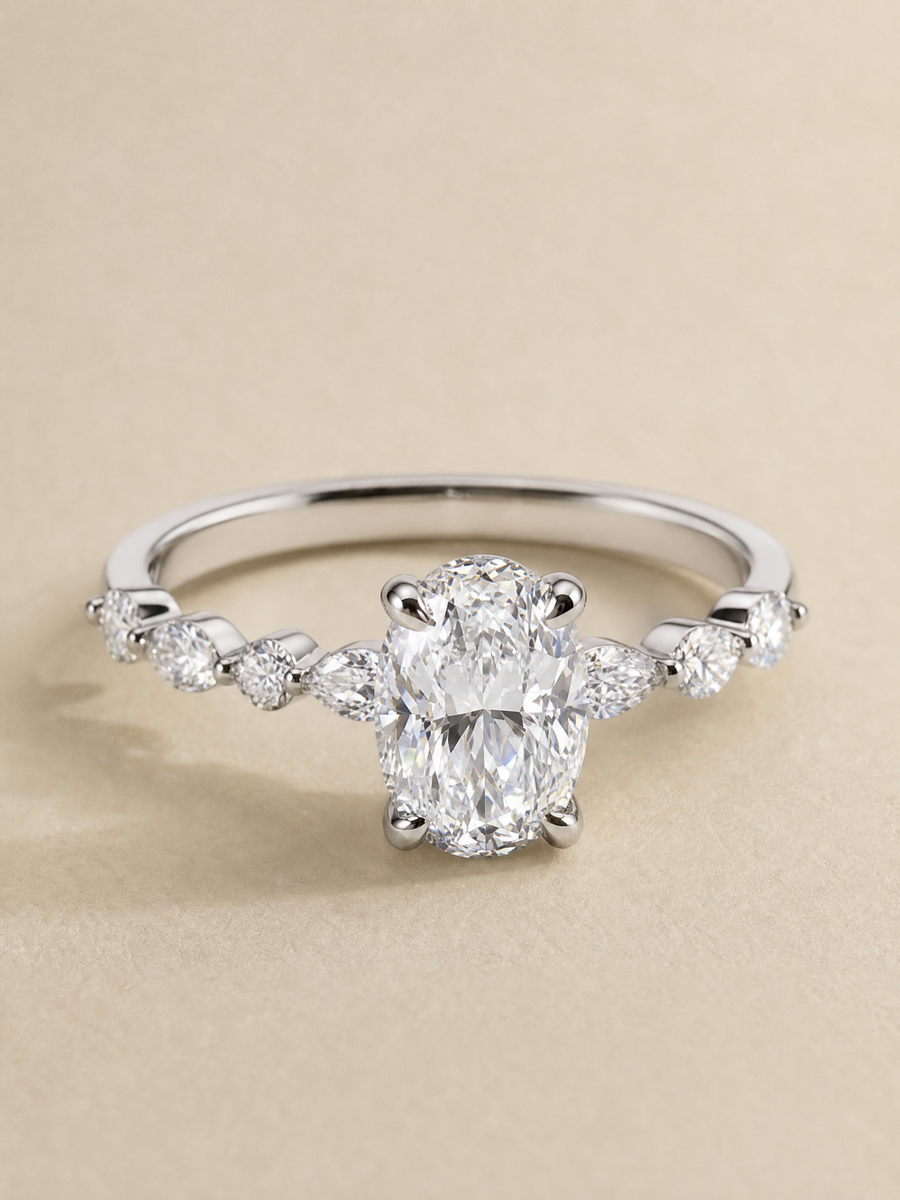
Platinum 950 Oval Brilliant Lab-Grown Diamond Ring - 1.22 ct Total
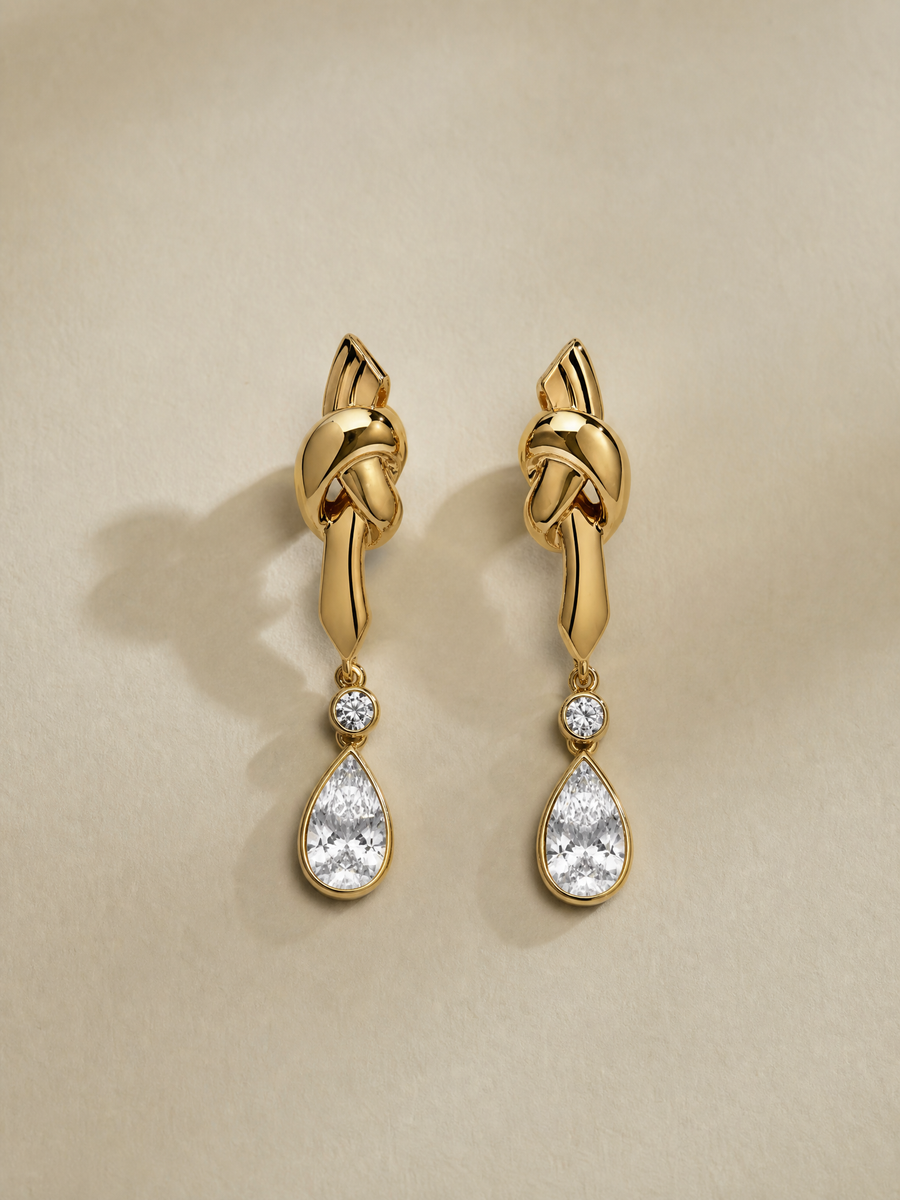
14K Yellow Gold Pear Lab-Grown Diamond Stud Earrings - 2.407 ct Total
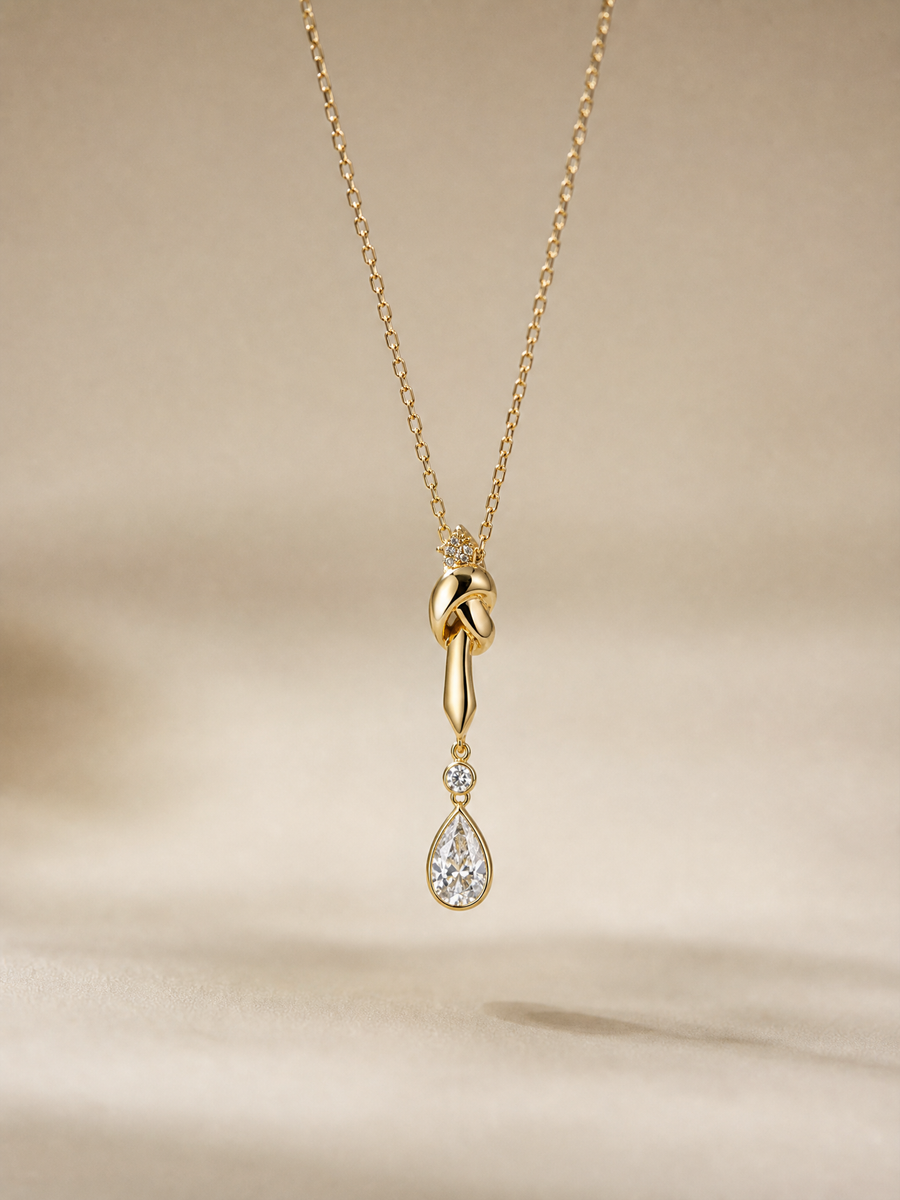
14K Yellow Gold Round Lab-Grown Diamond Necklace - 2.209 ct Total
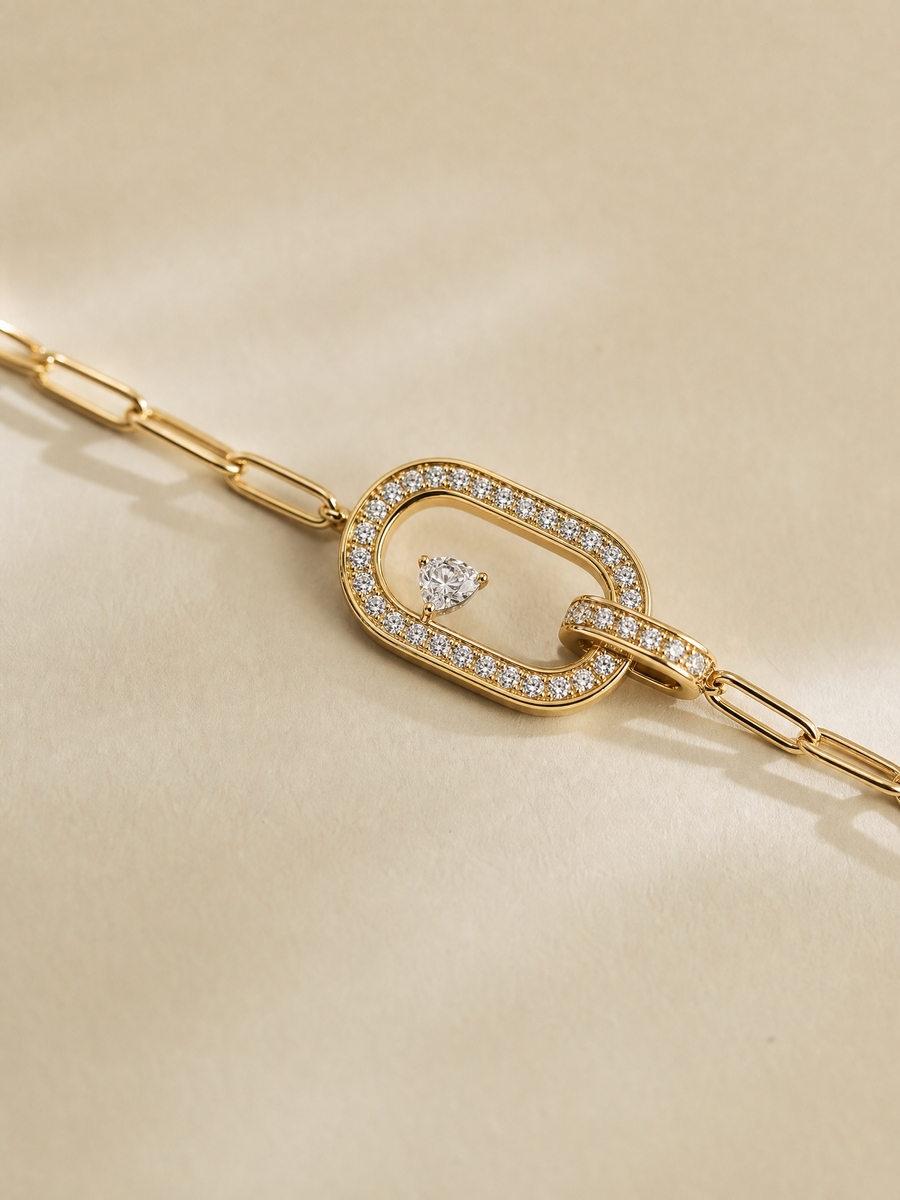
14K Yellow Gold Round Lab-Grown Diamond Bracelet - 0.633 ct Total
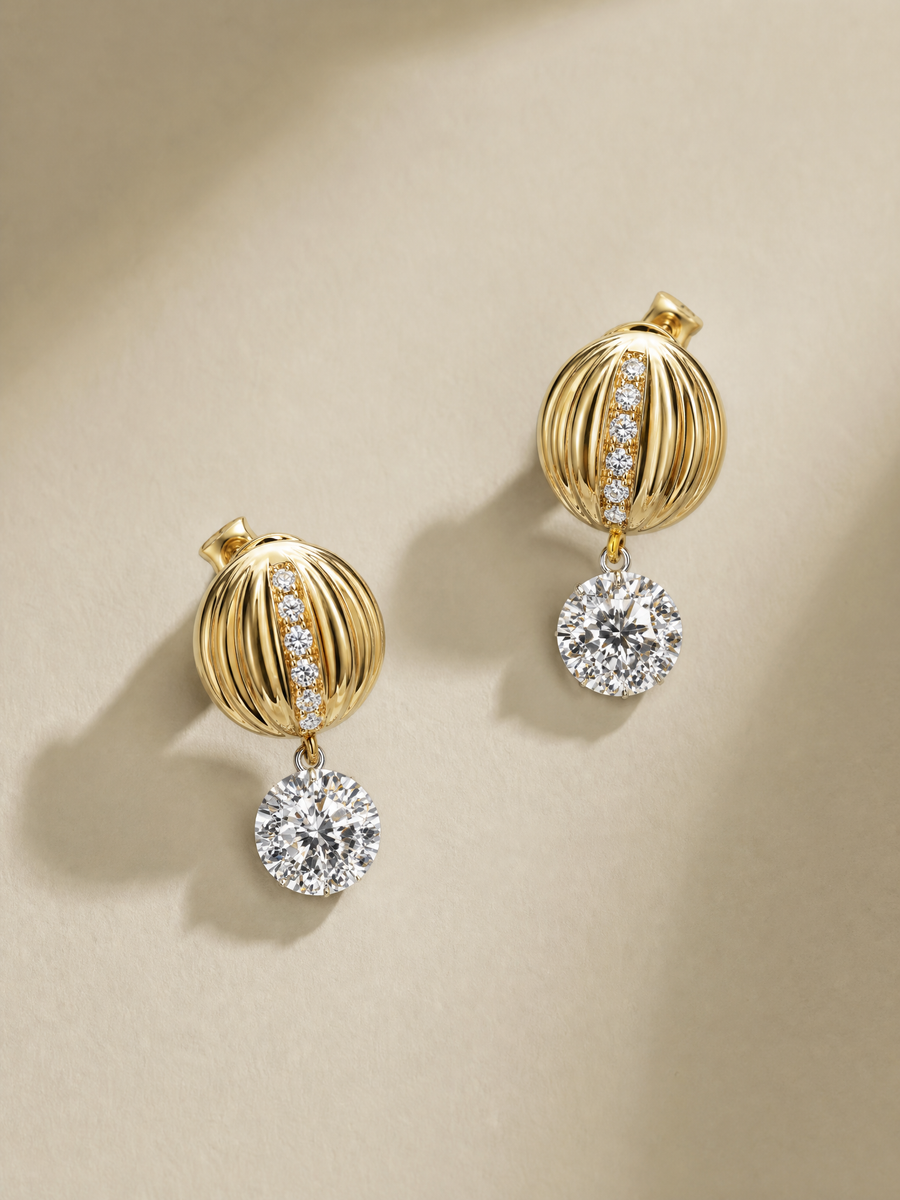
14K Two-Tone Gold Round Lab-Grown Diamond Stud Earrings - 1.654 ct Total
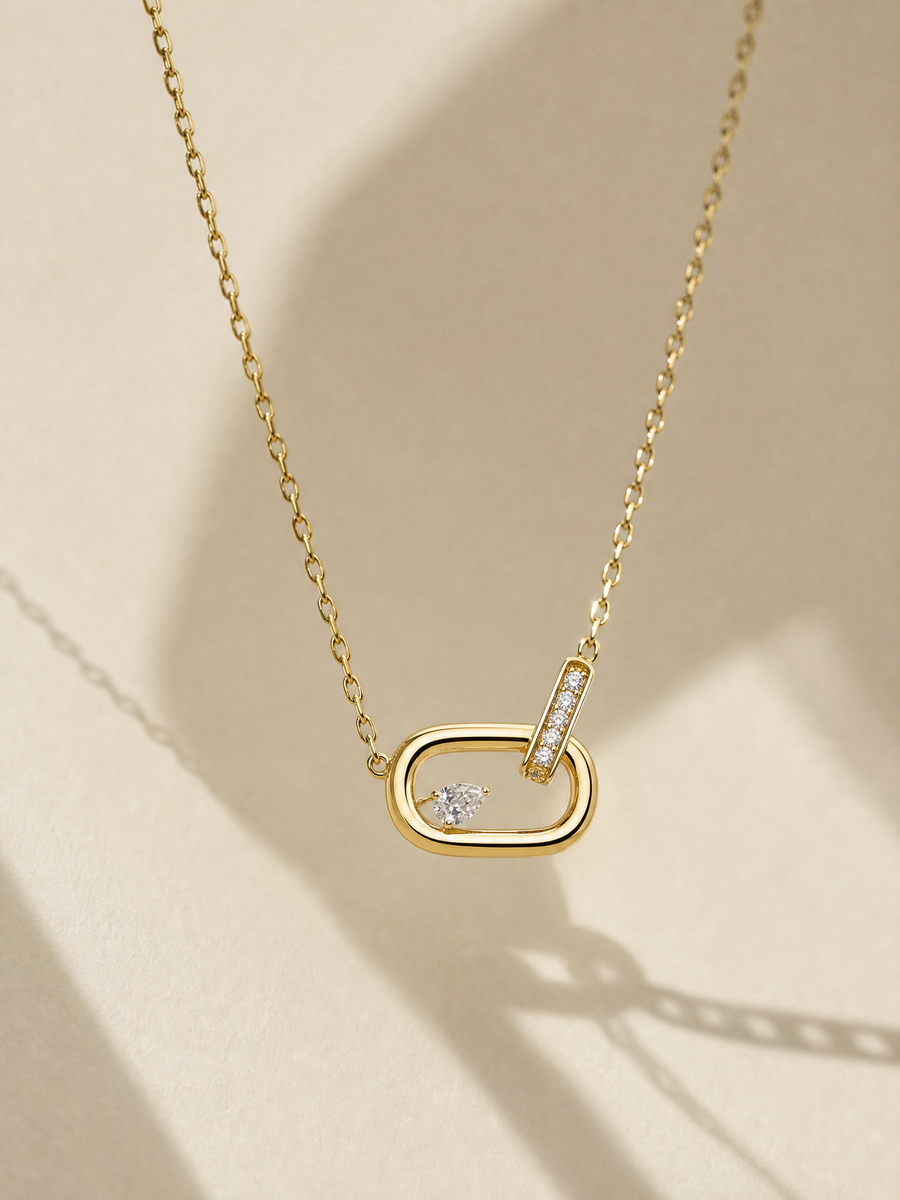
14K Yellow Gold Pear Lab-Grown Diamond Necklace - 0.245 ct Total
One note at a time.
New writing, new stones. Nothing else. Unsubscribe whenever you like.