August 27, 2026
The Shape of a Prong
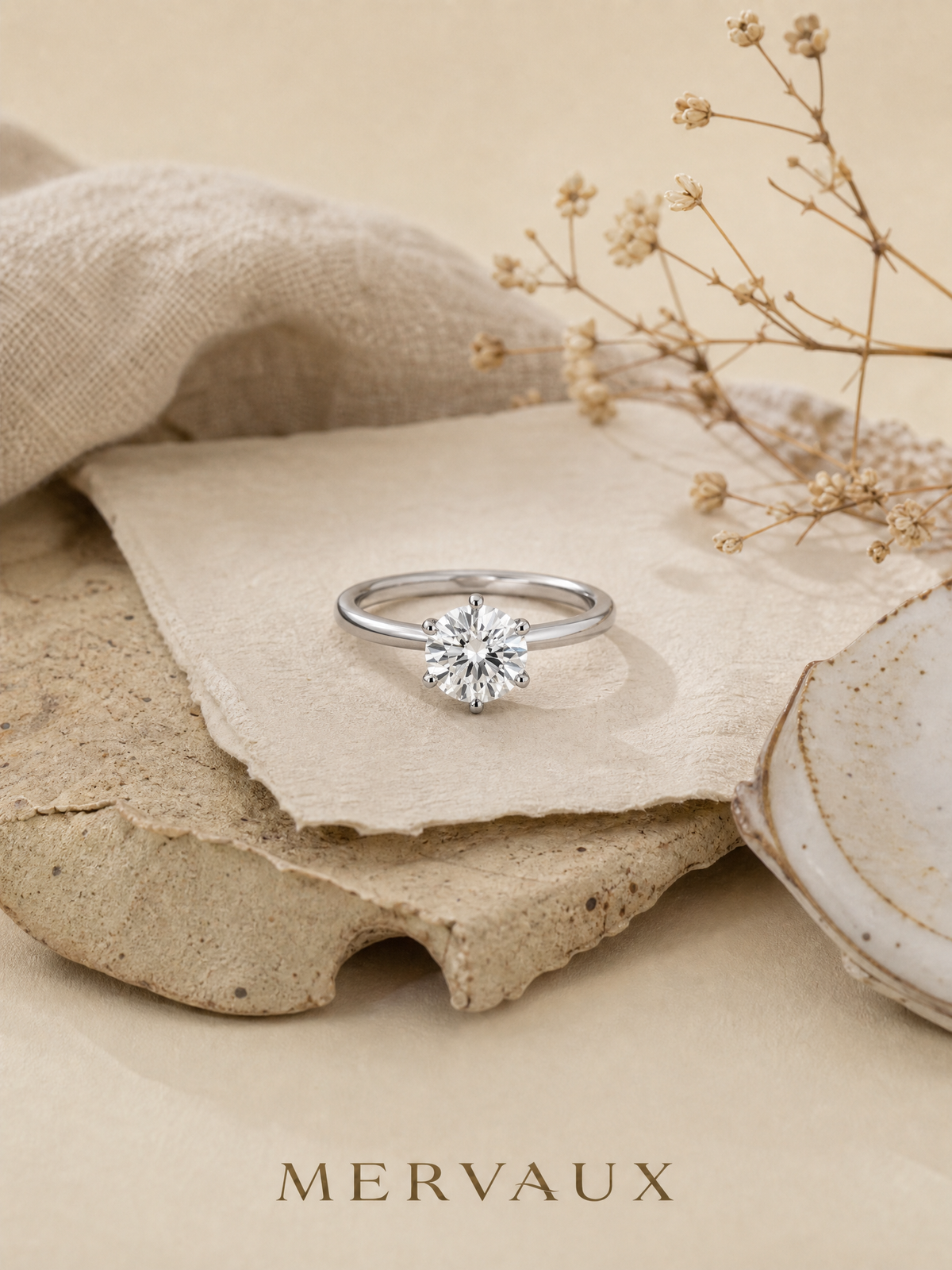
Set a ring under a lamp and count the bright points. Most belong to the stone. Four or six are metal, and the eye has never separated them out.
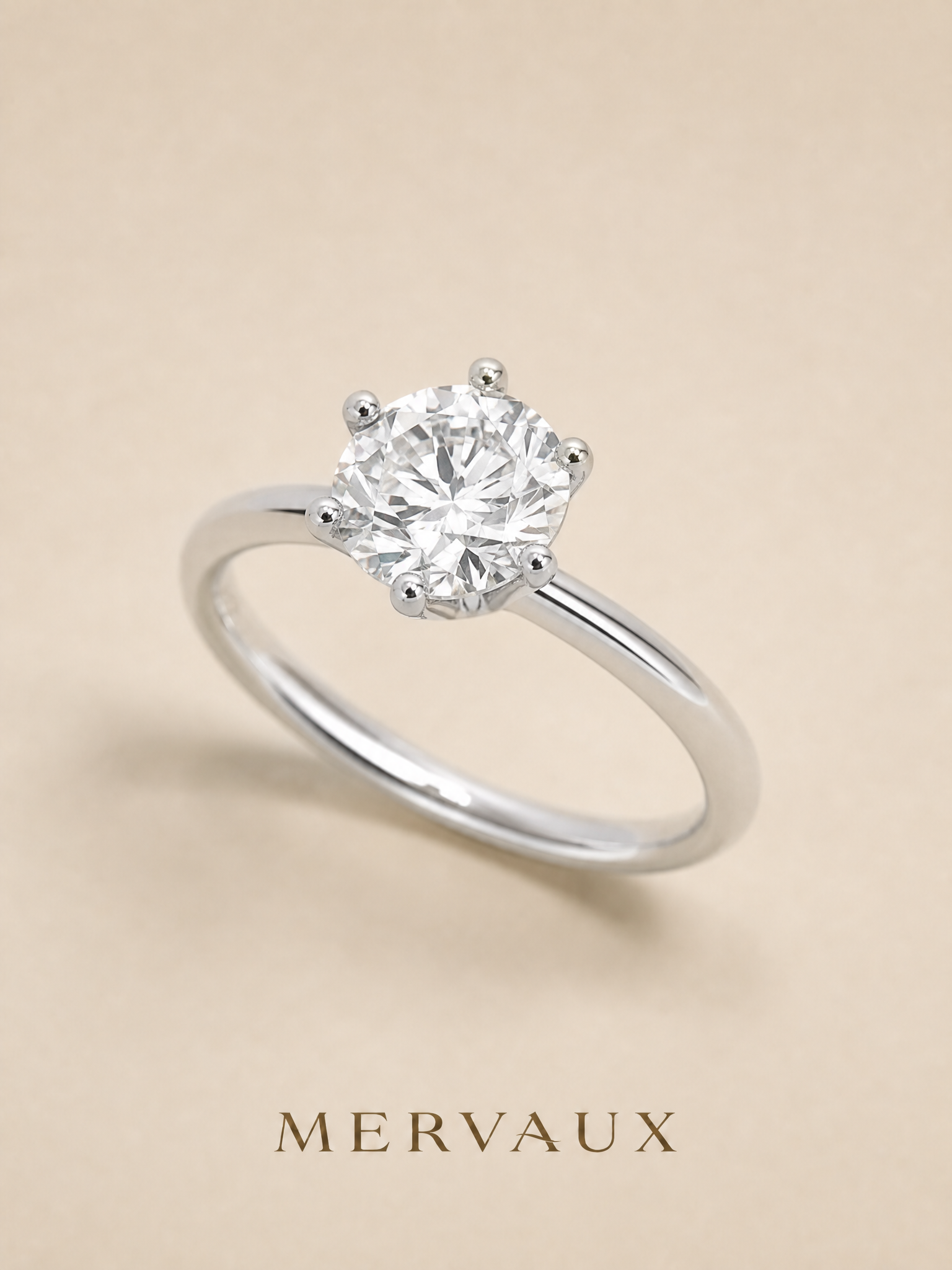
Set a ring down under a lamp and count the bright points. Most belong to the stone. Four or six do not. Those are metal, folded over the edge of the diamond, catching the same light and giving back the same white. The eye does not separate them. It reads one glitter and moves on.
A prong is in every photograph of every ring ever taken, in focus at the front, and almost nobody has looked at one. Very few of us could draw one from memory.
It deserves better, because a prong is not a fastener. It is a designed object, and every part of its shape is answering a question. How much of the stone to cover. Where the stone is weakest. What happens to metal after ten years of doors and countertops. It only looks arbitrary because it is small.

Two solitaire heads photographed close together, the prong tips reading as small bright marks of metal lying across the top edge of each diamond.
The count decides how much stone you see
Four or six is the first decision anyone makes about a prong, usually without knowing it.
Six holds better. GIA puts it plainly: four prongs do not hold a diamond as securely as six, and six better protect the girdle, the thin edge where a diamond is most exposed. Lose one of six and five are still working. Lose one of four and the geometry that was holding the stone is gone.
Four shows more. Less metal crosses the crown, so more of the outline stays uninterrupted. What four asks in return is more of each prong, each carrying a larger share of an unchanged load.
One thing the count does not do is change the sparkle, though the opposite is repeated constantly. GIA is direct about it: brilliance comes from the quality of the cut, not from the number of prongs standing around it. Four prongs show you more stone, not a brighter one.
Scale decides it more often than taste does. A 4.06 ct D VS1 round in solid 18K gold carries more momentum through a day than a 1.09 ct round in solid 14K white gold, and tends toward six. Small stones can be swallowed by six.
Every tip shape is an argument
Past the count, the head has a shape, and the shape was chosen. A round tip is a small dome of metal on the crown, photographing as a bead of light. A claw, sometimes called a talon, is drawn to a point and swept back, covering a narrower strip and reading as a line rather than a dot. Two answers to one problem, separated by fractions of a millimeter of coverage.
Then there is the V-prong, which is the reason this is worth writing about at all.
A pear, a marquise, a heart, a princess: each ends in a point, and a point is the most fragile part of a finished diamond, where the stone tapers to almost nothing and a knock has the least material to travel through. GIA recommends V-shaped prongs specifically for those shapes, because they wrap the corner instead of pressing on it.
What happens inside that V is better than the outside suggests. Trade instructions for cutting one give the finished seat three jobs at once: support the two flanks of the point evenly, leave enough metal that the prong can still be bent over without cracking, and hold a small void around the very tip. The sharpest, most breakable part of the stone touches nothing at all. It sits in a pocket of air, armored on three sides, under no pressure from any direction.
That is engineering wearing the costume of decoration. It looks like a flourish at the end of a marquise or a pear. It is a load path.

A ring head photographed apart from its stone, so the shape and position of each prong is visible before the diamond is set.
The stone is seated, not gripped
Here is the fact that rearranges the whole object.
Almost everyone assumes a prong works like a hand: fingers squeezing from the outside, holding by pressure. The stone is not gripped. It is seated.
Cut into the inside face of each prong is a small notch, and the girdle of the diamond rests in it the way a shelf rests in a bracket. The metal folded over the top is not the mechanism. It is the lid. The notch is the mechanism.
Bench literature describes cutting it with a needle file or a bur, taken roughly forty to fifty percent through the prong, with the angle of the seat matched to the angle at the girdle, close to ninety degrees on a brilliant. All the seats are cut to one height, since a single low seat tilts the stone. Then the stone is dropped in, the prongs are worked inward in stages rather than one squeeze, and the metal is pushed down over the girdle and burnished smooth so no edge stands proud enough to snag.
Once you know the seat is there, everything looks different. The part doing the holding was cut before anyone could see it, and stays invisible for the life of the ring.
Prongs thin from the tip down
Metal that touches things loses material. Prongs touch more than any other part of a ring and are the thinnest part of it. The wear does not distribute evenly. It concentrates at the tip, the surface that meets every doorframe first. A prong that began as a small column ends as a column with a shaved top, and the metal folded over the girdle thins until it is barely folded over anything. Retipping is the repair: a bench jeweler builds new metal onto the worn tip and re-forms it.
So the honest advice is inspection, not a schedule. GIA recommends checking the setting every six months, or at minimum once a year, and names the signs: the stone moving under gentle pressure, or a gap between stone and metal, best seen under a loupe. Caught there, a worn prong is a question. Left long enough it becomes an emergency, and the emergency is not the prong.
Metal changes the signal. Gold prongs shed material, so they visibly shorten and announce the problem. Platinum displaces rather than sheds, generally an advantage and one specific disadvantage here: displaced metal piles into a lip at the base of the stone while the neck of the prong thins underneath. The prong keeps its apparent height and is quietly not what it looks like. We go through this in platinum against white gold. It is why the question about a 1.08 ct D VS1 solitaire in Platinum 950 is thinning under buildup, not silhouette.

Two rings seen from a low angle, where the metal folds over the edge of each stone and daylight shows in the gap beneath the setting.
What the metal is willing to cover
Count and shape together state how much of the stone the design wants you to have.
Six round tips on a small stone says the setting is part of the picture. Four claws on a large one says get out of the way. A V at the point of a marquise concedes that the stone has a weakness and armors it in public rather than pretending otherwise. None is the better answer, only different amounts of visible intention, readable off a ring in a second once you know they are there.
The opposite pole is the bezel, where metal wraps the whole girdle and the decision is made once, completely. We have written about what a bezel gives up and what it buys separately. The comparison is clean: a bezel trades the outline for total coverage, a prong trades coverage for outline, and every setting across the rings sits on that line. A 1.474 ct D VS1 in solid 18K rose gold makes the trade in warm metal, where the join between stone and setting is visible rather than camouflaged.
Here is where this stops being useful. None of it tells you whether a particular prong is sound. Prong quality is a question about execution, not type, and execution is invisible from a photograph. A well-cut four-prong seat outlasts a badly cut six-prong one. No amount of reading gets you to that judgment. It gets you the right question to ask at a counter.
Set the ring back down under the lamp and count the bright points again. You can separate them now: those are stone, and those four or six are metal, each cut with a shelf on its inside face, folded over an edge, holding something much harder than itself. They were always the second thing your eye found. They were always the first thing doing the work.
In the collection
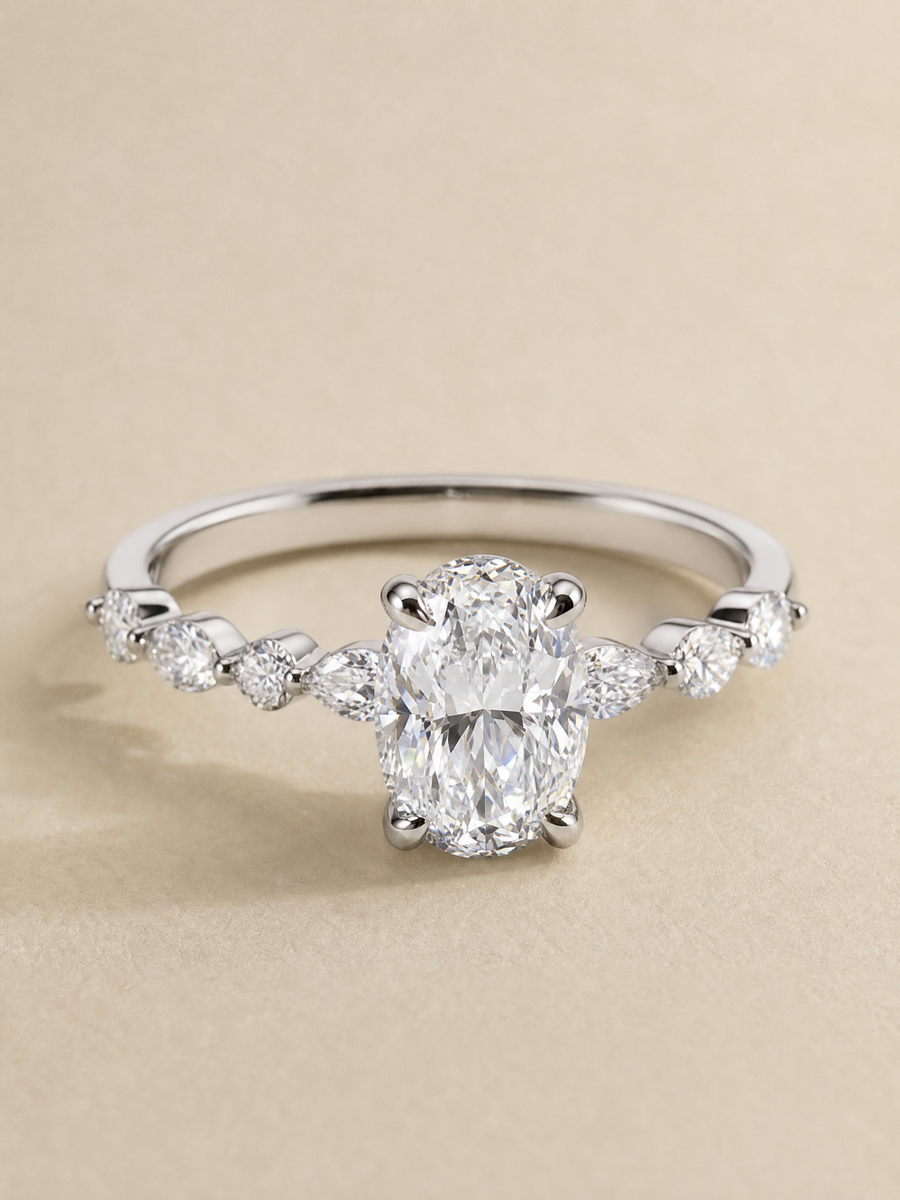
Platinum 950 Oval Brilliant Lab-Grown Diamond Ring - 1.22 ct Total
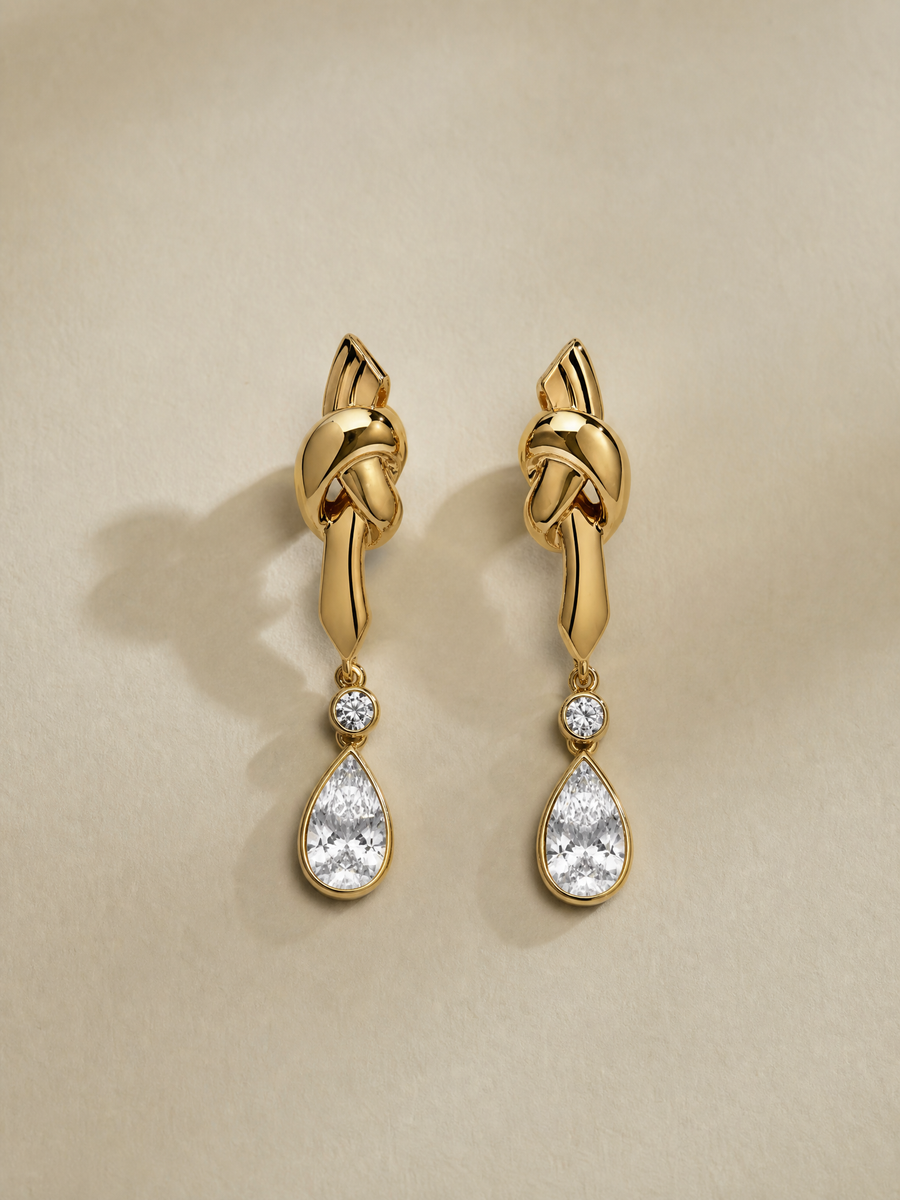
14K Yellow Gold Pear Lab-Grown Diamond Stud Earrings - 2.407 ct Total
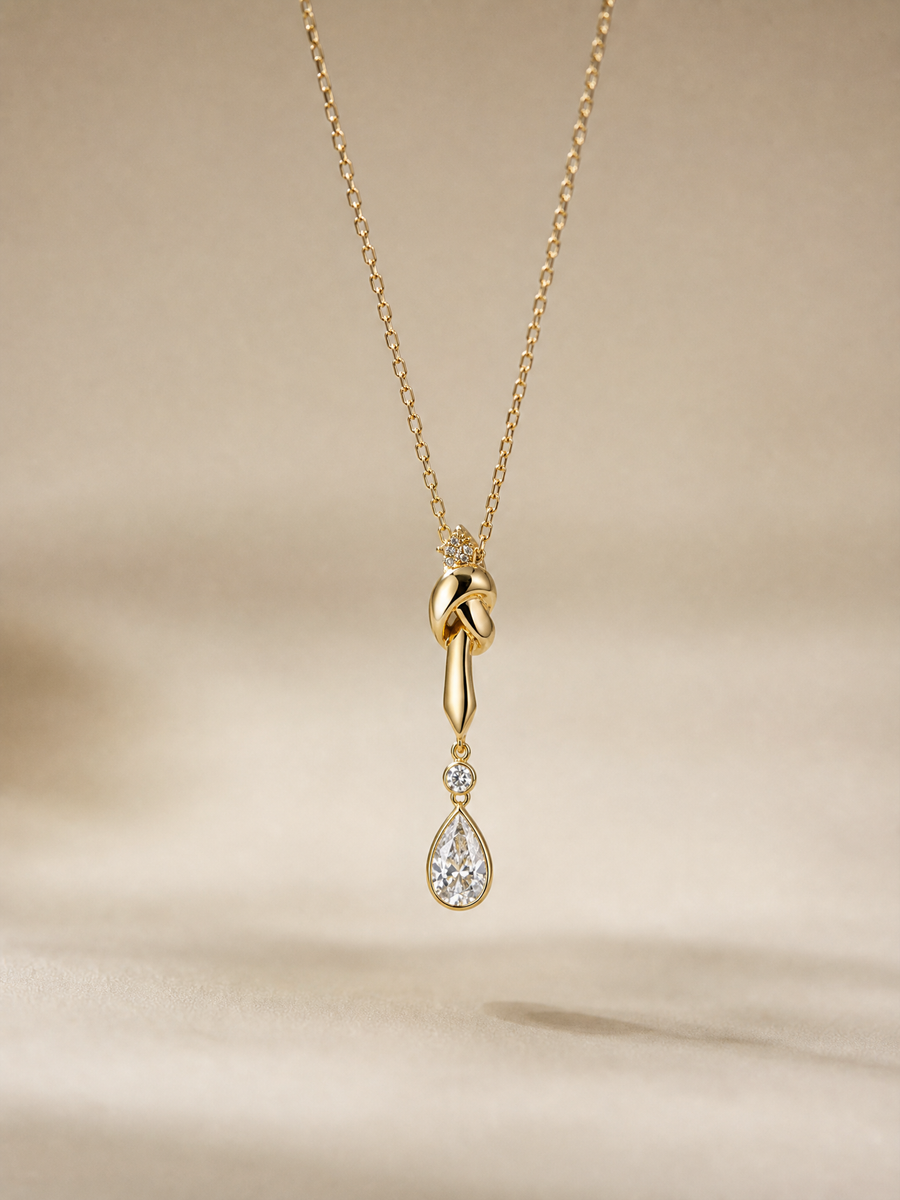
14K Yellow Gold Round Lab-Grown Diamond Necklace - 2.209 ct Total
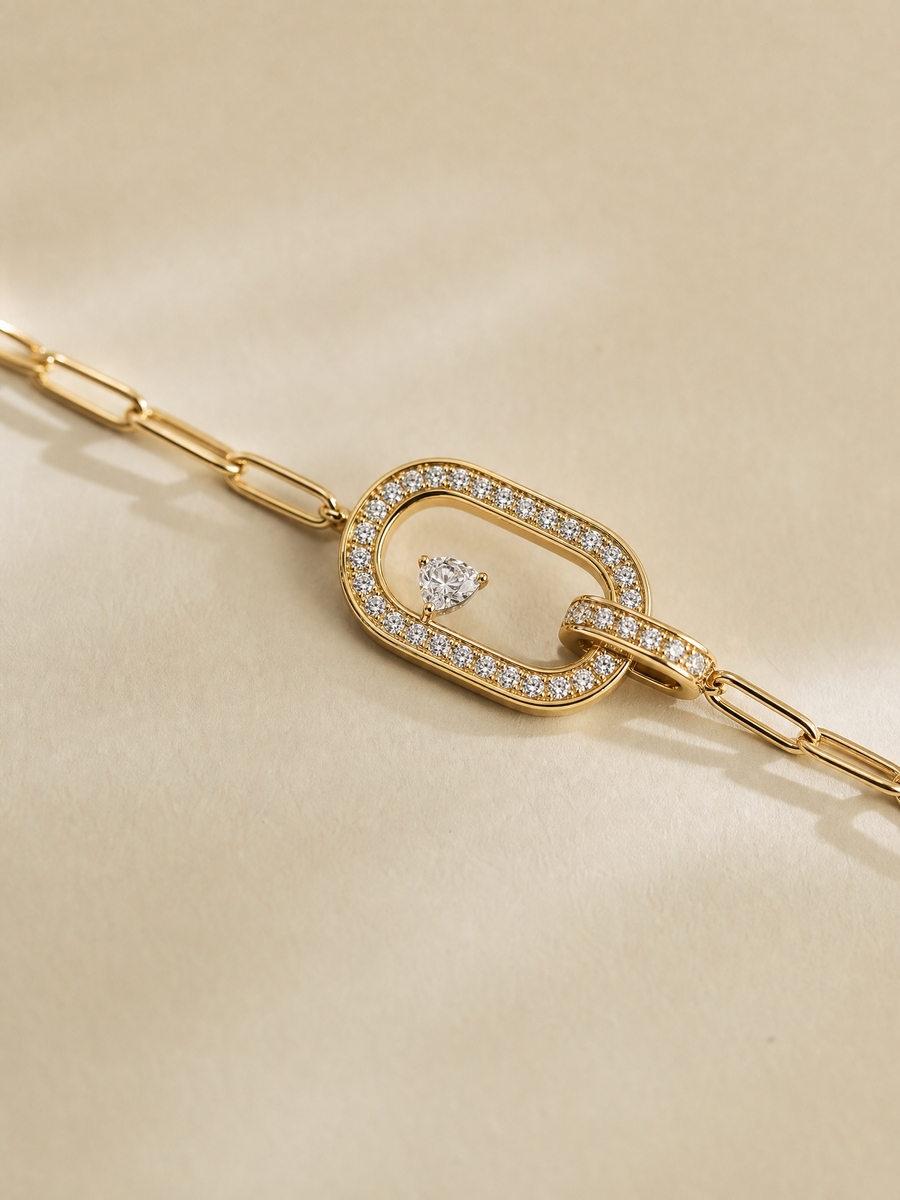
14K Yellow Gold Round Lab-Grown Diamond Bracelet - 0.633 ct Total
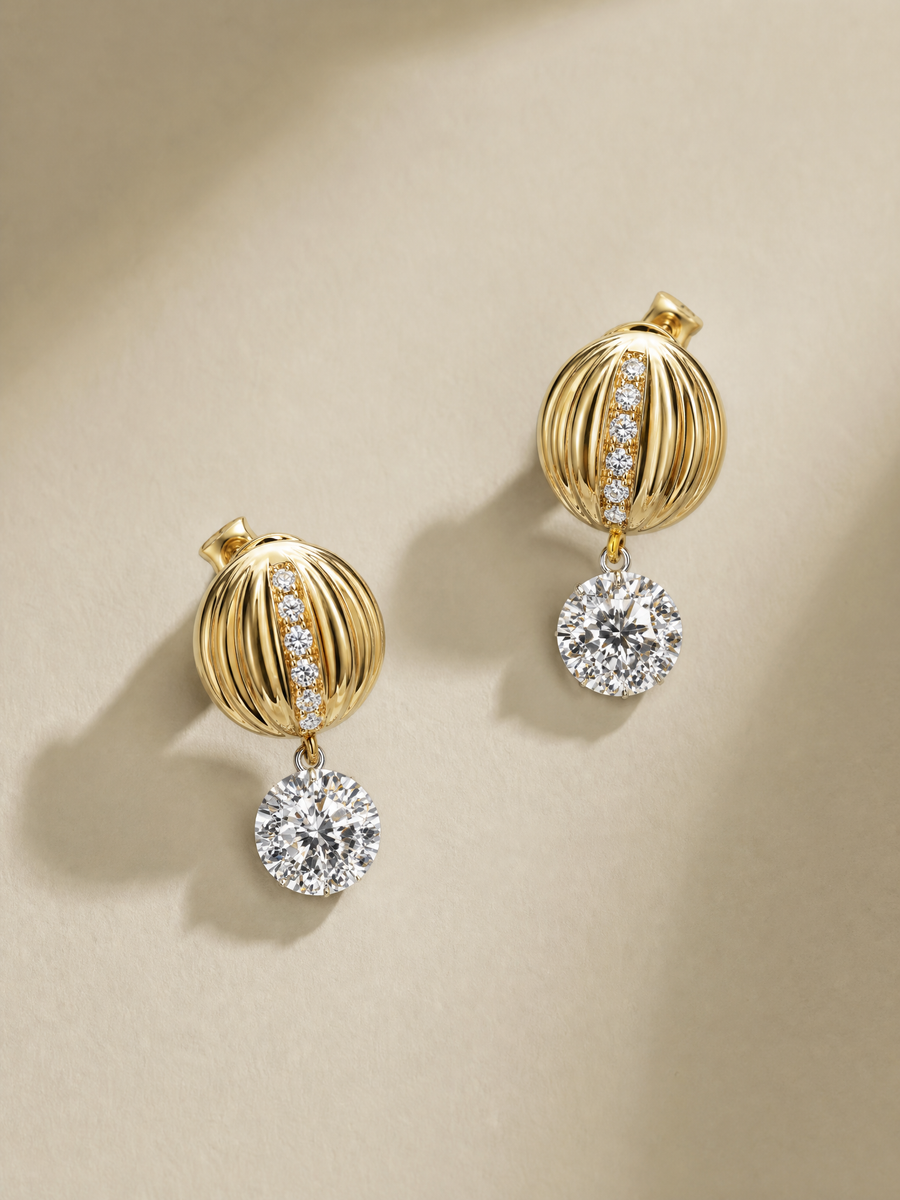
14K Two-Tone Gold Round Lab-Grown Diamond Stud Earrings - 1.654 ct Total
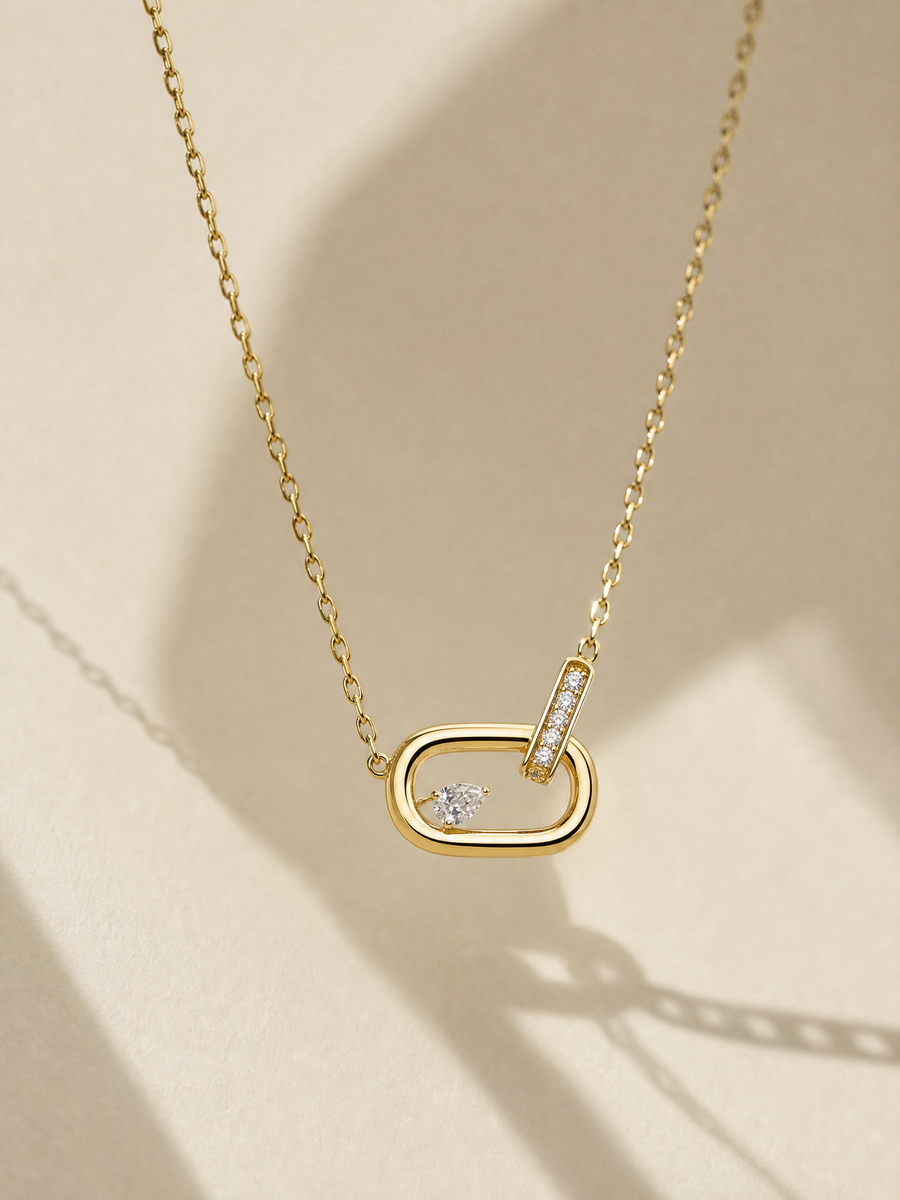
14K Yellow Gold Pear Lab-Grown Diamond Necklace - 0.245 ct Total
One note at a time.
New writing, new stones. Nothing else. Unsubscribe whenever you like.