August 27, 2026
What Happens Between a Loose Stone and a Finished Ring
A stone arrives with a report full of numbers, and the ring it becomes shows none of them. Everything between those two objects is invisible, and most of it is decisions.
Two objects sit at either end of this.
The first is a stone in a folded paper parcel, with a report folded around the parcel. The report is a page of numbers. Carat to two decimal places, a color letter, a clarity code, measurements in millimeters, table and depth as percentages, a girdle description, an inscription along the stone's edge too small to read unaided.
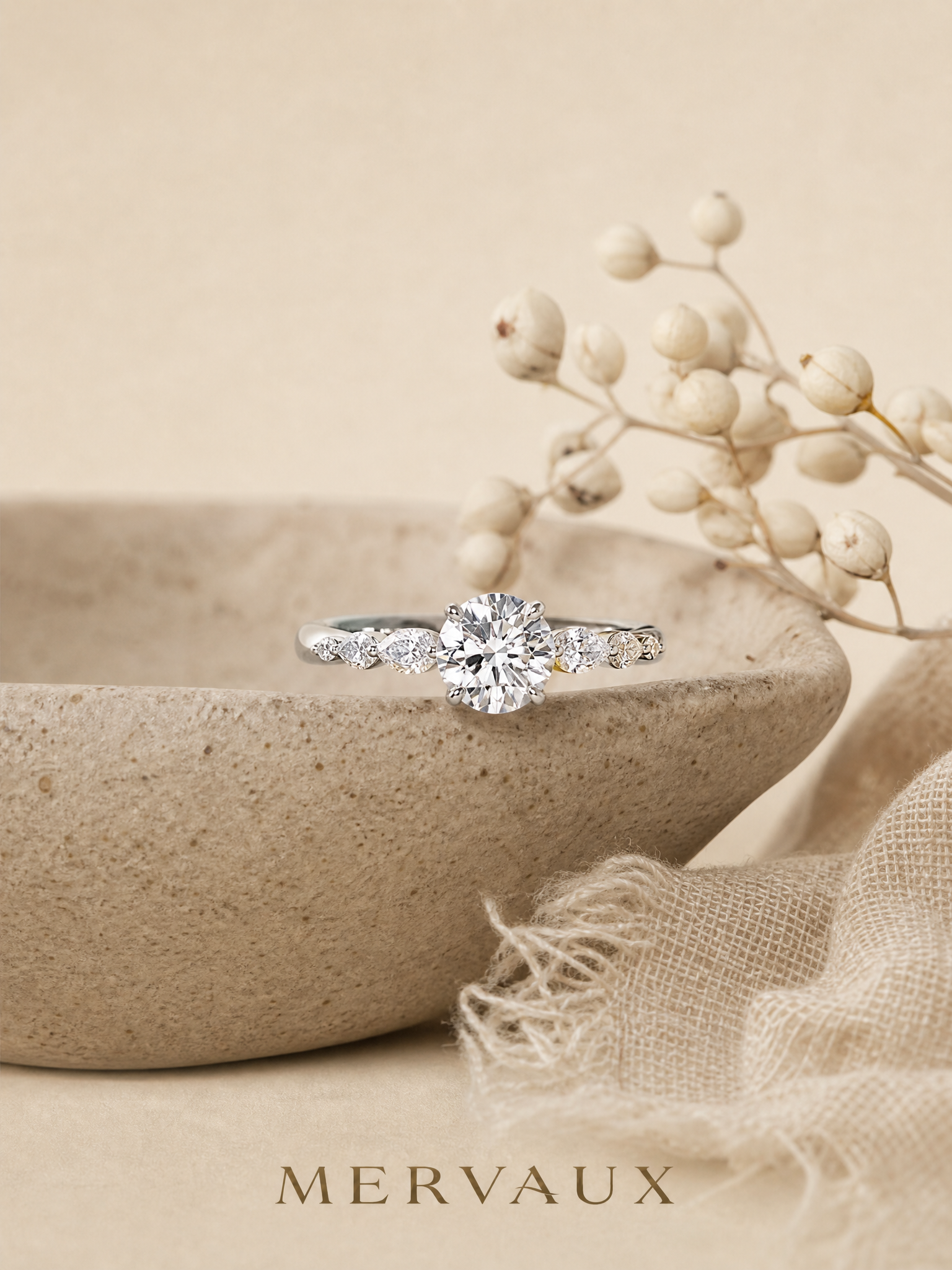
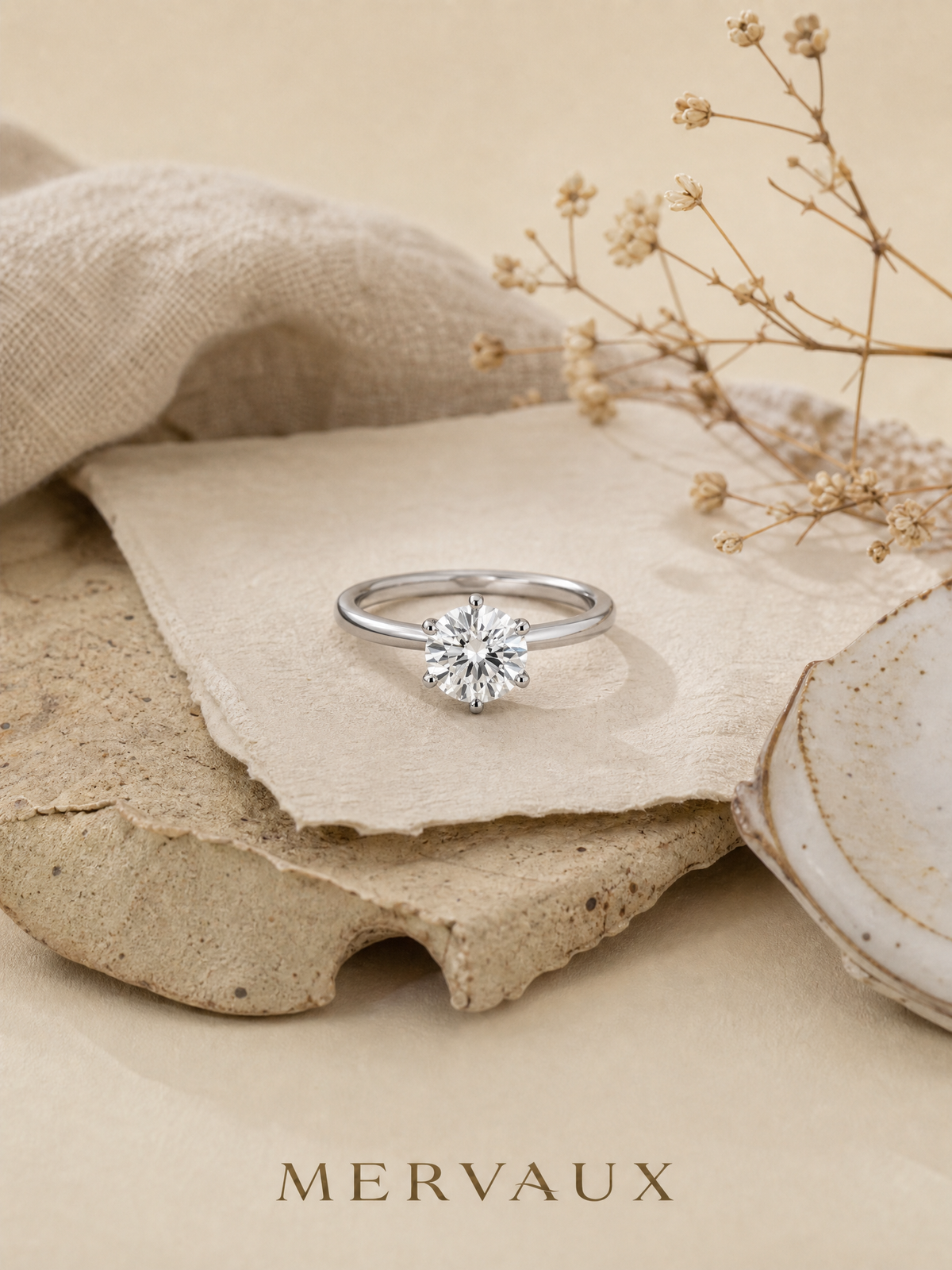
The second is a finished ring. None of the numbers are on it. There is a stone, held. There is metal, and light coming off both.
Between them is a sequence of decisions, and almost none survive into the finished thing as something you can point at. Most of what happens is not labor, or not mainly labor. It is choosing.

A loose round brilliant on its open paper parcel beside the loupe and tweezers used to check it, before any metal exists.
The setting is chosen against the stone
A mounting is not a size. It is a fit to one stone's geometry, and two stones of the same weight can need different ones.
Carat is weight, not outline. A shallow stone spreads that weight across the face, reads wider looking down at it, and sits on a short pavilion. A deep stone of the same weight has a smaller outline and a longer point below the girdle. Put the deep one in a seat cut for the shallow one and the pavilion runs out of room, so the stone rides high and the ring stands off the finger. Cut that seat too deep and a shallow stone sinks until its girdle disappears.
Girdle thickness is the constraint buyers almost never look at. A very thin girdle is the edge a setting tool has to close metal over, and thin edges are where chips start. A thick one asks the prong tips to reach further before they lie flat. Neither is a fault, and both change what can hold the stone. So does the outline: a pear or a marquise needs a tip shaped to its point, because a point is the most vulnerable part of a stone and an ordinary prong does not cover it.
This is why the loose stone comes first. A two carat round, D, VVS2 is a set of dimensions before it is anything else, and those dimensions decide what can be built around them. It is what deciding what the stone has to do means, and why the grades on the report matter at a bench first.
A drawing becomes metal
The older way is a wax model, carved and filed by hand, held up to the light, cut back, held up again. The newer way is a model built on a screen, then grown on a resin printer or cut on a mill. Either way what comes off is the same kind of object: a pattern, in a material that burns away cleanly.
The pattern is set in a flask and surrounded by a plaster-like slurry that sets hard. The flask goes into a kiln, the pattern burns out, and a cavity in its shape is left behind. Molten metal goes in, pulled or thrown by vacuum or by spinning, and the shell is broken away. Out comes a rough ring on a stalk of metal.
That is lost-wax casting, and it is centuries old, in use long before there was a jewelry trade to use it. Modeling on a screen changed the drawing. It did not change the pour, and it did not change what metal does between liquid and solid, which is shrink. Patterns are cut oversize to allow for it.

The drawing stage, where the head height, shank width and finger size are settled on paper before anything is cast.
The head and the shank are often not the same metal
Look closely at gold rings across the trade and the part gripping the stone is frequently platinum, made separately and joined to a gold shank.
That combination is buying something specific. Platinum moves under a setting tool in a way gold does not: pushed over a girdle it goes where it is put and stays, and as it wears it displaces rather than disappearing, so a prong thins slowly instead of failing at the tip. The four or six points where a ring can fail are the tips, and the trade often spends its platinum there and nowhere else. Color comes into it too: a yellow prong across the crown of a colorless stone puts a warm edge exactly where the eye goes.
None of it is visible without knowing to look, which is why what a prong is shaped to do is worth a piece of its own. The platinum pieces are the smallest group in most catalogs for an unglamorous reason: the metal is denser, so the same ring takes more of it.
The order of the work cannot be rearranged
A casting comes out matte, with a sprue where the metal entered and a surface like fine sandpaper. The sprue is cut away and filed flush, and the file marks come out with finer files, then abrasive papers, then rubber wheels. Then, before the stone goes near it, the piece is pre-polished.
Pre-polish is not the finish anyone sees. It is the finish on surfaces about to become unreachable: the inside of the shank, the inner walls of the head, the windows between the prongs where light will pass under the stone. Once a stone is seated a polishing wheel cannot get behind it. Whatever brightness sits behind a set stone was put there before there was a stone.
Only then does the stone go in. Seats are cut inside each prong with a burr sized to the girdle, so the stone rests on a shelf rather than being squeezed between four pieces of metal. The prongs are then closed over the girdle with a pusher, trimmed, shaped and burnished until each tip lies flat against the crown, with no gap under it and no edge left standing to catch on fabric. A bezel is a different set of moves and the same logic.
Setting leaves marks, so the ring is polished again with the stone in, and that second pass brings the outside surfaces and the prong tips up bright.
Two polishes, one before and one after, and neither can do the other's job. Polish only at the end and the inside of the head stays gray. Set before cleaning up and the tool marks stay. The sequence is not reorderable.

The last stage is finishing: the piece is cleaned and polished by hand after the stone is set, which is where the surface is made.
What the report cannot tell you
A laboratory report describes one stone, in isolation, face-up, under standard lighting, by a grader who will never see it again. Every stone we sell carries one, and reading it properly is worth the time.
It stops at the edge of the stone. It cannot tell you how high this stone sits in this head, how thick the prongs were left, whether the metal behind the pavilion is open or closed, or what any of that does in daylight rather than under a counter lamp. A 1.08 carat solitaire in Platinum 950 and a ring built to the same specification elsewhere can be two different objects, and a report describes them identically, because it was never describing the ring.
Which is where this stops being useful. Almost none of it is inspectable by the person buying. You cannot see a seat once a stone is sitting in it, or tell whether the inside of a head was polished first. Photographs at the size they are published at flatten exactly the surfaces this piece is about, and a well-cut stone in an indifferent setting still photographs well. That applies to our own listings as much as anyone's. Knowing the sequence does not hand you a way to audit it from a screen. It only changes where you look once a ring is in front of you: from the side, at the tips, at the back.
The parcel with its page of numbers, then, and the ring with none of them on it.
The numbers were true and they still are. But the report described one object under controlled conditions, and the ring is an object in the world, on a hand, in whatever light the day is providing. Everything that turned one into the other happened out of sight, in an order that could not be shuffled, and mostly as somebody deciding rather than somebody working.
That is the gap. It is not a secret. It is the part of the object that does not photograph.
In the collection
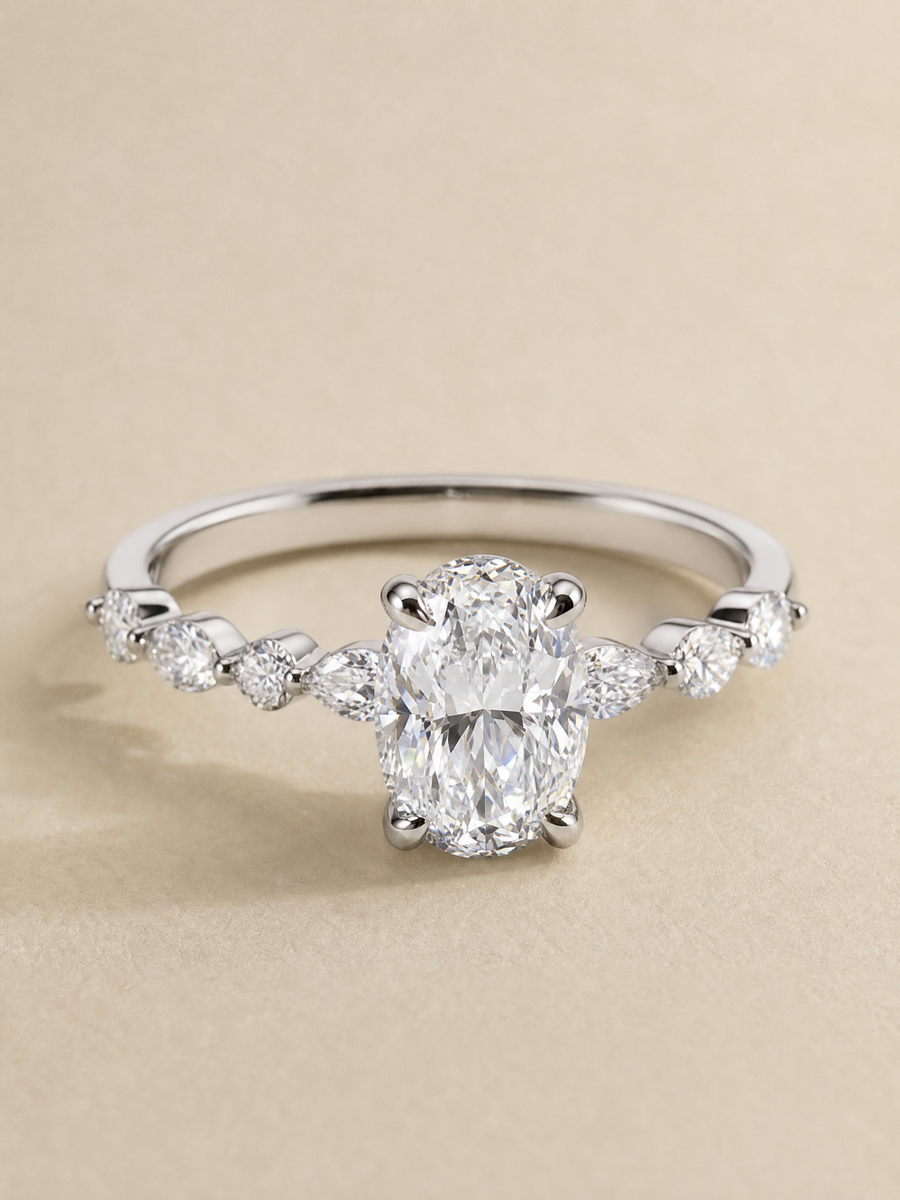
Platinum 950 Oval Brilliant Lab-Grown Diamond Ring - 1.22 ct Total
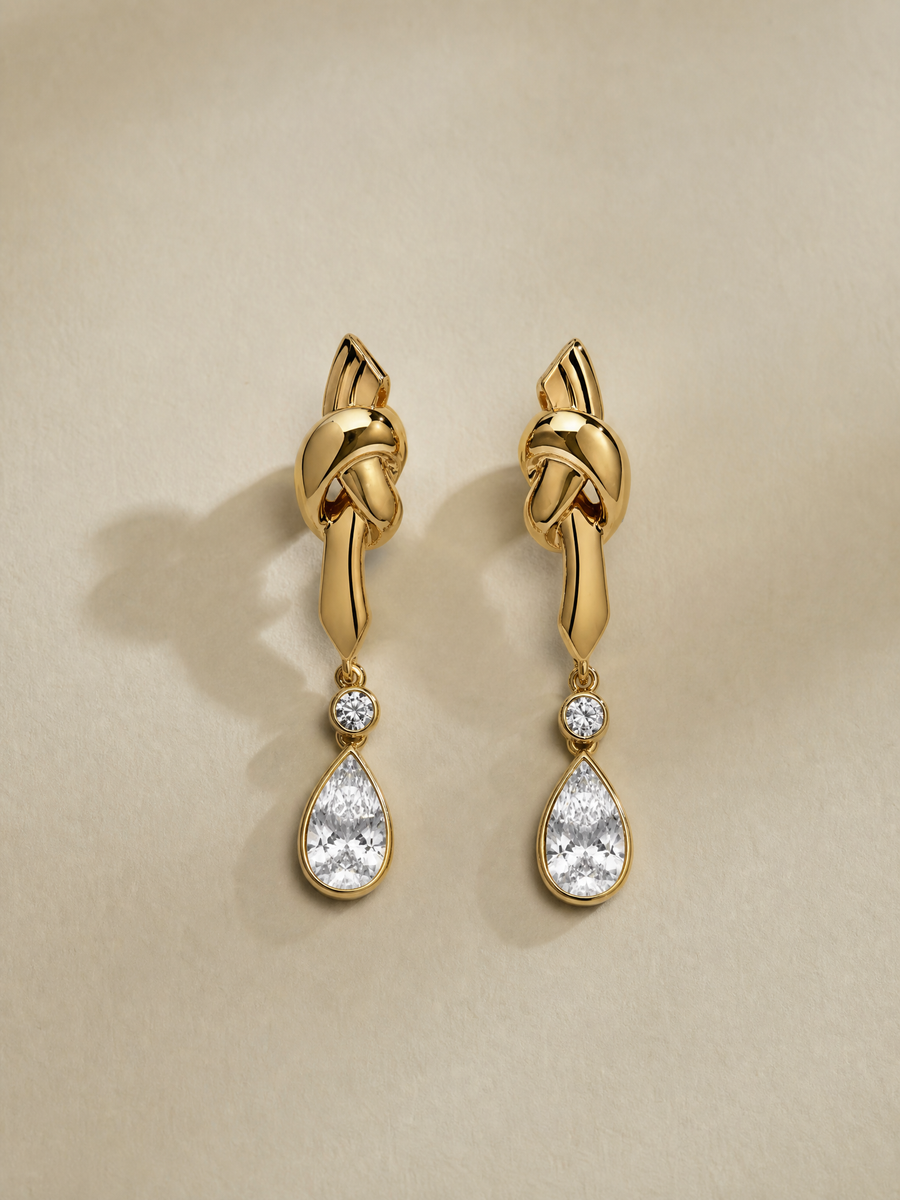
14K Yellow Gold Pear Lab-Grown Diamond Stud Earrings - 2.407 ct Total
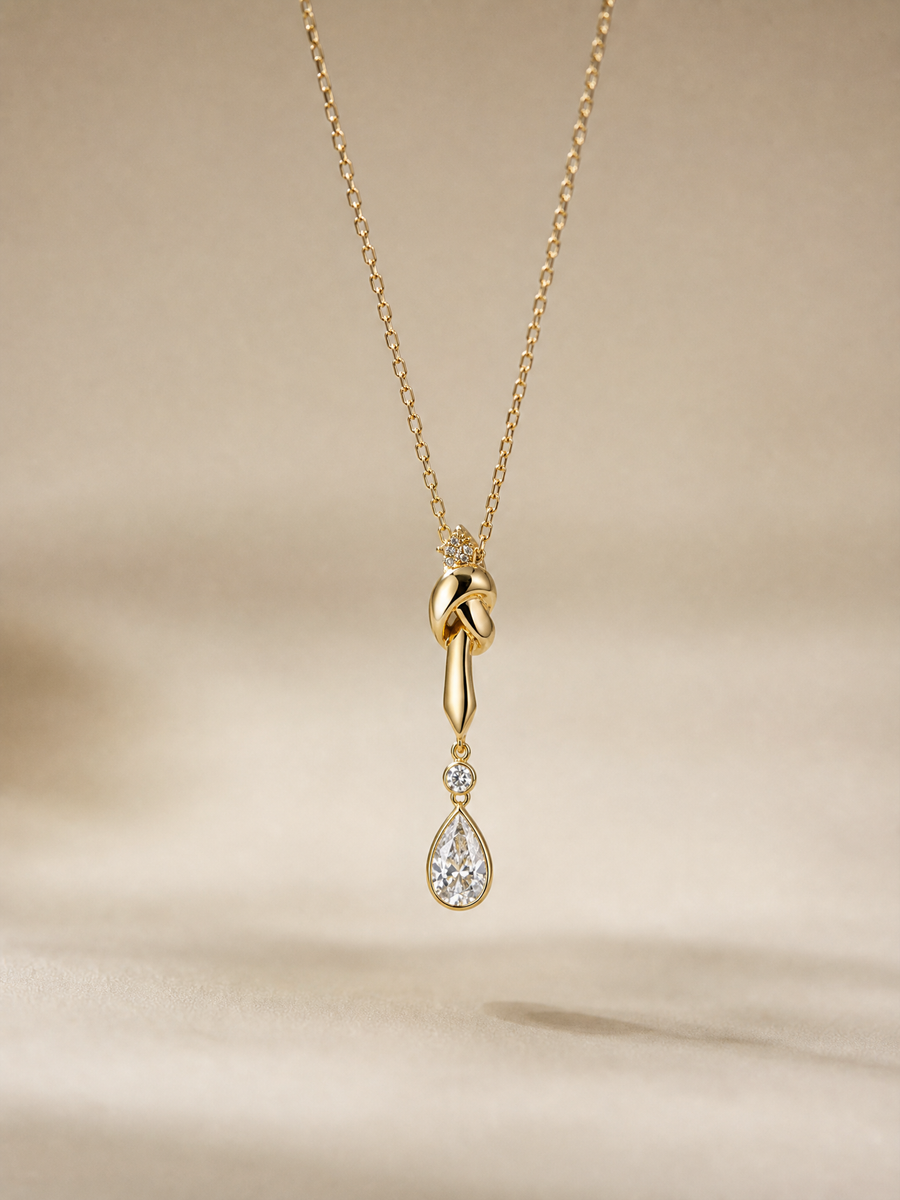
14K Yellow Gold Round Lab-Grown Diamond Necklace - 2.209 ct Total
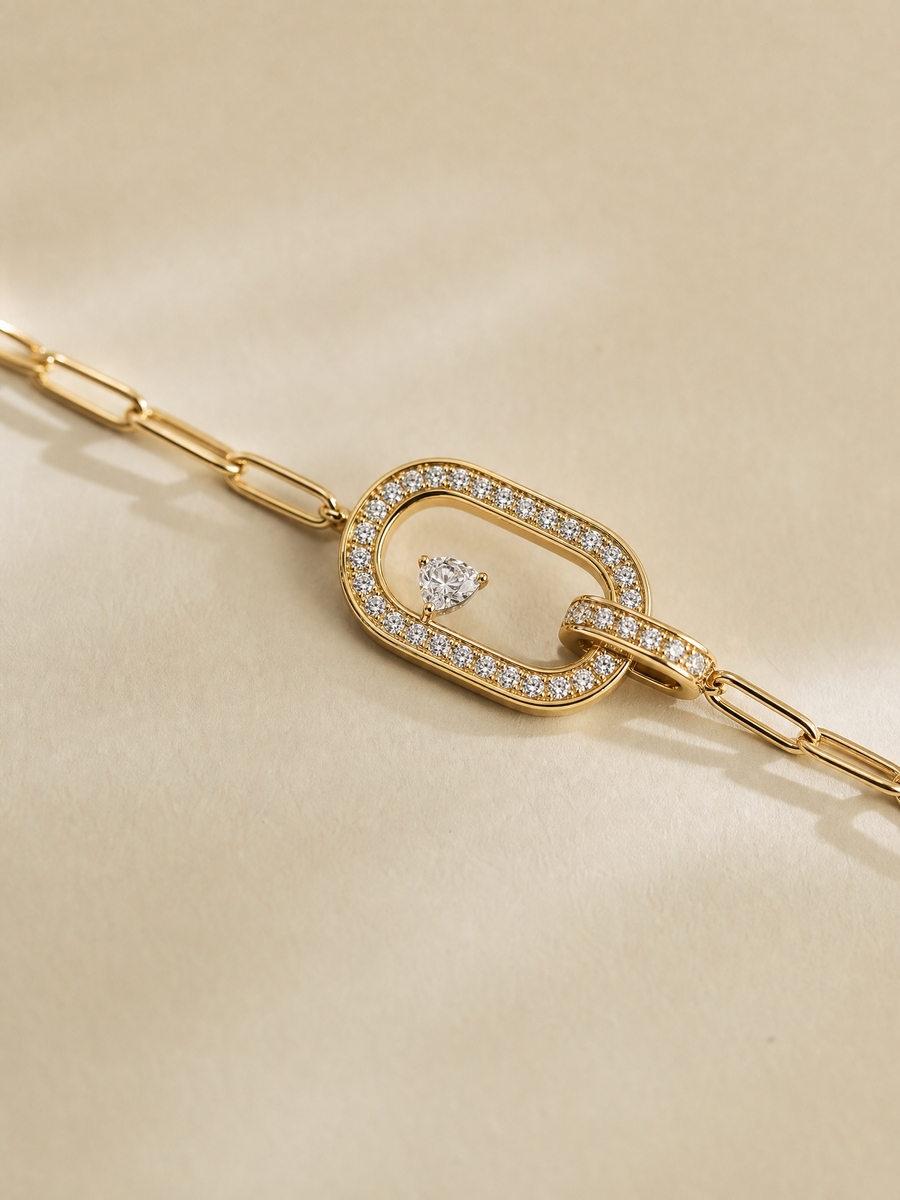
14K Yellow Gold Round Lab-Grown Diamond Bracelet - 0.633 ct Total
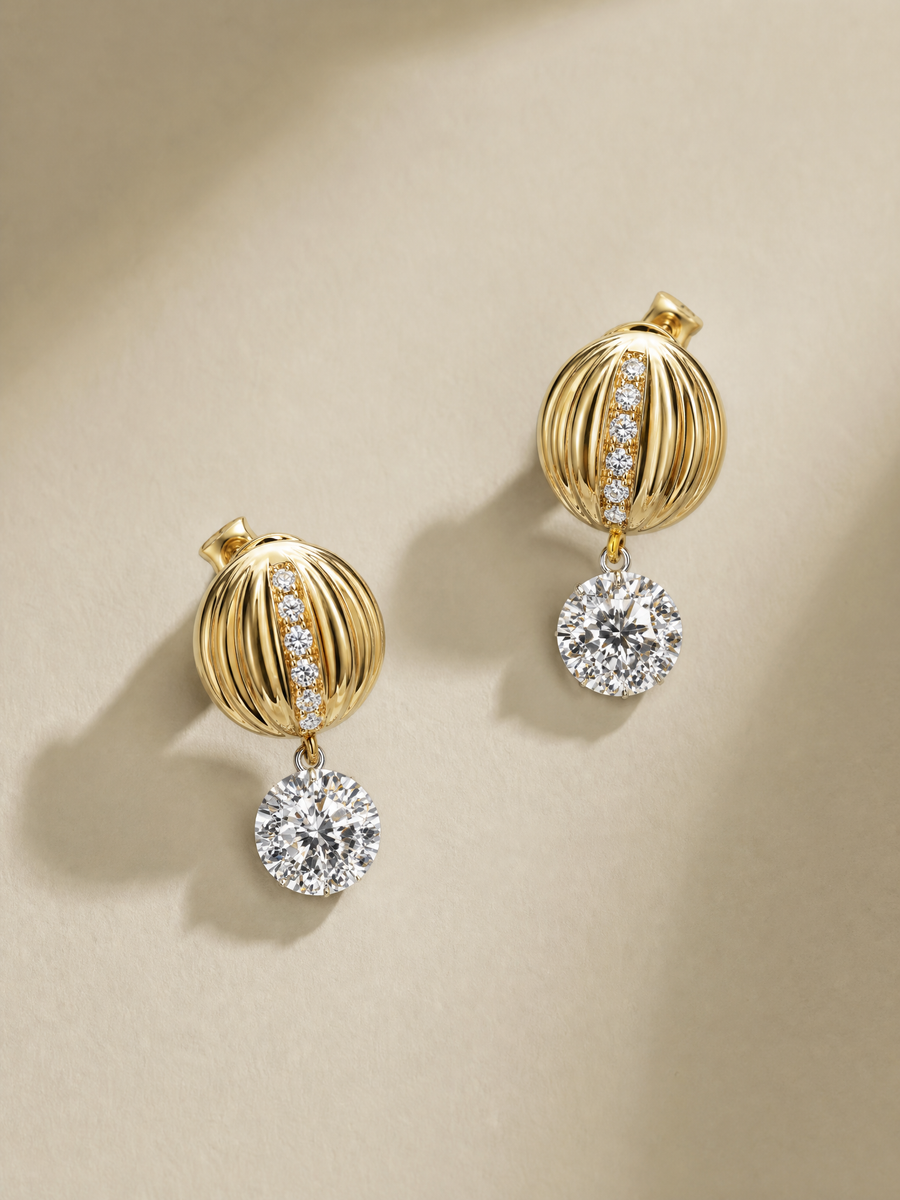
14K Two-Tone Gold Round Lab-Grown Diamond Stud Earrings - 1.654 ct Total
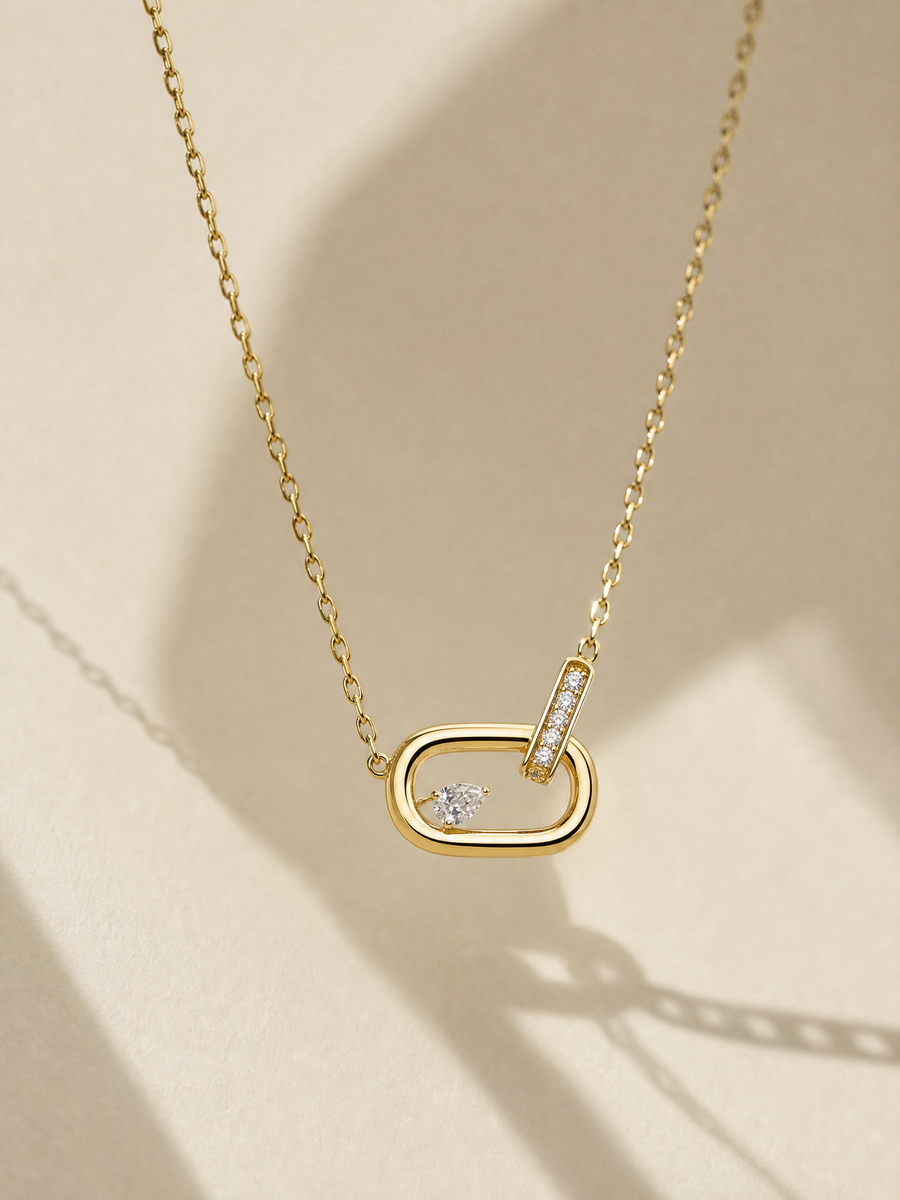
14K Yellow Gold Pear Lab-Grown Diamond Necklace - 0.245 ct Total
One note at a time.
New writing, new stones. Nothing else. Unsubscribe whenever you like.